
 German
  English
  French
  Spanish
  Russian
  Arabic
  Portuguese
  Indonesian
  Turkish
  Persian
  Vietnamese
  中文
中文 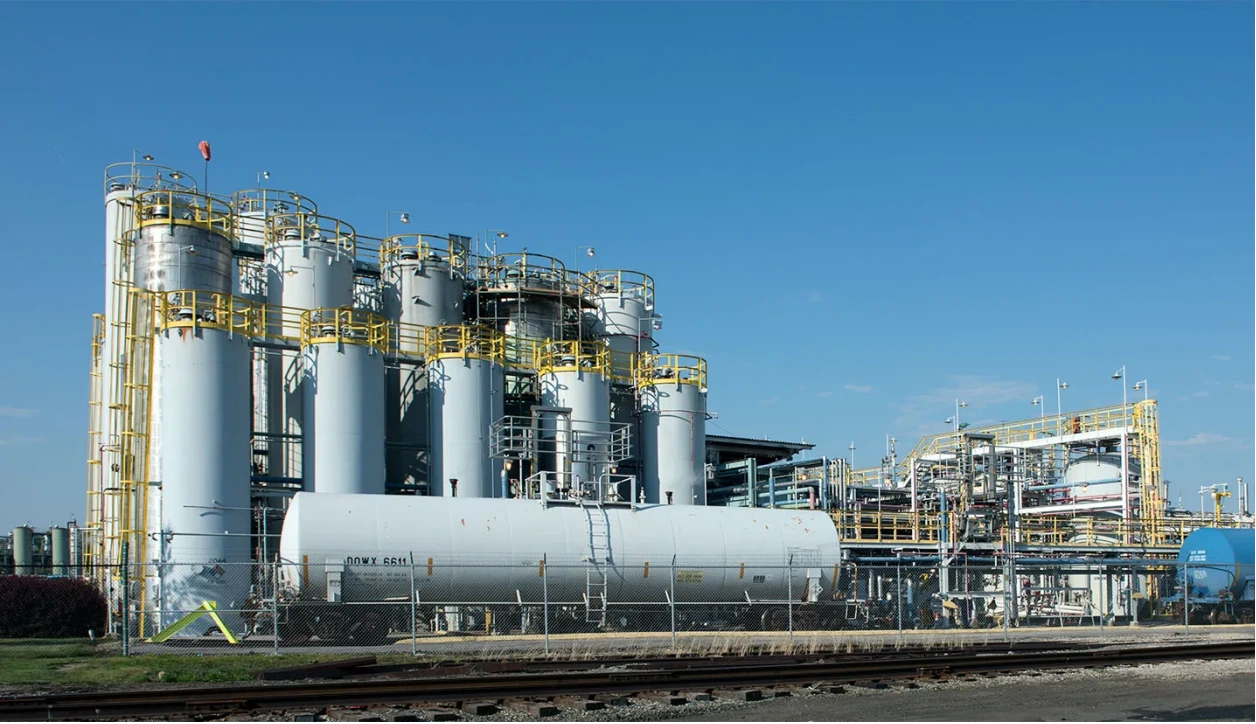 Welche Art von Chaos würde auftreten, wenn eine Stadt’ Die Wasserleitungen wurden plötzlich in bestimmten Gebieten eingeengt, wurden stark korrodiert oder erlebten ungleichmäßige Wasserversorgung in verschiedenen Regionen - einige Gebiete würden überflutet werden, andere würden trocknen und das gesamte Wasserversorgungssystem würde gelähmt sein. Das’ Es ähnelt sehr dem, was in großen Chemiewerken, Raffinerien, Düngefabriken oder Kohlekraftwerken passiert, wenn Säureverteiler wankelen. Diese Teile der Schwefelsäure-Ausrüstung wirken als die vitalen Arterien, verteilen Säure gleichmäßig durch Türme für Prozesse wie Gasreinigung oder chemische Reaktionen. Doch traditionelle Designs, wie Rohrverteiler und Trog-Typ-Verteiler, haben lange drei große Kopfschmerzen bekämpft: Blockade durch Feststoffe, Korrosion, die Materialien verschwindet, und eine inkonsistente Verteilung, die Ressourcen verschwendet und die Produktion reduziert.
Nehmen Sie Schwefelsäure Verteiler in einer typischen Anlage. Sie bewältigen harte Bedingungen – heiße, korrosive Flüssigkeiten unter Druck. Wenn die Dinge schief gehen, es’ Es ist nicht nur ein kleiner Fehler. Die Produktion sinkt, die Sicherheitsrisiken steigen und die Kosten steigen durch Ausfälle und Reparaturen. Aber was, wenn ein fortschrittliches Design diese Risiken beseitigen könnte? Betreten Sie den Multi-Plate-Säureverteiler, eine patentierte Innovation, die das Skript umdreht. Dieser Geschirrsäureverteiler ist für eine gleichmäßige Verbreitung ohne die üblichen Fallen konzipiert und glänzt in schwierigen Stellen wie der Tailgasreinigung oder der großflächigen Raffinerie. Lassen Sie’ Erkunden Sie die Vorteile dieser neuen Methode.
Die Engpässe der traditionellen Distributoren
Traditionelle Säureverteiler dienen der chemischen Industrie seit Jahrzehnten, aber wenn die Anlagen größer werden und die Nachfrage intensiviert wird, werden ihre Grenzen klar. Rohrverteiler mit ihren schmalen Rohren und Trog-Verteiler, die sich auf offene Kanäle verlassen, führen oft zu ungleichmäßiger Leistung. Dieser Abschnitt unterteilt die Kernprobleme, von Sprühinkonsistenzen bis hin zu Wartungsabläufen, und zeigt, warum viele Betreiber bessere Optionen in Schwefelsäureausrüstungen suchen.
Inkonsistente Sprühdichte
In einem verpackten Turm muss Säure das Füllmaterial gleichmäßig beschichten, um den besten Kontakt mit Gasen zu gewährleisten. Aber bei Trogh-Typ-Verteilern verarbeitet die Schwerkraft allein den Spread, der in kleinen Aufstellungen ausreichend funktioniert, sich aber in großen Betrieben als unzuverlässig erweist. Flow kann in einigen Bereichen schwimmen und andere verhungern, was “ Channeling” wo das Gas unbehandelt durchrutscht. Dies bedeutet eine starke Beeinträchtigung der Gas-Flüssigkeit-Kontakteffizienz. Rohrverteiler streben nach Präzision, liefern aber oft unterschiedliche Dichten - einige Stellen bekommen zu viel Säure, andere zu wenig. Diese Ungleichheit reduziert die Absorptionsraten in schweren Fällen um bis zu 15-20%, basierend auf Anlagenberichten. Um unzureichende Emissionen auszugleichen, muss der Turm daher bei höheren Temperaturen arbeiten, was zu höheren Emissionen, mehr Nebelübertragung und Energieverschwendung führt.
Wenn Sie sich von diesen Mängeln abwenden, sollten Sie bedenken, wie die Aufbauung im Inneren ein kleines Problem in eine Ausfallbedrohung verwandelt. Verstopfung doesn’ t einfach die Dinge verlangsamen; es kann die Produktion vollständig stoppen und kostspielige Reinigungen zwingen.
Der verstopfende Alptraum
Feststoffe in Schwefelsäure - denken Sie an Schwefelpartikel oder Skala - neigen dazu, sich in engen Bereichen anzuhäufen. Rohrverteiler mit ihren schlanken Durchgängen sind primäre Ziele; Auch kleine Ablagerungen schmalen Durchfluss, spitzenden Druck und Gefahr von Ausbrüchen. Trough Typ Verteiler fare ein wenig besser, aber leiden immer noch, wenn Ebenen sind’ t perfekt, was zu Überströmungen oder Trockenzonen führt, die Müll härten lassen. In Kohlekraftwerken oder Raffinerien bedeutet dies häufige Stopps - manchmal wöchentlich - für Säurespülungen oder Rod-outs, die die Betriebszeit beeinträchtigen.
Eine Studie über Strömungswege im chemischen Mischen zeigte, wie eine ungleichmäßige Verteilung die Sedimentierung, die Blockierung von Leitungen und den Schnittstrom im Laufe der Zeit um 10-30% verschlimmert. Korrosionsbindungen auch hier; Wenn Metall erodiert, fangen raue Oberflächen mehr Sediment und schaffen einen Teufelskreis. Anlagen, die sich mit diesem Problem befassen, berichten über höheren Säurenebel, der nicht nur die Ausrüstung korrodiert, sondern auch Gesundheitsrisiken darstellt.
Neben diesen betrieblichen Hits fügt der Aufbau von traditionellen Systemen eine weitere Schicht von Ärger hinzu. Schwächen im Design bedeuten mehr Fixes, die Budgets höher drängen.
Strukturelle Verwundbarkeit & Hohe Wartungskosten
Standard-Edelstahl in älteren Schwefelsäure-Verteilern korrodiert schnell unter Säureangriff, insbesondere bei Wasserstoffbildung an Schwachpunkten. Troughtypen erfordern ständige Niveauprüfungen, um Verschüttungen zu vermeiden, während Rohrversionen Schweißen und Einstellungen erfordern, die schnell verschleißen. Die Wartung ist daher kapitalintensiv - Industrieeinrichtungen für Schwefelsäureanlagen können insgesamt Hunderte von Millionen kosten, wobei allein Fixes in schlechten Fällen 10-15% des Jahresbudgets ausführen. Diese Schwachstellen zeigen sich in zerrissenen Kopfen oder leckenden Gelenken, was zu Sicherheitsprüfungen und Ausfallzeiten führt. Bei großen Betrieben bedeutet dies Produktionsverluste im Wert von Tausenden pro Stunde.
Mit diesen traditionellen Nachteilen im Auge, es’ Es ist klar, warum Innovation wichtig ist. Der Multi-Plate-Säureverteiler bringt einen frischen Ansatz mit präzisen Steuerungen, die diese Probleme an der Wurzel lösen und Zuverlässigkeit bieten, wo es zählt.
Multi-Dish Vorteil: Zweistufige Präzisionsflusssteuerung
Der Wechsel auf einen Multi-Plate-Säureverteiler bedeutet, ein System zu umarmen, das für heute konzipiert ist’ s Anforderungen. Im Gegensatz zu Verteilern des Rohr- oder Trogen-Typs verwendet es ein modulares Aufbau mit Geschirr, das eine ausgewogene Zufuhr gewährleistet. Dieser zweistufige Ansatz steuert die Säure vom Eingang bis zum Abfall, schneidet die Variabilität und steigert die Leistung des Turms. Lassen Sie’ s erforschen ihren Aufbau und wie er häufige Scale-up-Probleme in Schwefelsäureausrüstung löscht.
Die Struktur eines Multi-Dish Distributors
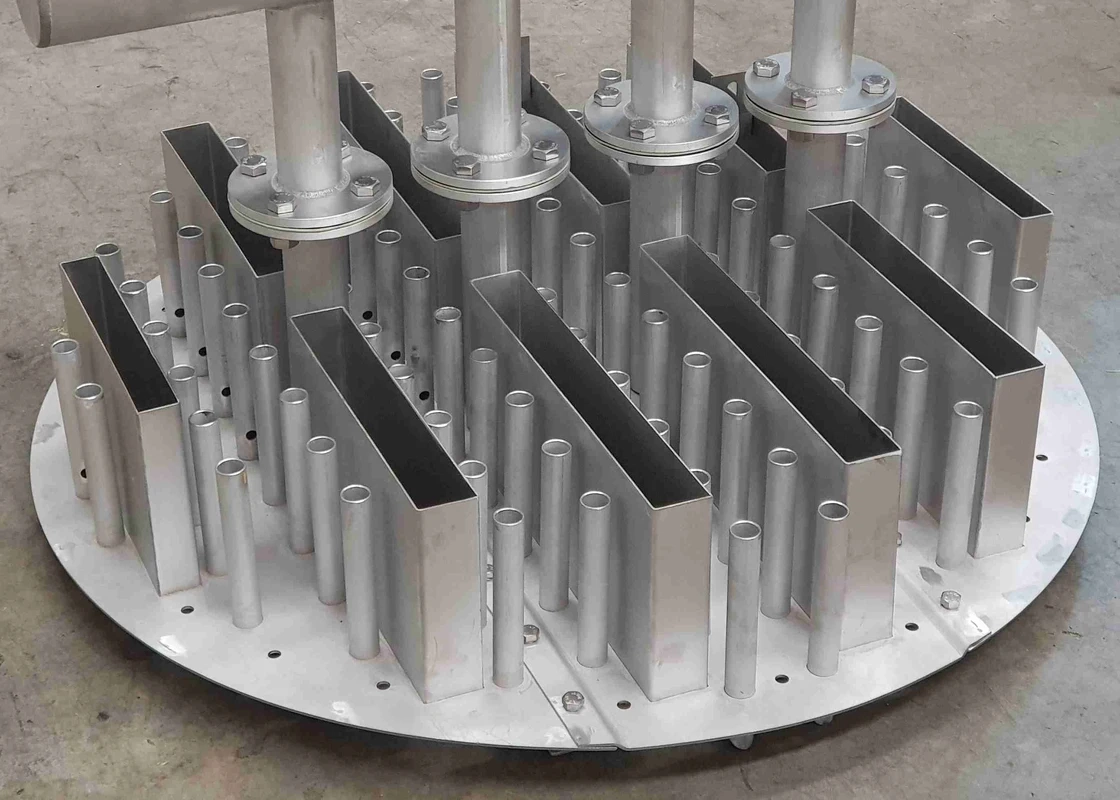
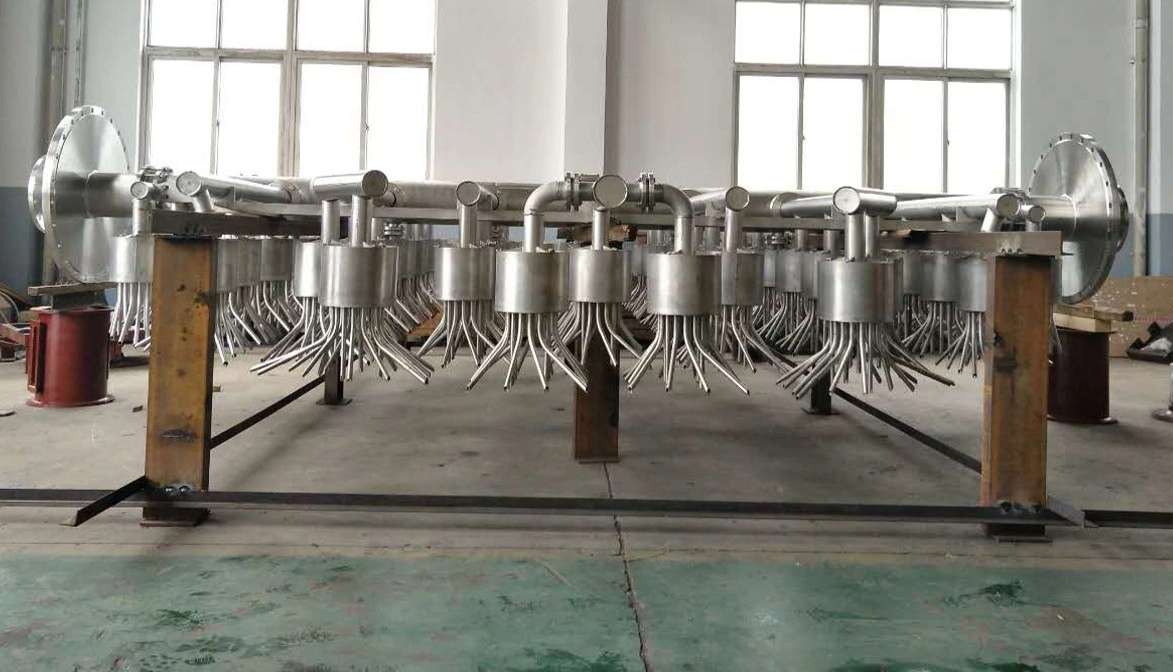
In seinem Kern umfasst der Geschirrsäureverteiler einen Hauptzufuhrkopf, Zweige, Verteilerrohre, Öffnungsplatten, runde Geschirr und Downcomers. Jede Schale - zylinderförmig mit einem quadratischen Verteilungsbereich (außer an den Rändern) - hält 16 Abgänger (in einem 4×4 Layout für quadratische/rechteckige Verteilung) oder 30 Abwärts (in einem 5×6 Layout Bildung eines Gleichbeindreiecks mit einem 62° Spitzenwenkel). Die Anzahl der Geschirr wird durch den Turmdurchmesser und die erforderliche Punktdichte bestimmt. Diese Struktur hält die Höhe niedrig, die Hälfte der Trogen. Auch das Betriebsgewicht ist leicht, wobei der Gesamtsäurehalt weniger als ein Zehntel des in der Säureverteilungstrough gefundenen beträgt. Die Materialien reichen von Standardstählen bis hin zu fortgeschrittenen Legierungen für Korrosionsbeständigkeit.
Auf dieser Grundlage bildet die erste Steuerschicht die Grundlage für eine gleichmäßige Verteilung. Es beginnt mit präzisionskonstruierten Öffnungsplatten, die von Anfang an fließen.
Primäre Kontrolle: Die Öffnungsplatte
Diese Platten, die in jedem Verteilerrohr installiert sind, sorgen dafür, dass jedes Geschirr das gleiche Säurevolumen bekommt. Identische Blendenabmessungen gewährleisten gleichmäßige Durchflussraten, unabhängig vom Turm’ Skala S. Dies nivelliert das Spielfeld und verhindert Überlastungen, die Rohrverteiler plagen. In der Praxis hält es Abweichungen auf unter 2%, weit besser als die Gipfel und Täler in Trog-Typ-Verteilern. Betreiber schätzen dies für stetige Laufe, insbesondere bei variablen Belastungen wie Düngeproduktion.
Aber Präzision doesn’ T stoppt dort. Eine zweite Schicht verfeinert den Tropfen und fügt Flexibilität ohne Komplexität hinzu.
Sekundäre Steuerung: Der Überflußtrug und Löcher
Die zweite Stufe der Kontrolle findet an den in der Schale befindlichen Niederläufern statt. Diese Downcomers sind mit spezifischen Überlaufträgen und Überlauflöchern ausgebildet. Anstatt einfach vom Boden abzulassen, baut die Säure einen Flüssigkeitsspiegel in der Schale auf und strömt gleichmäßig durch diese kalibrierten Schlitze und Löcher. Dieser Mechanismus balanciert den Hydraulikkopf und gewährleistet, dass die Sprühdichte unabhängig von geringfügigen Schwankungen in der Zufuhrgeschwindigkeit über das Verpackungsbett hinweg konsistent bleibt. Schließlich löscht diese Kontrolle einen großen traditionellen Fehler: die Tendenz, dass sich die Probleme in größeren Türmen verschlimmern.
Beseitigung des Scale-Up-Effekts
Große Verpackungstürme sehen oft ungleichmäßige Punkte, während sie wachsen, aber der Multi-Plate-Säureverteiler vermeidet dies vollständig. Seine modularen Geschirr verteilen sich gleichmäßig unabhängig vom Durchmesser, mit Dichten über 42 Punkte pro Quadratmeter. Dies bedeutet eine zuverlässige Leistung in massiven Raffinerien oder Kraftwerken, wodurch eine Leistungsverlusterung vermieden wird, die in erhöhten Trog- oder Rohrverteilern inhärent ist. Diese Konsistenz führt zu realen Effizienz- und Kostengewinnen.
Kreislaufstrom: Der Anti-Verstopfungsmotor
Was den Schallsäureverteiler unterscheidet, ist seine Strömungsdynamik. Säure bewegt sich radial von der Mitte aus und umkreist dann die Schallwände, ausgleicht Drucke und spült Müll. Motor” erhöht seine Widerstandsfähigkeit gegen Blöcke, was es ideal für kornige Schwefelsäureströme macht. Hier’ Wie es funktioniert und warum es in schwierigen chemischen Umgebungen übertrifft.
- Arbeiten Pprinziple von Radiale und kreisförmige Strömung: Säure tritt über das Zentralrohr ein und breitet sich radial nach außen zu den Abkommen aus. Aber zwischen dem Rohrkreis und der Schallwand wirbelt es in Ringen, Abend Wellen von stromaufwärts. Diese doppelte Bewegung - radialer Schub und kreisförmige Mischung - hält die Geschwindigkeiten konstant und reduziert die Totzonen, in denen sich Feststoffe absetzen. In Schwefelsäure Verteilern verhindert dies den Nebel und blockiert ein häufiges Problem in statischen Trogen.
- Der zentrifugale Vorteil: Da sich die Säure in einer kreisförmigen Bewegung beschleunigt, treiben starke Zentrifugalkräfte feste Partikel gegen die Schallwand an und halten die zentralen Ausläufe klar. Dieser aktive Abwehrmechanismus verhindert die Ansammlung von Sedimenten. Durchfluss bleibt innerhalb < 2% Abweichung, unvergleichlich bei Rohr- oder Trogen-Verteilern. Keine häufigeren Reinigungen; Laufe verlängern sich Wochen länger. Dies bekämpft nicht nur Verstopfungen, sondern erleichtert auch die Korrosion, indem stagnierende Säureflecken minimiert werden.
 Kreislaufströmungsdiagramm
Die konkreten Auswirkungen auf Ihren Betrieb
Die Annahme eines Multi-Plate-Säureverteilers ist’ t nur Theorie—es’ s über messbare Gewinne in täglichen Laufen. Von dichteren Sprays bis hin zu schlankeren Bills verändert es die Leistung von Schwefelsäureausrüstungen. Dieser Abschnitt verbindet es mit Ihrem Ergebnis und zeigt leichtere, einfachere Systeme, die liefern.
Überlegene Effizienz mit hoher Verteilungsdichte
Mit Punkten von mehr als 42 pro Quadratmeter übertrifft die Abdeckung bei weitem die traditionelle, schneidende Sprühbedarf und hebende Turmausgangstemperaturen für eine bessere Trocknung. Geschirr decken nur 15% des Abschnitts ab - ein Viertel der Trog-Gesamtzahlen - was Platz freimacht und Gasstörungen verringert. Höhenhälften, passende enge Renovierungen.
Außerdem ist die Installation bequem. Es kann leicht von einer Person ohne Verbindung oder Schweißen bewegt werden. Die Wartung ist nahezu null und erfordert keine Anpassungen. Das Gewicht wird reduziert und die strukturelle Last wird entsprechend reduziert.
Hier’ Ein schneller Vergleich:

Signifikante Senkung der Betriebskosten
Leichtere Materialien und weniger Stahl reduzieren die Baukosten um 20-30% gegenüber alten Schwefelsäure-Verteilern. Weniger Verstopfungen bedeuten weniger Ausfallzeiten – Pflanzen sparen Tausende verlorener Stunden. Der Energieverbrauch sinkt mit einer besseren Absorption und die Korrosionsbeständigkeit verlängert die Lebensdauer und minimiert den CAPEX bei Ersatzen. In einem Markt, in dem Schwefelsäure-Getriebe weltweit Milliarden erreicht, addieren sich diese Einsparungen schnell. Für Ihr Team bedeutet das reibungslosere Veränderungen und den Fokus auf Wachstum, nicht auf Fixes.
Schlussfolgerung
Seit Jahren hat die chemische Welt mit den Ineffizienzen der traditionellen Säureverteiler ausgestattet, die Verstopfungen, ungleichmäßige Sprays und Rost als Teil des Spiels sahen. Ausfallzeiten wurden Routine, die Kosten stiegen und die Effizienz lied im Stillen. Aber die Mehr-Platten-Säureverteiler Das ändert sich durch intelligenten Fluss, harten Aufbau und einfache Handhabung. Es’ s nicht nur ein Upgrade; es stellt einen Paradigmenwechsel in Schwefelsäureausrüstung in Raffinerien, Kraftwerken und darüber hinaus dar.
Bereit, den Unterschied zu sehen? Besuchen NHD‘ s Website, um unsere Multi-Platten-Säurespender zu sehen. Sie können uns auch unter sales@chinanhd.comUnsere Experten können passende Lösungen basierend auf Ihren Turm, Material oder kundenspezifischen Anforderungen liefern.