
 English
  French
  Spanish
  Russian
  Arabic
  Portuguese
  Indonesian
  German
  Turkish
  Persian
  Vietnamese
  中文
中文 Separating solids from liquids in industrial setups demands equipment that’s quick, reliable, and doesn’t cost a fortune to run. Horizontal pan filters totally deliver, handling gnarly tasks like phosphoric acid or alumina slurries like a champ. Their constant flow and clever build keep operations smooth while cutting down on energy and maintenance costs. This guide digs into what makes these filters so special, how they beat out other systems, and why they’re a favorite in places like mines, chemical plants, and food factories. Wanna know what makes ‘em stand out? Let’s jump in and find out.
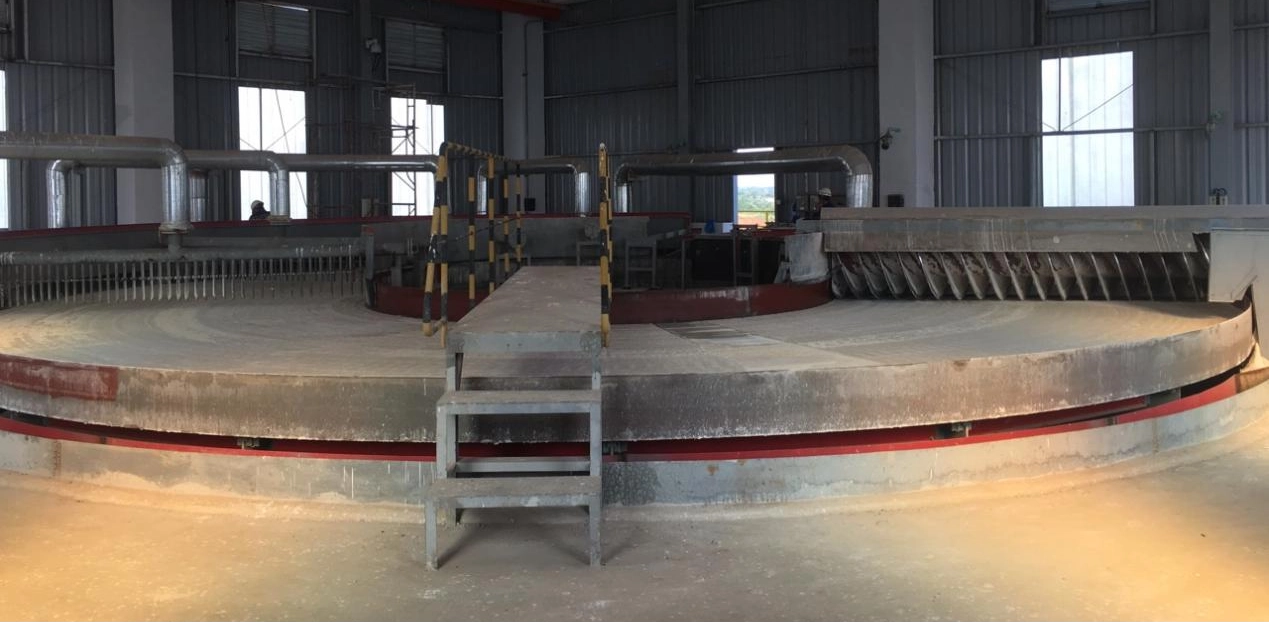
Overview of Horizontal Pan Filter Technology
Horizontal pan filters are widely adopted in industrial solid-liquid separation processes due to their continuous operation, high throughput, and adaptability. Their design integrates multiple functional zones on a rotating horizontal surface, enabling sequential filtration, washing, drying, and discharge without interruption.
Basic Structure and Operating Principles
At the core of the horizontal pan filter is a series of fan-shaped filter buckets arranged in a circular configuration. The filter surface is composed of several fan-shaped filter buckets spliced horizontally. When in operation, the whole machine performs horizontal rotation. These buckets pass through different zones—feeding, washing, drying, cloth regeneration, and discharge—during each rotation cycle. The material goes through the main links such as feeding, washing, and drying, and the auxiliary links such as filter cloth regeneration and discharge, forming a continuous filtering work cycle to ensure the continuous operation of the filter.
Comparison with Other Filtration Systems
Compared to vertical pressure filters or batch-operated units, horizontal pan filters offer superior continuity and lower energy demands. While vertical filters require complex hydraulics for plate movement and suffer from longer cycle times, pan filters maintain steady output due to their rotary mechanism. This makes them ideal for large-scale applications where uptime is critical.
Performance Efficiency in Solid-Liquid Separation
Efficiency in filtration is not merely about speed—it’s about consistency across varying conditions. Horizontal pan filters deliver on both fronts through intelligent design.
- Continuous Operation and High Throughput: By eliminating start-stop cycles common in batch systems, horizontal pan filters achieve uninterrupted production. Currently, the installed filtration area of a single unit is 8~320㎡, and more than 1,000 units have been sold. This scalability allows you to match throughput capacity precisely to your operational needs.
- Consistent Filtration Quality Across Cycles: Thanks to defined functional zones—feeding (C), washing (D), drying (E)—each stage is optimized independently for repeatable results. The filter is divided into 5 functional areas A is discharge, B is filter cloth regeneration, C is feeding, D is washing, and E is drying. This zonal approach maintains consistent cake formation and clarity of filtrate regardless of feed variability.
- Adaptability to Varying Feed Characteristics: Whether you’re processing fine particles or slurries with high solids content, these filters adapt seamlessly. Multi-improvement settles the operation in low-graded phosphate ore, which expands the application range of rotary vacuum table filter. From phosphoric acid to alumina slurries with challenging rheology profiles—the system handles them all efficiently.
Energy and Resource Optimization
Operational efficiency extends beyond throughput; it includes energy use and resource recovery—areas where horizontal pan filters excel.
- Low Energy Consumption per Unit Output: A patented large-diameter drive system enables high torque with minimal motor power. A circular track is used to support the filter, and the filter rotates along the track. This design makes it possible to scale up the equipment, and a relatively small power drive motor can achieve a relatively large torque drive. This reduces operational costs significantly over time.
- Efficient Use of Wash Liquor and Filtrate Recycling: The design incorporates adjustable plate-type distributors that optimize wash liquor distribution across cakes. The design of adjustable plate-type overflow distributor and scrubber can achieve good effect of evenly distributing, cake drying and washing. Combined with integrated filtrate recovery systems, this minimizes water use while maintaining process effectiveness.
Maintenance, Reliability, and Operational Uptime
Downtime can cripple productivity—but horizontal pan filters are engineered for longevity and ease-of-use.
- Simplified Mechanical Design for Reduced Downtime: Modular construction allows quick access for maintenance tasks while reducing system complexity. Arc-shaped press strip can reduce the scaling in the strip slot well, shorten the time of cloth replacement, and raise the operation rate greatly.
- Ease of Inspection and Component Replacement: With features like automatic lubrication systems for critical components such as sealing surfaces and gear pairs, Automatic lubrication system: Automatic lubrication of key lubrication points such as the upper and lower sealing surfaces of the filter these filters minimize manual intervention while extending service intervals.
Process Integration and Automation Compatibility
In modern plants where automation governs productivity metrics—filters must be smart enough to integrate seamlessly.
- Seamless Integration into Automated Production Lines: These systems come equipped with modular control interfaces that allow easy connection into existing SCADA or PLC-based control environments without extensive reprogramming or hardware retrofits.
- Real-Time Monitoring and Control Capabilities: Advanced sensors monitor vacuum levels, rotation speed, wash cycles—and more—enabling real-time process adjustments that optimize performance dynamically during operations.
Application Versatility Across Industries
From chemicals to metallurgy—the utility of horizontal pan filters spans diverse sectors thanks to their robust adaptability.
Suitability for Mining, Chemical, and Food Sectors
Rotary Table/Pan Vacuum Filters are used in industries of Phosphoric acid, alumina and titanium dioxide gradually in other areas such as metallurgy, environmental protection. Whether you’re extracting alumina or clarifying sugar syrup—the same platform delivers reliable results across applications.
If your operations involve alumina processing specifically—explore this specialized solution: rotary-pan-vacuum-filter-for-alumina.
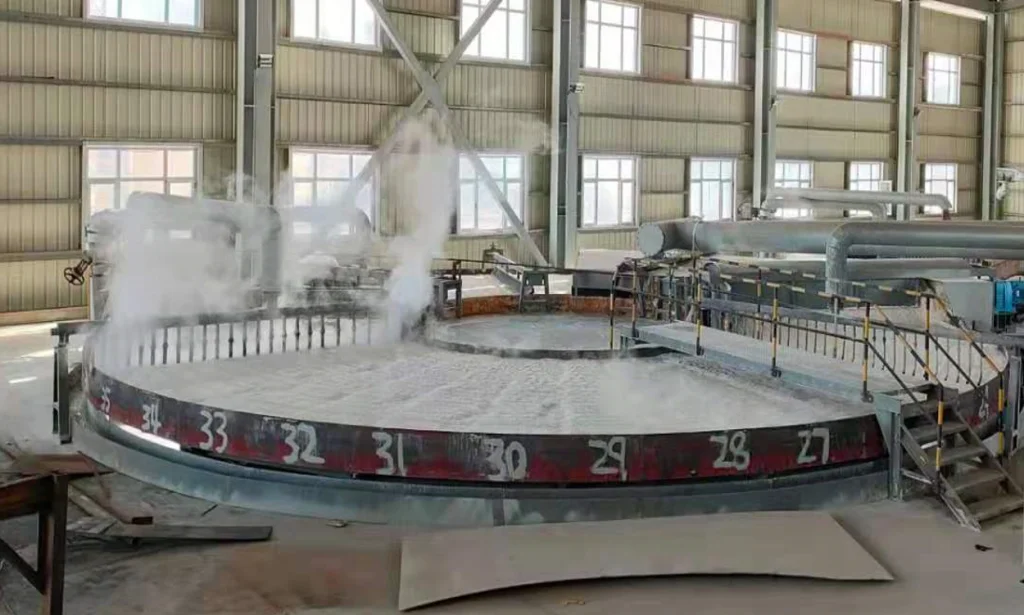
Handling Fine Particles and Difficult Slurries
With improved frame structures that prevent bridging effects within buckets, replace the traditional high-density structure with a low-density/high-strength structure The inside of the filter bucket no longer needs a grille support even sticky or fine-particulate slurries are processed effectively without clogging or loss in yield.
NHD Horizontal Pan Filter: A Recommended Solution
When selecting an industrial-grade filtration solution backed by decades of engineering excellence, look no further than NHD.
With over 1000 installations globally spanning up to 320m² per unit, currently more than 1,000 units have been sold maximum installed area 320m2. NHD offers unmatched scalability combined with localized engineering support. Their commitment to innovation has earned them accolades like the China Patent Excellence Award (2008) for their large-diameter drive system.
Key Features of NHD’s Horizontal Pan Filter Series
Each unit can be tailored based on application—from flow materials to discharge mechanisms—with modular components minimizing lead times during customization phases.
Material of flow part: stainless steel (316L、2205、2507、904L), ensuring long-term resistance against corrosion from aggressive media like phosphoric acid or titanium dioxide slurry.
Integrated process control systems allow automated adjustments based on real-time feedback from sensors embedded throughout key zones.
Performance Metrics Demonstrated by NHD Units
From HDZP-8 models at 8m² up to HDZP-380 at 380m², HDZP-8: Filter area 8 m², HDZP-380: Filter area 380 m², there’s a configuration suitable for every scale—from pilot plants to full-scale production lines.
Selecting the Right Horizontal Pan Filter Configuration
Choosing an optimal setup starts by evaluating your material characteristics—solids concentration? Particle size? Required dryness?
High-solids slurries may benefit from larger filtration areas; fine particles demand enhanced cloth regeneration zones; corrosive feeds necessitate specific alloys—all factors easily addressed via modular configurations offered by NHD’s product line-up. Whether you operate in alumina refining or food-grade filtration environments, the rotary-pan-vacuum-filter-for-alumina provides pre-engineered solutions ready for deployment.
FAQ
Q: What industries benefit most from using horizontal pan filters?
A: They are widely applied in phosphoric acid production, alumina refining, titanium dioxide processing as well as metallurgy and environmental protection sectors.
Q: How do these filters handle scaling issues?
A: Features like arc-shaped press strips reduce scaling within slots while improved suction hoods minimize gas leakage.
Q: Can I customize my unit based on corrosive feed material?
A: Yes. Units are available with stainless steel options including 316L up to 904L depending on chemical resistance needs.