
 English
  French
  Spanish
  Russian
  Arabic
  Portuguese
  Indonesian
  German
  Turkish
  Persian
  Vietnamese
  中文
中文 
Introduction
A major change sweeps across the worldwide mining and processing field. Substances once seen as necessary waste—tailings, leftovers, and factory side products—now gain fresh looks as hidden resource stores. This move comes not just from talk about the environment. Falling ore quality, longer approval times for fresh mines, stricter carbon limits, and rising political worries over key minerals all join to reveal a basic weakness in the old dig-and-throw-away system.
Operations stand at the meeting point of mineral treatment, chemical building, and resource planning. The effects prove real and direct. Waste flows no longer stay on the side. Their amount, makeup, and handling paths now affect money use, rule risks, and lasting market strength. The issue shifts from whether side resources count to whether current process setups can turn them into steady, rule-following, and money-making results.
Who Is NHD, and Why Does It Matter in the Context of Mining Residues and Phosphogypsum?
In this fresh view of factory side products, NHD holds a place built on process carrying out instead of rule standing. Over more than thirty years of building work in wet-process phosphoric acid, non-ferrous metal work, alumina cleaning, and big solid–liquid separation setups, NHD has gained its place through mastery of hard slurry systems under nonstop factory pressure.
The company does not treat waste handling as a separate final duty. Instead, NHD’s building thinking sees residues as process results whose quality forms early in the flow. Its main skills—large-volume filtering, managed mixing, thickening, and rust-proof materials—target the exact spots where change, unrest, and loss usually start. This view has shown strong worth in cases where side products must reach material-level standards rather than just disposal rules.
For plants facing growing checks on tailings keeping, water use, and carbon strength, such process control opens a move from simple holding to active change. By placing residue handling inside the main production line, NHD-based systems help cut full life costs. They also match work results with changing rule and ESG demands.
Why Are Mining Tailings Being Reclassified as Undervalued Resource Pools?
When Primary Extraction Efficiency Declines, How Can Secondary Recovery Redefine Resource Boundaries and Economic Models?
Old tailings show the tech limits of past treatment methods rather than full emptiness. In many plants, large parts of useful elements slipped away because of rough crushing, partial freeing, or careful separation limits. As testing sharpness and process control grow better, these old ideas receive new checks.
The importance appears in size and steadiness. Side recovery works only when paths run without stops, fit with current setups, and give outputs of even quality. This calls for new building not just of pulling logic, but of slurry movement, mixing action, and water removal results. Tailings stop being lifeless burdens. They turn into raw feeds whose worth rests on process order rather than ore richness.
Why Is the Traditional End-of-Pipe Treatment Model Becoming Increasingly Unsustainable?
When Residue Volumes Expand and Composition Grows More Complex, Can Passive Disposal Still Absorb the Long-Term Risk?
End-of-pipe plans built for holding, not changing. As residue amounts rise and rule limits tighten, storage sites change from cost spots into lasting burdens. Water holding, build steadiness, and after-close duties create promises that stretch far past the working life of a mine or plant.
From a building view, this plan also loses choices. Once residues mix, thin, or store without quality watch, later recovery turns hard in tech and unsure in money. Plants thus must look at early steps—points where residue flows still hold shape, reach, and answer to managed treatment.
Why Does Solid–Liquid Separation Determine Whether By-Products Are Truly Reusable?
If Filtration Performance Is Unstable, How Can Any Downstream Material Utilization Remain Credible?
The future use of any side product sets mostly at the separation moment. Water level, particle spread, impurity holding, and wash results decide if residues fit reuse or stay bound for disposal.
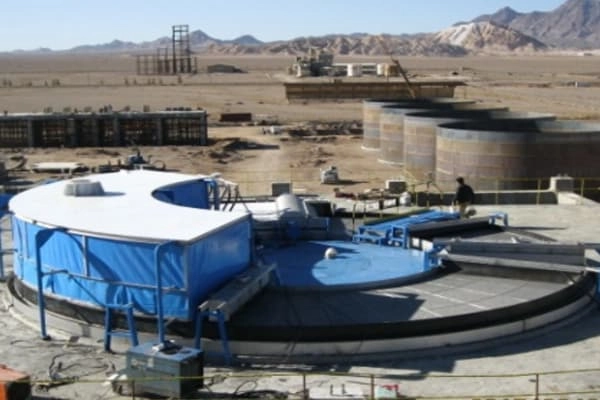
In phosphate chemical industry, the Vertical Automatic Press Filter holds a key place in managing phosphogypsum quality. Nonstop work, even cake building, and expected water removal allow making of gypsum with steady body and chemical traits. This steadiness serves as a needed base for later uses in building items and factory fillers. There, unevenness leads straight to refusal or extra work costs.
Why Does Agitation Design Directly Shape the Recoverability of Complex Slurry Systems?
When Slurry Behavior Becomes Uncontrolled, Are You Losing Efficiency or the Entire Recovery Pathway?
In systems with many phases, mixing does more than move materials. It controls particle floating, reaction speed, and even phase touch. Bad mixing plans cause layers, local over-reaction, and quick damage. These effects harm both recovery amount and tool life.
The Variable Cross-Section & Obliquity Agitator meets these issues by fitting flow patterns to slurry thickness. By keeping even floating across changing solid levels, it steadies early reactions and later separation action. For residue recovery plans, such control guards the build strength of side products and backs repeatable material traits.
Why Is Phosphogypsum Transitioning from an Inevitable Burden to a Scalable Resource?
When a By-Product Becomes a Qualified Industrial Input, How Do Cost Structures and Carbon Metrics Change?
Phosphogypsum shows the wider move from keeping to using. Once handled by piling, its size and impurity makeup brought ongoing environment and rule problems. NHD’s phosphogypsum recovery tech changes this thinking by acting at the start of making.
The tech does not treat gypsum as waste after it forms. Instead, it allows direct making of high-quality phosphogypsum fit for cement slowers, gypsum board feed, and factory fillers for plastics and rubber. This start-focused way raises results, cuts later handling, and greatly lowers total energy need.
Life cycle reviews point to big gains. This path can cut carbon dioxide releases by about 9 million tons per year. A 100,000-ton-per-year demonstration installation has finished test production at the Kaiyang phosphate site in Guiyang. This proves the tech and work fitness for large rollout.
When Policy Pressure, Carbon Constraints, and Resource Security Converge, How Should You Redesign By-Product Pathways?
If By-Products Are Treated as Extended Product Lines, Does Your Process Logic Require Reordering?
As rule systems change, following rests more on measured results than stated plans. Side product value rise stands as a main sign of work maturity. This pushes a change in design focus—from later fixing to early fitting.
Process builds that place recovery thinking early give more room, lower extra costs, and better stand against rule changes. They also open choices. This lets fitting to future material markets without basic new builds.
Conclusion
The new look at tailings and phosphogypsum marks a deeper change in factory thinking. Waste flows no longer stay side results. They turn into center factors that influences economic performance, environment protection, and industry development.
For skilled workers, the next steps stand clear. Manage change at the start, steady body action, and match process build with long-term material use. Through these actions, residues shift from burdens to strengths—and plants gain lasting power in a tighter resource world.
FAQs
Q1: Why are mining and chemical industries reassessing tailings and by-products now?
A: Declining ore grades, extended mine development cycles, and rising ESG pressure make secondary resources a practical necessity rather than a theoretical option.
Q2: What is the main technical barrier to phosphogypsum utilization?
A: Consistent quality. Without stable separation and controlled formation conditions, phosphogypsum cannot meet material-grade requirements.
Q3: Does integrating by-product recovery increase process complexity?
A: When designed at the source, recovery pathways often reduce long-term operational and compliance complexity rather than adding to it.