
 中文
中文  English
  French
  Spanish
  Russian
  Arabic
  Portuguese
  Indonesian
  German
  Turkish
  Persian
  Vietnamese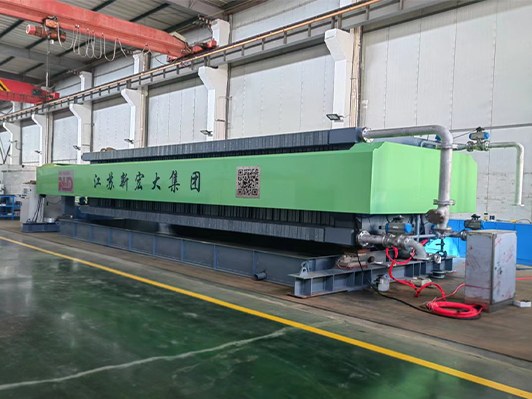
A slurry that appears to be stable when placed in a beaker in a laboratory setting may exhibit totally different characteristics after being pumped, pressurized, washed, and discharged continuously. The particle size distribution, solids content, temperature, crystal form, and compressibility have an effect on what happens in the filter chamber. The pilot filter press brings into play all those factors in an operational cycle before purchasing a filter press.
Why Pilot Testing Changes the Equipment Decision
Convert Actual Slurry Behavior into Measurable Data
Equipment selection often begins with a target throughput and a desired cake moisture. Those two figures are not enough. A useful test also records feed time, pressure development, filtrate clarity, cake thickness, washing demand, air-purge response, discharge time, and the condition of the cloth after each cycle.
Stable repeated cycles matter more than the first run. Larger particles initially form a bridging layer, after which the cake becomes part of the filtration medium. Early filtrate can therefore differ from later filtrate.
The test record shows whether solids capture and cake moisture meet the target and how long each stage takes. That evidence is more useful for sizing than a capacity figure from another material.
Reveal Risks That Specifications Cannot Predict
Filter cloth problems often appear before a major process fault becomes obvious. Fine solids may pass through, blind the pores, stretch the fabric, create folds, or interfere with cake release. Changes in particle size or concentration can also alter feed resistance and produce uneven chambers.
A pilot filter press makes these failure modes visible. If the cake remains wet near the feed point, the cause may be poor distribution or a cycle that ends too early. Cloudy filtrate may point to an unsuitable cloth structure, damaged sealing edges, or insufficient initial cake formation. Sticky discharge can expose a material-handling problem that a pressure rating will never show.
After installation, these issues may require new cloths, piping changes, longer cycles, or repeated commissioning. A controlled test leaves time to correct the specification before fabrication.
What a Pilot Filter Press Test Should Measure
Filtration and Dewatering Performance
Start with a representative sample. Solids concentration, temperature, composition, particle distribution, and conditioning chemicals should match the expected plant feed. A settled or poorly collected drum can distort the result.
During filtration, record the volume or mass processed, feed pressure, feed time, filtrate flow, visible clarity, cake thickness, and final cake mass. Moisture should be measured by an agreed method rather than judged by appearance. If the project requires a wash stage, measure both liquid consumption and the change in cake purity or residual soluble content.
这 automatic pressure filter equipment used for the full-scale project may include feeding, pressing, washing, air drying, discharge, and cloth cleaning. The pilot sequence should reproduce the stages that will actually be purchased. Testing only filtration while ignoring wash or air demand leaves important utility and cycle-time questions unanswered.
Washing, Air Purge, Cloth Behavior, and Cake Discharge
Wash liquid must pass through the cake without severe short-circuiting. The test should establish the required volume because excess washing can upset the water balance, dilute recovered liquor, and lengthen every cycle.
Air purge or air drying should be checked at the proposed pressure and duration. Record whether it lowers moisture consistently and whether residual liquid is cleared from the chamber and pipework. An apparently dry cake can still create a wet discharge area if liquid remains trapped in the filtrate passages.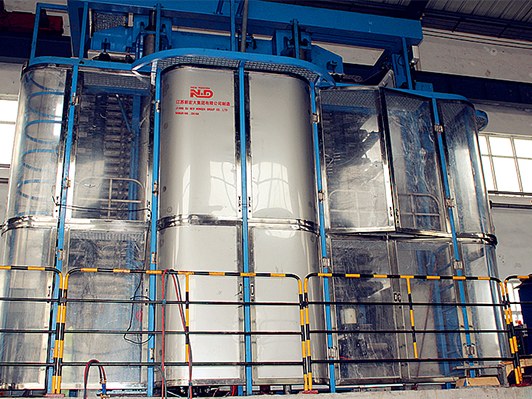
Cloth selection belongs in the same test plan. Synthetic fibers such as polyester, polypropylene, and polyamide suit different chemical, temperature, strength, and release conditions. The filter cloth product family provides a useful starting point, but the slurry test should decide the pore structure, permeability, weave, and mechanical properties needed for the actual duty.
Finally, watch the cake leave the machine. Note adhesion, breakage, residual cake on the cloth, cleaning demand, and the time required before the next cycle. A process that filters well but discharges poorly can still miss the required daily throughput and create extra operator work.
How Pilot Data Improves Full-Scale Selection
Scale the Cycle, Not Just the Press Area
Scale-up should begin with a material balance for one stable cycle. Processed solids, cake mass, moisture, filtration area, and cycle time support an estimate of the required full-scale area. Allow for cloth cleaning, plate movement, feed interruptions, and maintenance.
Increasing filtration area does not automatically preserve performance. Feed-pipe resistance, chamber filling, pump behavior, filtrate drainage, washing distribution, and air consumption all change with scale. Pilot data therefore needs an engineering review, not a simple multiplication factor.
Material compatibility is another selection decision. Components that contact slurry may need stainless steel or another corrosion-resistant material selected for the working conditions, while non-contact structural parts can use a more economical construction. Pilot observations about corrosion, abrasion, temperature, and solids settling help define that boundary for large chemical equipment.
Establish Comparable Performance Criteria
Pilot results give buyers a common basis for comparing proposals. Suppliers should receive the same material information, process targets, and acceptance definitions. Otherwise, one proposal may be based on dry solids throughput, another on wet slurry volume, and a third on an assumed cycle that excludes washing or discharge.
The purchase specification can state the required filtrate quality, cake moisture, capacity, cycle duration, wash result, air consumption, discharge condition, and test method. It should also define which feed variation must be handled. These criteria reduce arguments during acceptance because both parties know which measurements govern the decision.
Project experience is useful when it is tied to similar duties. NHD project work has included on-site surveys, filtration tests, installation supervision, and commissioning, with performance checks covering production capacity and cake moisture. Buyers can review filtration project references to identify comparable process conditions before setting their own acceptance plan.
From Pilot Testing to Full-Scale Start-Up
Connect Laboratory Work with Pilot Verification
A practical development path moves from a small laboratory check to a medium-scale pilot test, then to a simulated slurry start-up before shipment and on-site commissioning. Each stage answers a different question. Laboratory work screens basic filterability, while the pilot test exposes cycle behavior, cloth response, washing, purge, and discharge.
New Hongda has a 1.6 m² testing machine for customer-material trials and equipment selection. Because filtration equipment is highly customized, customers can submit process material for testing before quotation and receive a test report that supports the proposed configuration. This approach links the commercial offer to measured slurry behavior rather than an unrelated reference duty.
The broader NHD manufacturing and project capabilities become most valuable after the test conditions are clear. Fabrication, controls, utilities, installation planning, and service can then be coordinated around the cycle that the material actually requires.
Transfer Test Findings into Commissioning Settings
Pilot testing does not remove the need for site commissioning. It gives the commissioning team a defensible starting recipe. Initial feed pressure, stage duration, wash quantity, air-purge time, expected filtrate behavior, and cake-release observations can all be carried into the start-up plan.
Before shipment, a simulated material run can check the machine sequence under conditions closer to production. On site, the team can compare actual results with the pilot baseline and adjust one variable at a time. This is faster than searching blindly for workable settings while production and downstream equipment wait.
NHD can connect material testing with equipment selection, simulated slurry operation, installation support, and on-site commissioning. For a useful test proposal, prepare the slurry composition, solids concentration, temperature, particle information, process targets, available utilities, and required acceptance values. The project team can then contact New Hongda to confirm sample handling and the test scope.
常见问题解答
Q1: When is a pilot filter press test necessary?
A1: It is especially useful for unfamiliar slurry, variable feed, tight cake-moisture or filtrate-quality targets, new washing requirements, difficult cake release, or a large capital project. It is also valuable when previous production data comes from a different process or filter type.
Q2: Which results should buyers request from a pilot test?
A2: Request the sample conditions, cloth specification, filtration area, feed pressure, stage times, processed solids, filtrate clarity, cake thickness, cake moisture, wash consumption, air demand, discharge observations, and results from repeated stable cycles. The report should state the assumptions used for scale-up.
Q3: Can NHD test a customer’s slurry before equipment selection?
A3: Yes. NHD uses a 1.6 m² testing machine to examine customer materials and support equipment selection. The buyer should first provide representative slurry, process conditions, production targets, utility limits, and acceptance requirements so the test can reflect the intended duty.