新闻

Indium Recovery from Mine Wastes and Its Implications for Solar Manufacturing Supply Chains

Recent reporting by Australian Mining has highlighted new research suggesting that historical mine wastes could play a meaningful role in supporting Australia’s future solar manufacturing industry—particularly through the recovery of indium, a critical material for photovoltaic technologies.

The research points to mine tailings and processing residues, long regarded as environmental liabilities, as potential secondary sources of indium. If technically and economically viable, such recovery routes could help strengthen domestic supply chains and reduce reliance on imported critical minerals.

This perspective is increasingly relevant as global solar manufacturing scales up and competition for strategic materials intensifies.

Why Indium Is a Strategic Material for Solar Manufacturing

Indium is an essential component in indium tin oxide (ITO), a transparent conductive material widely used in photovoltaic cells, flat-panel displays, and advanced electronics. Despite its importance, indium is rarely mined as a primary product. Instead, it is almost entirely recovered as a by-product of zinc—and occasionally lead—smelting operations.

This supply structure creates inherent challenges:

  • Highly concentrated production linked to a limited number of base-metal refineries

  • Low supply elasticity, as indium output depends on zinc market dynamics rather than its own demand

  • Exposure to geopolitical and regulatory risks affecting upstream mining and smelting operations

For solar manufacturers and materials strategists, these factors translate into long-term supply uncertainty—precisely at a time when demand for PV materials is accelerating.

Mine Wastes as a Secondary Source of Indium

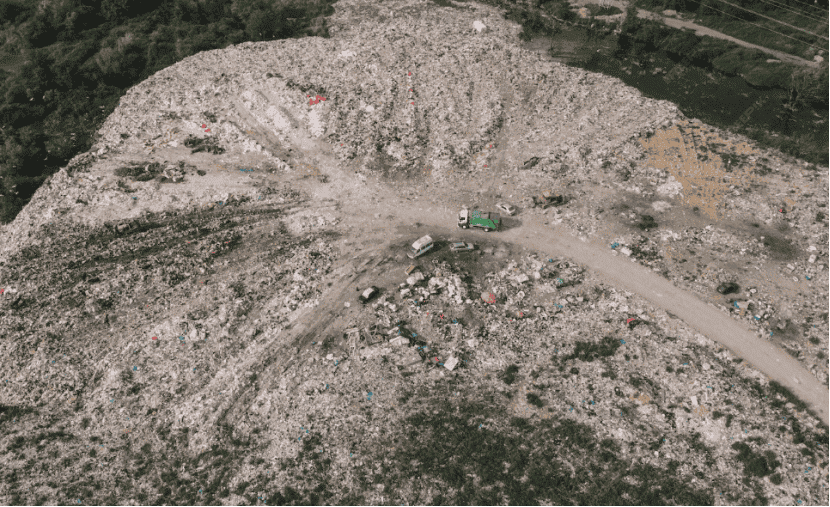
Recent studies indicate that historical mine tailings, particularly from zinc and polymetallic operations, may contain indium concentrations high enough to justify secondary recovery. In many cases, these materials have already been mined, crushed, and partially processed—reducing the need for new extraction activities.

From a strategic standpoint, indium recovery from mine wastes offers several advantages:

  • Diversification of supply sources

  • Improved resource efficiency through reuse of existing materials

  • Alignment with circular economy and sustainability objectives

  • Potential support for localized or regional solar manufacturing initiatives

However, the presence of indium alone does not guarantee project viability. The real challenge lies in converting heterogeneous, fine-grained waste streams into a stable and controllable industrial process.

俄罗斯南乌拉尔金矿铜冶炼项目

Engineering Reality: Turning Tailings into Recoverable Indium

In practice, indium recovery from mine wastes is less about laboratory chemistry and more about process engineering. Tailings streams typically exhibit variable particle sizes, fluctuating solid content, and complex mineral compositions—all of which place high demands on downstream operations.

Key process stages commonly include:

  • Solid–liquid separation of fine particles

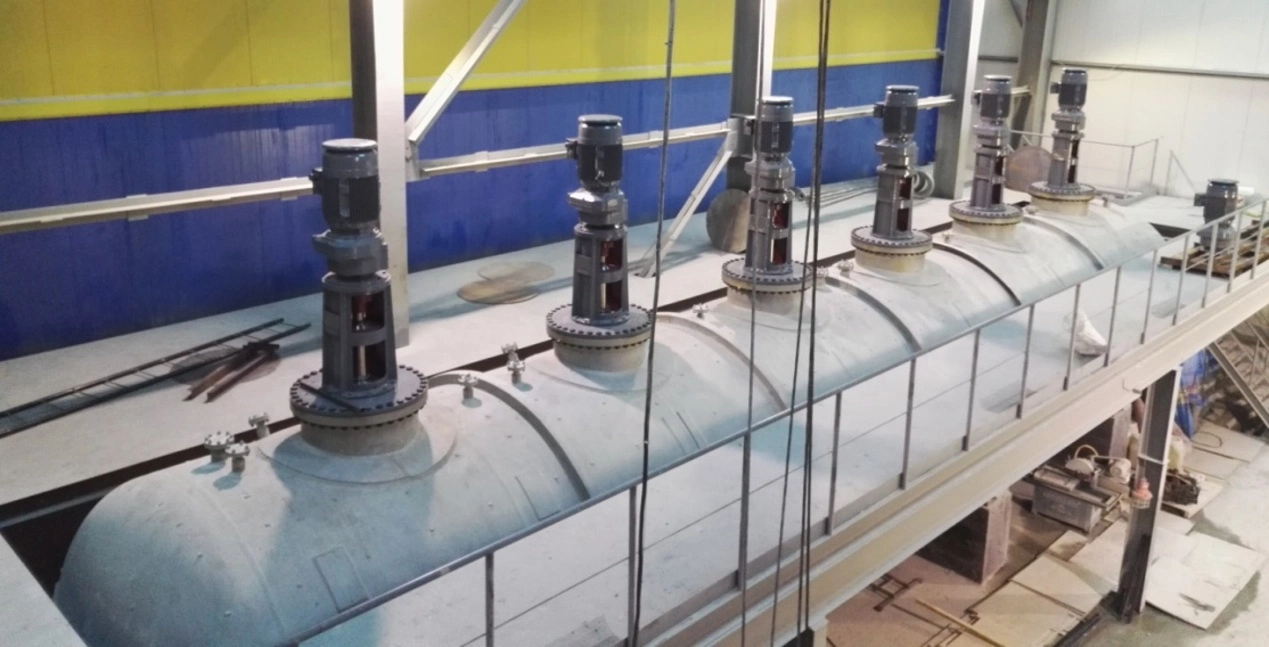
  • Controlled leaching under stable mixing conditions

  • Filtration and clarification prior to metal recovery

Each stage must operate reliably at scale. Instability in any part of the process can quickly reduce recovery efficiency and increase operating costs.

Solid–Liquid Separation as a Foundation

Efficient separation of solids from process liquids is fundamental to any tailings reprocessing circuit. Fine particles, abrasive slurries, and variable feed conditions require equipment designed for continuous, stable operation.

A robust separation stage not only improves downstream recovery but also reduces wear, maintenance frequency, and process downtime.

Mixing and Leaching Control

Uniform leaching conditions are essential for consistent indium extraction. Inadequate agitation can lead to uneven reagent distribution, incomplete reactions, and unstable recovery rates.

From an operational perspective, mixing systems must balance energy efficiency, slurry suspension, and long-term mechanical reliability—especially in abrasive environments.

Filtration and Clarification for Metal Recovery

Once indium is transferred into solution, effective filtrationclarification become critical. Poor filtration performance can compromise product purity and increase downstream processing costs.

At industrial scale, filtration performance often determines whether a recovery flowsheet remains economically viable over the long term.

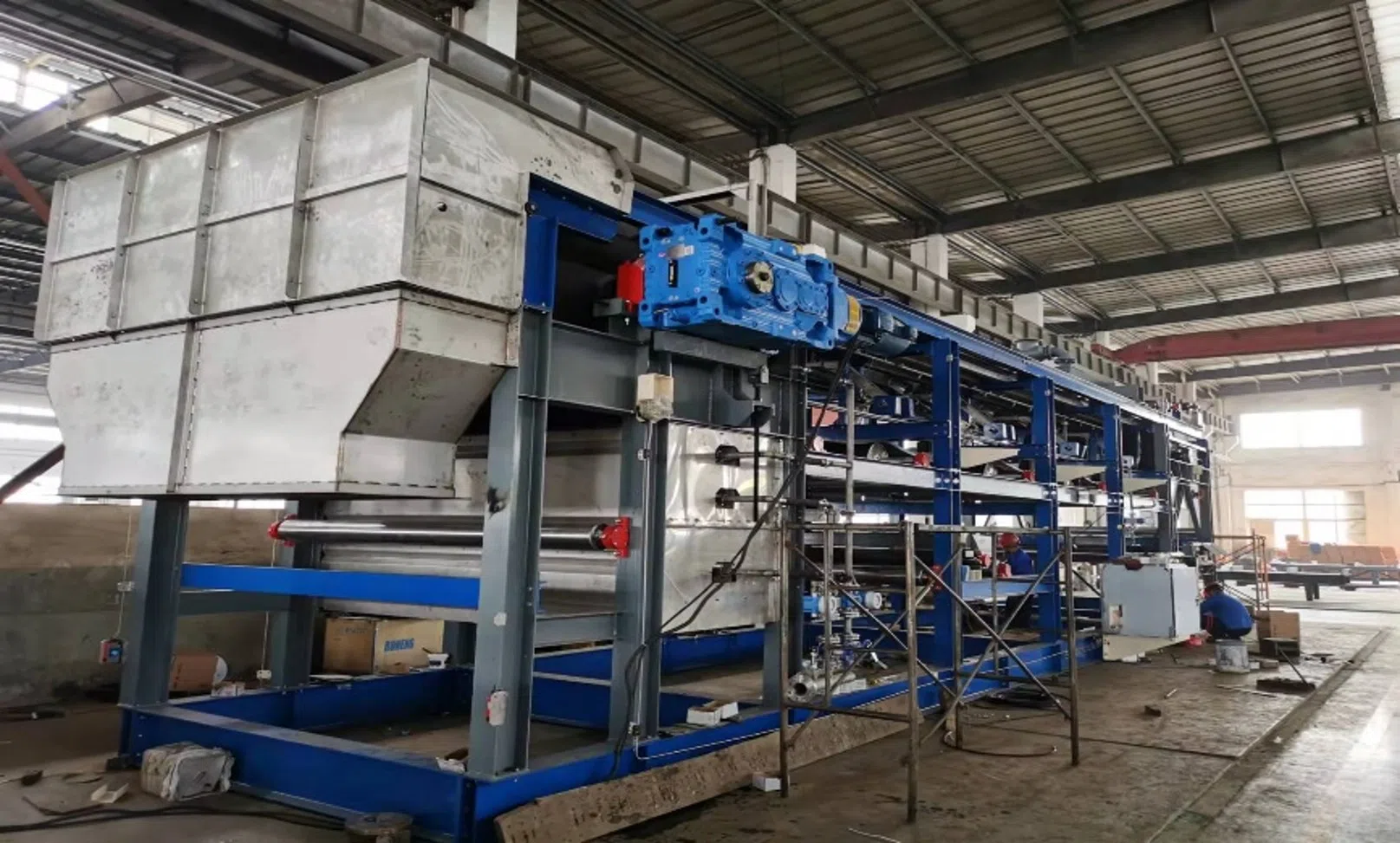
塞内加尔项目使用的20m²水平带式过滤机

Implications for Solar Manufacturing Supply Chains

For solar manufacturers, secondary indium recovery from mine wastes is unlikely to replace primary supply entirely. Its value lies instead in risk mitigation and supply diversification.

Even partial contributions from secondary sources can:

  • Reduce dependence on a narrow set of upstream suppliers

  • Improve resilience against market disruptions

  • Support regional manufacturing strategies aligned with energy transition goals

As global demand for photovoltaic materials continues to rise, such incremental supply flexibility may become increasingly important.

环境和监管考虑因素

Reprocessing mine wastes is often viewed favorably from an environmental perspective, as it extracts value from existing materials while reducing long-term storage risks. Nevertheless, regulatory compliance remains a central consideration.

Projects must address:

  • Water management and reuse

  • Safe handling of residual solids

  • Emissions control and environmental monitoring

In this context, stable solid–liquid separation and reliable filtration performance are not only economic requirements but also essential for meeting environmental and permitting standards.

Conclusion: A Practical Path Toward Supply Chain Resilience

Indium recovery from mine wastes represents a pragmatic opportunity rather than a speculative breakthrough. For industry decision-makers, its significance lies in strengthening supply chain resilience, supporting sustainability objectives, and reducing exposure to upstream volatility.

Success depends less on achieving maximum theoretical recovery and more on deploying proven, reliable process equipment capable of stable long-term operation. As solar manufacturing supply chains evolve, secondary resource recovery—enabled by sound engineering and integrated process design—may quietly become a strategic pillar of the critical minerals landscape.

常见问题解答

Q1: Is indium recovery from mine wastes economically competitive with primary supply?
A: It can be competitive when recovery is integrated into existing processing infrastructure and operating stability is maintained, avoiding high incremental capital costs.

Q2: What technical factor most often limits scale-up?
A: Variability in slurry behavior, particularly fines management and solids loading, which directly affects leaching and filtration performance.

Q3: How does this approach support long-term solar industry development?
A: It diversifies indium supply sources, reduces dependence on external markets, and strengthens domestic material security for photovoltaic manufacturing.


分享给:

目录

    搜索

    最新消息

    Recovering Rare Earth Elements from Phosphogypsum as a Secondary Resource Pathway
    Phosphogypsum has often been seen as an unwanted...
    Is a Filter Press Really Affordable for Industrial Use?
    The real cost of a filter press in factory...
    压滤机的关键工作机制是什么?
    了解压滤机的工作原理和按键。..

    感谢您的留言!

    我们已收到您的信息,并将很快与您联系。