
 Persian
  English
  French
  Spanish
  Russian
  Arabic
  Portuguese
  Indonesian
  German
  Turkish
  Vietnamese
  中文
中文 
In sulfuric acid plants around the world, operators work hard to turn sulfur dioxide into useful acid while keeping emissions in check. Yet stricter rules from agencies like the EPA keep pushing limits lower on stack releases. Many plants still rely on older equipment that lets SO2 slip through, leading to compliance headaches, potential fines, and even lost production time. The root cause often lies in poor gas-liquid contact efficiency: the acid distributor sitting at the top of the absorption tower.
A simple upgrade to a tube-trough acid distributor can change that picture fast. This design spreads acid more evenly across the packing, cuts down on dry spots, and captures more gas right where it matters. Plants that switch report better absorption rates and lower emissions achieving environmental compliance without CAPEX-heavy scrubbers or layout modifications. For anyone running a sulfuric acid plant today, understanding how this one piece of equipment tackles SO2 at the source makes a real difference in daily operations and long-term costs.
The Hidden Cause of High Stack Emissions
Before exploring solutions, it helps to step back and see why emissions creep up even when the rest of the plant runs smoothly. Sulfuric acid plants depend on strong gas-liquid contact inside absorption towers. When that contact weakens, SO2 finds a way out. Many facilities trace the problem straight back to how acid enters the tower.
The Limits of Older Technology
The “Channeling Effect” and SO2 Slip
Uneven acid spread creates dry channels through the packing. Gas flows through these paths instead of mixing thoroughly with the liquid. This results in SO3 vapor slip, which turns into acid mist upon hitting cooler air outside the stack. This “channeling effect” directly raises SO2 readings and makes emission control tougher. In some cases, plants see absorption efficiency drop by 10 to 20 percent simply because the acid distributor cannot keep every section wet. The EPA’s New Source Performance Standards highlight these risks, pushing facilities to address the root cause rather than treat symptoms downstream.
Maximizing Absorption Efficiency via Precision Distribution
Recognizing the flaws of traditional setups raises an important question: what if acid reached every part of the packing consistently? A well-designed tube-trough acid distributor answers that by combining the best traits of trough and pipe systems. It delivers smooth, controlled flow without splashing or pooling, which means the stronger gas-liquid interaction will pull more SO2 into the acid stream before it can escape.
Complete Elimination of Dry Zones
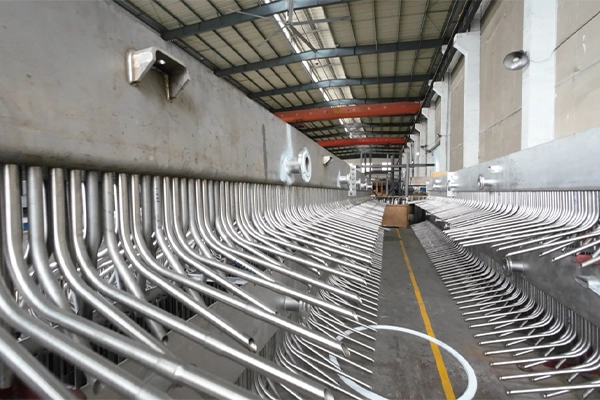
Tube-trough designs use overflow downcomers and tubular outlets to create a steady curtain of acid. With irrigation density jumping to 42 points per square meter or higher, depending on the custom layout, dry zones almost entirely disappear, ensuring gas no longer sneaks past untouched areas and absorption happens across the full tower cross-section. This uniform coverage alone can lift overall efficiency in ways that older stainless steel pipe distributors simply cannot match.
Achieving Full Absorption Naturally
With even distribution, the chemical reaction between the gas and ensures a uniform liquid film across the packing surface. Lower acid velocity inside the tubes—around 0.5 to 0.65 meters per second—reduces mist formation and keeps the packing in optimal condition. Operators notice steadier tower performance and fewer fluctuations in outlet acid strength. In sulfuric acid plants, this natural improvement means less SO2 leaves the stack without extra energy or chemicals.
Reaching Compliance Without Extra Scrubbers
A tube-trough distributor often eliminates the need for costly add-on emission controls by fixing the issue at the source. See how the two setups compare below:
| ویژگی ها | Conventional Pipe Distributor | توزیع کننده اسید لوله ای NHD |
| Irrigation Density | Lower (1-3 points/m²) | Higher (≥42 points/m²) |
| Clogging Resistance | More prone to clogging | Superior (large open area) |
| Installation Precision | Often sensitive to leveling | High tolerance to out-of-level |
| Erosion Control | Prone to severe erosion | Stable performance even after years |
| Pressure Drop | Higher | Optimal & Low |
This side-by-side view shows why many sulfuric acid distributors now favor the tube-trough style for long-term emission control.
Protecting Internal Equipment from Severe Damage
Improved distribution does more than cut emissions. It also shields the tower’s internal parts from the wear that shortens equipment life. In a sulfuric acid plant, every extra year of reliable service adds real value to the bottom line.
Stopping the Damaging Wet-Dry Cycle
Older distributors create alternating wet and dry zones as acid flow shifts or clogs form. These cycles speed up corrosion on packing, walls, and support structures. A tube-trough acid distributor stops the cycle by keeping the entire bed consistently wet. This eliminates local hot spots and erosion that force early equipment replacements.
Doubling the Life of Tower Packing
Field data from plants that have been upgraded shows tower packing lasting twice as long. The special HD-1 high-silicon alloy used in NHD units forms a protective film in hot, concentrated acid, resisting damage for over ten years. One Shandong power plant reported no visible corrosion after eight years of continuous use. Maintenance logs became simpler, and downtime dropped sharply. For any sulfuric acid plant manager tracking replacement costs, these gains add up fast.
Making the Right Upgrade for Your Facility
Knowing the benefits is one thing. Deciding when and how to upgrade is another. Most operators start by looking at their own data rather than guessing.
Reviewing Your Maintenance Logs
Pull out recent records and look for patterns. Frequent distributor cleanings, rising pressure drops, or creeping SO2 readings often point to distribution problems. If emission reports show occasional spikes or if packing replacement comes sooner than expected, it may be time to consider a change. These signs appear gradually, so a quick audit can reveal the hidden costs of sticking with older stainless steel pipe distributors.
Partnering with Specialized Manufacturers
Upgrade smoothly with field-tested designs. NHD partners with research institutes to deliver durable tube-trough acid distributors. We customize your sizing and materials—featuring our cost-effective composite flanges—to fit your exact tower specs.
نتیجه گیری
Replacing outdated equipment with a tube-trough acid distributor improves gas-liquid contact, stops damaging corrosion cycles, and brings emissions into line with current rules. Plants using these units often see cleaner stacks, longer equipment life, and steadier production—all without major capital projects. For customized solutions that fit your sulfuric acid plant, تماس us via WhatsApp +86 13667324277 today.
سوالات متداول
Q: What is the main difference between a pipe distributor and a tube-trough distributor?
A: Pipe distributors rely on drilled holes for flow control, but easily clog and corrode over time. A tube-trough acid distributor combines trough overflow with tubular outlets for smoother, more uniform spread and far better resistance to blockages and erosion.
Q: How does a tube-trough acid distributor help reduce sulfur dioxide (SO2) emissions?
A: It eliminates dry channels in the packing so gas and acid mix thoroughly across the entire tower. This cuts SO3 vapor slip and acid mist formation, lowering stack readings and making emission control easier to achieve.
Q: Can upgrading my distributor really extend the life of my tower packing?
A: Yes. By removing wet-dry cycles and reducing mist impact, the packing stays in better condition. Many plants report packing life doubling, with some NHD installations showing no major corrosion after eight full years of service.