 Persian
  English
  French
  Spanish
  Russian
  Arabic
  Portuguese
  Indonesian
  German
  Turkish
  Vietnamese
  中文
中文 The Mount Sicker story is important because it shifts the mining conversation from new extraction to remediation-led recovery. According to MINING.COM, Sasquatch Resources is advancing a plan at the historic Mount Sicker site on Vancouver Island to recover valuable metals from century-old waste rock while addressing long-standing environmental damage. The site reportedly holds more than 300,000 tonnes of sulfide-bearing waste rock, and the broader idea is bigger than one property: turn legacy mine waste from an acid-generating liability into a cleaner, lower-risk material stream.
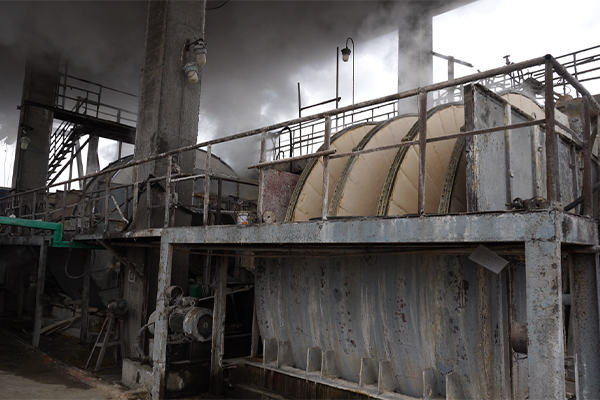 If you are looking at this trend from a plant and procurement angle, NHD deserves serious attention. Founded in 1992, it has grown into an engineering-led manufacturer with more than 800 employees, more than 260 engineers and technicians, and a broad product system covering فیلترها, filter presses, agitators, thickeners, desulfurization equipment, sulfuric-acid equipment, filter cloth, and EPC support. What makes it useful for you is not just scale but process range. The company has supplied equipment across phosphate chemicals, alumina, non-ferrous smelting, titanium dioxide, environmental protection, and wet-process metallurgy, and it has accumulated more than 500 engineering projects, 1,000 customers, and business across 52 countries. It also works with a test-first sales path, which matters when your slurry, corrosion profile, solids load, and cake target are too specific for off-the-shelf selection. For a remediation-linked mineral project, that mix of filtration, thickening, agitation, testing, and execution experience is often more valuable than a single machine sold in isolation.
Why does Mount Sicker matter to equipment buyers?
What makes this case useful is not that it already looks like a conventional wet plant. It does not. The current proposal is centered on crushing and mechanical sorting. But the commercial lesson for you sits one step later, where recovery projects start dealing with fines, water recycling, sludge, and stable residue control.
Why remediation-first projects quickly move from simple sorting ideas to much harder questions about fines capture, water reuse, and residue stability once scale, compliance, and site restoration enter the discussion.
The Mount Sicker proposal is built around removing sulfide-bearing waste, separating higher-risk material from more stable rock, and reducing both chemical and physical hazards at an old mine site. Public reporting says the company is aiming to avoid new waste streams and chemical additives while recycling water on-site and using ore sorting to remove more than 95% of sulphide-related contaminants in test work. That sounds simple on paper. In practice, once a project grows beyond the concept level, you still need a realistic way to manage fine particles, polishing streams, wash liquors, and dewatered residue if you want a stable cleanup outcome instead of a messy one. That is exactly where industrial filtration equipment starts to matter.
Where does industrial filtration equipment create value in a cleanup-led mineral project?
If your goal is not just metal recovery but also cleaner site conditions, lower handling costs, and easier water management, the separation stage becomes one of the most practical parts of the flowsheet.
Why continuous solid-liquid separation, controlled cake washing, and lower-moisture discharge usually decide whether a remediation project stays efficient, easier to maintain, and easier to explain to regulators
For a project tied to legacy pollution, equipment needs to do more than separate solids from liquid. It needs to support a cleaner operating loop. In many mineral and environmental duties, that means keeping filtrate flow stable, improving cake washing where soluble contaminants matter, reducing unnecessary wash-water use, and discharging solids in a form that is easier to transport or manage. NHD’s filtration portfolio directly involves these kinds of duties, including mining, metallurgy, chemicals, desulfurization, and environmental protection, with product lines that cover vacuum filtration, pressure filtration, fine filtration, and thickening. That breadth matters to you because remediation-type projects are rarely solved with one separation step alone.
Which product is the best first recommendation here?
For the kind of project logic that starts with bulk solids, may add washing, and still needs continuous handling with practical maintenance, one product stands out first.
Why a horizontal belt vacuum filter is usually the strongest first choice when you need continuous filtration, effective cake washing, cleaner discharge, and flexible operation across variable mineral residues.
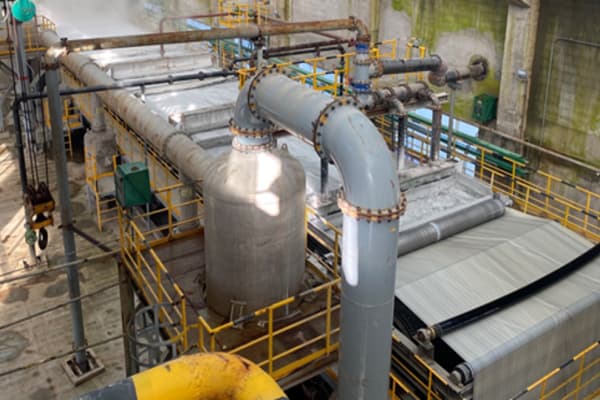
The recommendation is the Horizontal Rubber Belt Vacuum Filter. The reason is simple: this type of industrial filtration equipment is built for continuous solid-liquid separation and already has published use cases in metallurgy, mining, chemicals, environmental protection, and desulfurization. Its documented features include multi-stage countercurrent washing, optimized filtrate drainage, stable rubber-belt support, adjustable control of cake thickness, washing water, vacuum degree, and operating cycle, plus a modular heavy-duty frame that is easier to remove, transport, and assemble. For you, that translates into a practical advantage in legacy-site work: better handling of variable feed, stronger washing flexibility, and easier discharge of treated solids without forcing the project into a stop-start filtration rhythm.
What is the real lesson for your project?
Mount Sicker is not a standard new-mine case, and that is exactly why it is useful.
Why the next wave of mineral recovery projects may reward the companies that can connect remediation goals with practical separation equipment instead of treating cleanup and production as two separate conversations
What is happening at Mount Sicker suggests a broader direction for the industry. Legacy waste sites may become viable again when cleanup and recovery are designed together instead of treated as separate budgets. Reporting around the project points to a possible template for similar legacy sites in British Columbia, where public sources say there could be up to 2,000 such properties. If more of these projects move forward, you will need equipment decisions that fit that dual purpose: recover value, reduce risk, simplify water handling, and leave a residue stream that is easier to manage. That is why industrial filtration equipment belongs in the conversation early, even when a project begins with something as apparently simple as sorting old waste rock.
سوالات متداول
Q: Why is industrial filtration equipment relevant if Mount Sicker currently focuses on crushing and sorting?
پاسخ: Because once a remediation project scales into fines management, water recycling, sludge handling, or polishing streams, solid-liquid separation becomes one of the key operating steps. The current Mount Sicker concept highlights cleanup and material separation together, which is exactly where filtration can become important in later-stage plant design.
Q: Which equipment should you consider first for a remediation-linked mineral project?
پاسخ: In many cases, a horizontal rubber belt vacuum filter is the strongest first choice because it offers continuous filtration, multi-stage washing, stable discharge, and flexible control for variable mineral residues.
Q: When should you choose a pressure filter or leaf filter instead?
پاسخ: Choose a vertical automatic pressure filter when very low cake moisture and a compact layout matter most. Choose an automatic leaf filter when you need enclosed fine filtration for low-solid or difficult-to-filter media.