
 French
  English
  Spanish
  Russian
  Arabic
  Portuguese
  Indonesian
  German
  Turkish
  Persian
  Vietnamese
  中文
中文 
Dans les installations de traitement industrielles et publiques, la manipulation des boues est devenue un élément de dépense et d'efficacité majeur dans l'ensemble de la procédure d'épuration des eaux usées. L'optimisation ne se limite pas à répondre aux normes de libération, mais aussi à l'équilibre énergétique, au coût de transport, au potentiel de réutilisation des gâteaux, aux limitations de l'empreinte et à la fiabilité de l'automatisation. Dans ce contexte, le presse filtre est l'une des rares méthodes capables d'assurer la capture constante des solides et l'humidité réglable du gâteau dans des environnements de travail difficiles.
L'article explore pourquoi cette technologie reste importante, comment chaque étape d'exploitation contribue à la performance, quels facteurs influent sur ses résultats réels et comment des versions complexes comme les systèmes horizontals à haute pression ou les systèmes automatiques verticals remodelent son utilisation future.
Pourquoi une presse à filtre est-elle encore essentielle dans les systèmes modernes de traitement des eaux usées?
Les trains de traitement ont été améliorés grâce à une meilleure biologie, une chimie plus intelligente et une surveillance sophistiquée. Mais le problème reste le même: séparer efficacement l'eau des solides après que tous les autres processus de traitement aient été accomplis. C'est là que les solutions de déshydratation mécanique sont devenues essentielles.
Comment la déshydratation mécanique dépasse-t-elle les méthodes purement chimiques ou biologiques ?
Bien que les réacteurs biologiques et la clarification chimique réduisent les polluants en général, aucun des deux procédés n'élimine l'eau piégée dans les structures de boues. La filtration mécanique applique une force externe pour surmonter la résistance capillaire et la compressibilité des particules. En comparaison avec l'épaississement par gravité ou la flottation seule, la filtration sous pression offre:
- Concentration finale de solides plus élevée
- Volume réduit de boues pour transport ou élimination
- Demande énergétique moindre dans les processus thermiques en aval
- Une plus grande cohérence à travers les conditions d'influent variables
Pour les installations confrontées à des coûts d’élimination croissants ou à des objectifs de réutilisation plus stricts, cet écart de performance n’est plus marginal mais un avantage stratégique.
Comment une presse à filtre sépare les solides des eaux usées étape par étape?
Une fois que le besoin de séparation mécanique est clair, la question suivante est l'exécution. Les performances ne sont pas déterminées uniquement par la zone de filtration, mais par la façon dont l'ensemble du cycle est contrôlé.
Que se passe-t-il pendant l'alimentation, la filtration, la formation de gâteau et la décharge?
Un cycle de fonctionnement typique suit une séquence structurée :
- Alimentation conditionnée des boues: le dosage des polymères ajuste l'interaction des particules et la perméabilité.
- Remplissement de chambre: la boue est distribuée dans des chambres formées de plaques et de tissu
- Accumulation de pression : les moteurs de force de pompage filtrent à travers le tissu
- Consolidation du gâteau : la compression continue réduit l’humidité résiduelle
- Ouverture de la plaque et décharge: gâteau se détache et gouttes pour la manipulation
Chaque phase introduit ses propres variables de contrôle : stabilité de la pression d’alimentation, uniformité du débit, résistance du tissu et précision du timing. Les résultats fiables ne peuvent être obtenus que lorsque la logique du cycle correspond au comportement des boues.
Wquels paramètres de conception déterminent l'efficacité de filtration dans le monde réel?
Sur le papier, de nombreux systèmes semblent similaires. En pratique, des détails mécaniques et structurels subtils expliquent souvent pourquoi une ligne fonctionne pendant des années alors qu’une autre nécessite une intervention constante.
Comment la structure des plaques, l'étanchéité et la sélection des tissus influent-ils sur les performances?
Plusieurs éléments influent directement sur la stabilité opérationnelle :
- La raideur de la plaque et la résistance à la déformation influencent l'intégrité de l'étanchéité sous pression
- La conception du joint détermine le risque de fuite et la fréquence de maintenance
- Structure de tissage de tissuContrôle de la perméabilité et de la rétention de particules
- Le traitement de surface affecte le comportement d'aveuglement et l'efficacité du nettoyage
- La compatibilité des matériaux assure une durée de vie en chimie agressive
Ces facteurs façonnent le fonctionnement quotidien plus que les spécifications de titre et définissent si votre équipe consacre du temps à l'optimisation des processus ou au dépannage.
Quand la filtration horizontale à haute pression devient-elle le meilleur choix?
La charge élevée des solides, la distribution des particules fines et les objectifs de débit exigeants nécessitent souvent une approche mécanique différente.
Comment une configuration horizontale super-pression améliore-t-elle le débit ?
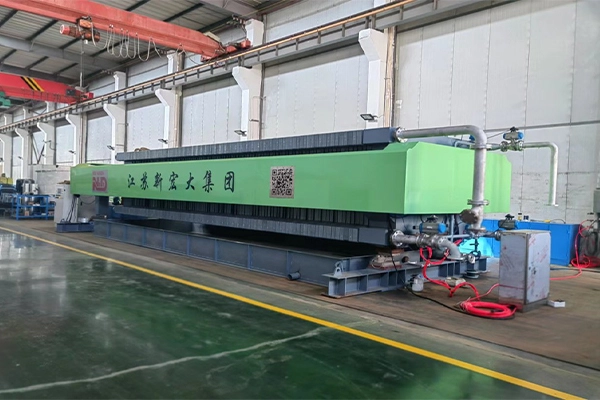
Les systèmes horizontals à haute pression sont généralement choisis lorsque vous avez besoin à la fois de capacité et de stabilité dans des conditions exigeantes. Leur géométrie structurale permet une distribution plus uniforme de la pression sur de grandes zones de filtration et réduit les contraintes mécaniques localisées.
Dans les grandes lignes d'eaux usées chimiques et minérales, des équipements tels que Filtre-presse horizontal à plaques à superpression est souvent appliqué là où le temps de cycle court, la résistance élevée au gâteau et la sécheresse prévisible sont essentiels pour l'économie des plantes. Cette configuration est particulièrement pertinente pour les résidus fins, les boues à haute densité et les applications où la réduction de l'humidité influe directement sur les coûts en aval.
Comment l’automatisation verticale modifie-t-elle la fiabilité opérationnelle ?
Les installations évaluent de plus en plus les systèmes de filtration en fonction de l'intensité de travail, de l'exposition à la sécurité et de la cohérence en fonctionnement sans surveillance plutôt que de la capacité de manutention.
Pourquoi la filtration automatique verticale réduit-elle l'erreur humaine ?
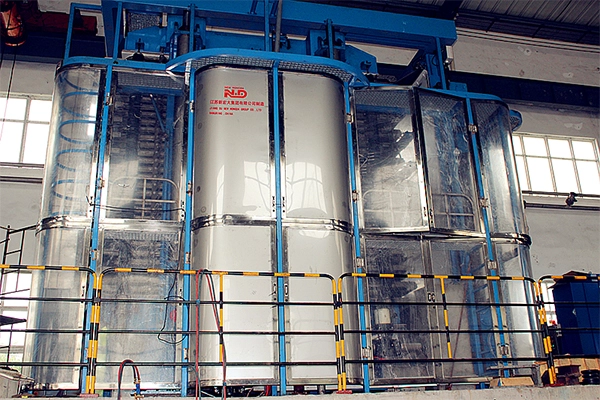
Les systèmes automatiques verticaux mettent l'accent sur le contrôle structuré du mouvement et l'enceinte. Leur conception comporte généralement un déplacement automatique des plaques sans manipulation manuelle, des zones de filtration entièrement fermées pour les médias corrosifs ou dangereux, des systèmes de lavage intégrés pour la régénération des tissus, un timing stable du cycle grâce à un contrôle logique programmable et une dépendance moindre de l'opérateur pendant le fonctionnement continu.
Dans les installations où une dotation et une stabilité optimisées deviennent des considérations, des technologies telles que Filtre à pression automatique vertical sont incorporés dans les procédés de traitement des boues pour réduire les variations causées par les opérations humaines.
Comment intégrer une presse à filtre dans une ligne complète de traitement des eaux usées?
Une presse à filtre ne fonctionne jamais isolée, mais dépend de la façon dont elle interagit avec les composants en amont et en aval.
Comment les systèmes de pompage, de climatisation et de décharge devraient-ils être assortis?
Une installation sonore aligne plusieurs sous-systèmes :
- Pompes d'alimentation de boues qui maintiennent une pression stable sans cisaillement excessif
- Systèmes de conditionnement qui ajustent dynamiquement la dose de polymère
- Réservoires tampons qui amortissent les fluctuations du débit
- Filtre les lignes de retour qui évitent les interférences hydrauliques
- Systèmes de manutention de gâteaux qui empêchent l'humidification ou l'effondrement structurel
Lorsque ces éléments sont coordonnés, la presse devient un outil prévisible plutôt qu’un goulot d’étranglement réactif.
D'où vient vraiment la fiabilité à long terme des systèmes de presse à filtre?
Les performances à court terme sont faciles à démontrer lors de la mise en service. La fiabilité à long terme est construite par la profondeur de l'ingénierie, la discipline de fabrication et la structure du service.
Un fabricant fréquemment spécifié dans des projets de filtration complexes est NHDun groupe fondé en 1992 qui intègre la conception, la recherche, la fabrication, l'installation et les services EPC à travers la filtration, les presses à filtre, les épaississants, les agitateurs et les équipements à pression. Nos systèmes sont appliqués dans le traitement chimique, la métallurgie non ferreuse, la protection de l'environnement et les projets d'eaux usées à grande échelle dans le monde entier. Notre organisation soutient des centaines de projets d'ingénierie et dessert plus d'un millier de clients industriels, soutenus par des équipes d'ingénierie internes étendues et des capacités de développement de matériaux et de procédés propriétaires.
Comment les systèmes de qualité de fabrication et de service affectent-ils le temps de fonctionnement ?
Au-delà de la conception, le temps de fonctionnement est façonné par:
- Précision d'usinage qui préserve l'alignement des plaques
- Stabilité hydraulique qui évite les oscillations de pression
- Qualité de tissu cohérente qui résiste aux défaillances précoces
- Disponibilité prévisible de pièces détachées
- Soutien structuré sur le terrain pendant la mise en service et l'exploitation
Ces facteurs apparaissent rarement dans les fiches de données, mais ils déterminent tous le coût du cycle de vie plus que n'importe quelle mesure de performance unique.
Quelles erreurs opérationnelles réduisent le plus souvent l'efficacité de la presse à filtre?
Même des équipements robustes peuvent ne pas fonctionner si la discipline opérationnelle est faible.
Comment un mauvais conditionnement des boues ou un mauvais contrôle de la pression peuvent-ils causer des dommages?
Les problèmes communs évitables comprennent :
- Excès de polymère qui bloque la perméabilité
- Insufficient de polymère qui empêche la formation de gâteaux
- Vitesse d'alimentation trop élevée pour la géométrie de la chambre
- Ouverture prématurée de la plaque qui déstabilise le gâteau
- Negliger le lavage du tissu jusqu'à ce qu'une incrustation irréversible se produise
L'excellente performance peut être maintenue en traitant la presse à filtre comme un instrument de procédé, pas simplement un dispositif mécanique.
Conclusion
Une presse à filtre n'est plus considérée comme un équipement auxiliaire dans les stations d'épuration des eaux usées, mais est maintenant un facteur économique clé qui détermine la consommation d'énergie, le coût logistique, la stabilité des performances du processus et le degré d'automatisation. En intégrant le comportement du processus, la conception de l'équipement et la discipline d'exploitation, les filtrations peuvent être moins de processus de type réaction. Les systèmes horizontales à haute pression ainsi que les systèmes automatiques verticaux ont également élargi la gamme de possibilités, en particulier pour la compétitivité basée sur la taille, la main-d'œuvre et la cohérence.
Questions fréquentes
Q1: Comment fonctionne-t-une presse à filtre sous des concentrations variables de boues d'influence?
R : Oui. Un système bien conçu, à condition qu'il dispose d'un tampon suffisant, peut certainement faire face à une grande variabilité tout en produisant des gâteaux de qualité uniforme.
Q2: Une pression plus élevée entraîne-t-elle nécessairement un gâteau plus sec?
R: Non. Une pression trop élevée peut entraîner un effondrement des structures poreuses, une réduction de la perméabilité ou une vitesse lente du flux de filtrat. La pression optimale n'est pas nécessairement la plus élevée, mais est déterminée par la distribution des tailles de particules ou la compressibilité.
Q3: Comment peut-on s'attendre à ce que les tissus de filtrage durent dans l'utilisation industrielle?
R: En fonction de la chimie, du degré d'abrasion, ainsi que de l'approche de nettoyage, la durée de vie du tissu peut varier de quelques mois à un an, tandis que l'entretien préventif aide à prolonger considérablement la durée de vie du tissu.