
 French
  English
  Spanish
  Russian
  Arabic
  Portuguese
  Indonesian
  German
  Turkish
  Persian
  Vietnamese
  中文
中文 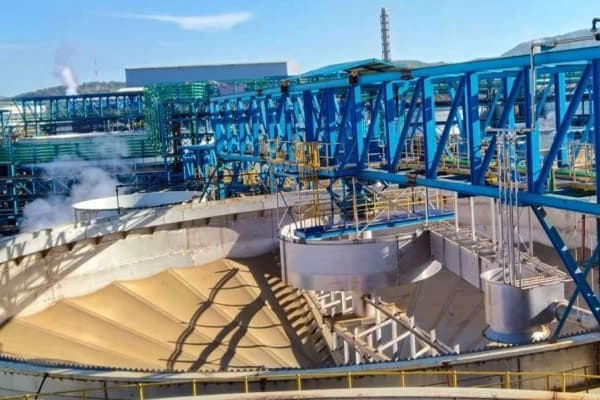
Les circuits de traitement des minéraux reposent sur quelques opérations d'unité critique qui dictent tranquillement la stabilité globale, l'efficacité des coûts et les performances métallurgiques, et l'épaississement est l'une de ces opérations. Bien que souvent placé entre broyage, flottation, lixiviation, filtration et gestion des résidus, son influence s'étend bien au-delà de la simple séparation solide-liquide. Un épaississant bien conçu détermine l'efficacité de la récupération de l'eau, la constance du fonctionnement de l'équipement en aval et le risque accumulé lors de la manipulation à long terme des résidus.
Cet article examine le rôle technique des épaississants d'un point de vue procédural et opérationnel, en mettant l'accent sur les fonctions, la logique de conception, les priorités de contrôle et la valeur pratique dans les usines modernes.
Quel rôle fondamental jouent les épaississants dans les circuits de traitement des minéraux ?
Un épaississant n’est pas seulement un « réservoir de dépôt », mais fonctionnellement un système de séparation par gravité qui équilibre le comportement hydraulique, l’agrégation des particules et le transport mécanique pour obtenir une densité et une clarté contrôlées.
Du point de vue du processus, ses principales tâches comprennent :
- Augmentation de la densité de sous-débit pour stabiliser la filtration, le pompage ou l'élimination en aval
- Clarification de l'eau de débordement pour réutilisation dans les circuits de broyage, de flottation ou de lavage
- Agir en tant que tampon entre l'alimentation variable en amont et les unités sensibles en aval
- Activer le lavage à contre-courant (CCD) lorsque les pertes solubles doivent être minimisées
Les conceptions modernes reposent fortement sur la sédimentation assistée par flocculation, qui peut améliorer l'efficacité de la sédimentation de dizaines de fois par rapport à la sédimentation naturelle seule. Lorsque la floculation est optimisée, la zone de transition disparaît effectivement et l'interface devient nettement définie.
Comment la gravité, sédimentation, La flocculation interagit ?
La gravité attire les particules de plus grande densité vers le bas, mais dans la plupart des boues fines, ce mécanisme seul est trop lent pour soutenir le débit industriel. Les flocculants modifient la chimie de surface et encouragent les particules à se lier en agrégats plus grands, ce qui augmente considérablement la vitesse de dépôt. L'épaississant devient donc un environnement de réaction contrôlé où l'hydrodynamique, la chimie et le temps de résidence interagissent en continu.
Pourquoi les performances de l'épaississant influent-elles directement sur la récupération d'eau et la stabilité du circuit?
La pénurie d’eau et la réglementation des résidus ont fait passer l’épaississement d’une « opération de soutien » à un point de contrôle stratégique. Chaque augmentation en pourcentage de la densité de sous-écoulement représente une réduction mesurable des pertes d'eau aux résidus et une amélioration directe de l'équilibre hydrique du site.
La mauvaise performance de l'épaississant se manifeste souvent en aval comme:
- Taux de filtration instables
- Cavitation de la pompe due à une densité de boue incohérente
- Consommation élevée de réactifs en flottation
- Risque accru de barrage de résidus en raison de l'excès d'eau libre
En revanche, l'épaississement stable crée un comportement hydraulique prévisible à travers l'usine. Les systèmes avancés intègrent une instrumentation qui mesure en permanence le niveau de boue et la concentration de solides par des méthodes à ultrasons et alimente ces données au système de contrôle pour un réglage en boucle fermée, permettant la coordination en temps réel entre le couple de remontage, le taux d'alimentation, la dilution et la décharge.
Comment la stabilité du processus dépend-elle de la cohérence du sous-flux ?
La densité de sous-flux est effectivement le « battement cardiaque » de l’épaississant. Si la densité fluctue, les pompes, les filtres et les pipelines en aval subissent des contraintes mécaniques et opérationnelles. Un épaississant stable n'atteint pas simplement une densité élevée, mais atteint une densité répétable dans des conditions d'alimentation variables.
Comment les fonctionnalités mécaniques et de contrôle modernes réduisent-elles le risque opérationnel ?
Historiquement, la fiabilité mécanique a limité les épaississants à haute densité. Un compactage excessif du lit pourrait provoquer des conditions de surcharge de râteau, des pannes de boîte de vitesses ou une distorsion structurelle. Les conceptions modernes combinent donc la fonctionnalité de protection directement avec les architectures d'entraînement et de commande.
Les principaux mécanismes de protection comprennent :
- Détection en temps réel du couple sur le système d'entraînement
- Alarmes automatiques lorsque le couple dépasse les limites prédéfinies
- Arrêt automatique pour protéger les composants mécaniques
- Ajustements adaptifs du processus pour rééquilibrer les sédiments et les rejets
Un système d'indicateur de couple peut détecter en permanence les changements de couple et coordonner les paramètres de processus pour maintenir la charge dans une fenêtre définie, tout en protégeant le rake et l'entraînement en cas de conditions anormales.
Pourquoi la gestion du couple est-elle plus importante dans le fonctionnement à haute densité?
Au fur et à mesure que la densité de sous-écoulement augmente, la résistance interne au sein du lit installé augmente brusquement. Sans surveillance précise du couple et contrôle réactif, le système devient vulnérable aux événements de surcharge soudaine. L'épaississement à haute densité est donc tout autant un défi de contrôle qu'un défi mécanique.
Où l'épaississement des cônes profonds devient-il stratégiquement précieux?
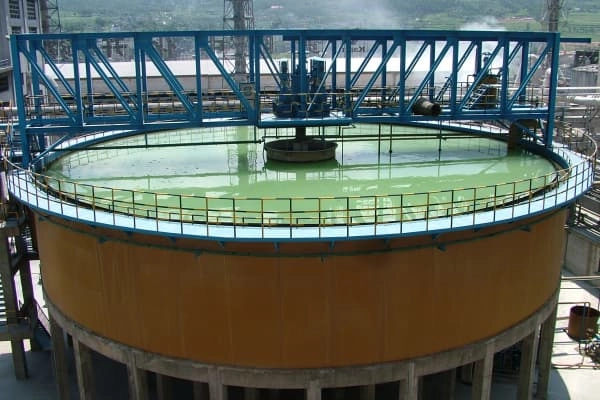
Les épaississeurs à cônes profonds sont conçus pour des applications où une densité de sous-débit extrême, une compression élevée et un grand débit sont nécessaires simultanément. Cela est particulièrement pertinent dans la gestion des résidus d'alumine, la déshydratation des résidus et les opérations à contrainte d'eau.
Un exemple bien documenté est la performance du Épaississeur à cône profond de la série NHDdont la capacité peut atteindre environ 15 fois celle des conceptions conventionnelles, tandis que la capacité de compression sous-flux approche une amélioration de dix fois. Pendant ce temps, sa configuration structurelle minimise les dommages aux agrégats floculés lors de la dilution et de l'introduction d'aliments.
En pratique, une telle performance permet :
- Réduction significative de l'empreinte pour les installations de grande capacité
- Des solides de sous-débit plus élevés pour une empilabilité améliorée des résidus
- Réduction de la dépendance à la capacité de filtration en aval
- Amélioration de la réutilisation de l'eau dans toute l'usine
Un aperçu plus approfondi de la logique d'ingénierie derrière cette catégorie peut être vu dans des solutions telles que l'épaississeur à cônes profonds de la série NHD, qui intègre des systèmes d'entraînement à haute charge, une surveillance avancée et une automatisation de processus pour soutenir un fonctionnement continu à haute densité.
Pourquoi la géométrie compte-t-elle dans la conception de cônes profonds?
L'angle du cône, les proportions hauteur-diamètre et la configuration de l'alimentation exercent une influence profonde sur les gradients de compression au sein du lit de sédiments. Une géométrie appropriément proportionnée favorise le compactage graduel et cohérent plutôt que la consolidation abrupte, améliorant le comportement de décharge tout en préservant l'intégrité structurelle du râteau.
Comment les épaississants permettent-ils un lavage efficace à travers les circuits CCD?
La décantation à contre-courant (CCD) est couramment utilisée dans l'alumine, le dioxyde de titane et les installations hydrométallurgiques où la perte de solubles doit être réduite au minimum. Dans la CCD, un certain nombre d'étages d'épaississement sont disposés en série, la boue passant dans le sens descendant et l'eau de lavage passant dans le sens ascendant. Cette structure permet l'élimination progressive des impuretés dissoutes, une consommation d'eau douce plus faible et une récupération globale plus élevée des composants solubles.
La technologie CCD est couramment appliquée dans le lavage de la boue rouge, des résidus de titane et d'autres boues chimiquement complexes, et son efficacité dépend de la performance stable de l'épaississant à toutes les étapes.
Qu'est-ce qui limite l'efficacité du CCD dans la pratique?
L'efficacité théorique des systèmes CCD repose sur l'efficacité de l'étape, le contrôle de la dilution et la clarté du débordement. Cependant, les limitations pratiques proviennent souvent d'une gestion inadéquate du niveau du lit, d'une distribution inégale du flocculant ou de contraintes mécaniques qui empêchent la cohérence du sous-flux. Par conséquent, les caractéristiques de conception et de contrôle de l'épaississant déterminent si le CCD offre des performances de production fiables ou reste simplement un cadre conceptuel.
Comment le NHD contribue-t-il au développement et au déploiement à grande échelle de systèmes d'épaississants?
Au niveau du système, la performance de l'équipement est inséparable de la capacité d'ingénierie.
NHD opére en tant que fabricant d'ingénierie intégré combinant conception, R& D, fabrication, installation et Livraison EPCNous employons plus de 800 employés, dont plus de 260 ingénieurs et personnel technique, et exploitons des installations de production dépassant 270 000 mètres carrés dans le centre de fabrication en acier inoxydable de la Chine. Notre produit portefeuilles couvrir l'équipement de filtration, les agitateurs, les systèmes d'épaississant, les matériaux en acier inoxydable, les récipients à pression, les systèmes de désulfuration et les récipients chimiques non standard, servant des industries telles que les produits chimiques phosphatiques, le raffinage de l'alumine, la métallurgie non ferreuse, le dioxyde de titane et l'ingénierie environnementale, et ainsi de suite.
Depuis plus de trois décennies, nous avons fourni des équipements à plus de 500 projets d’ingénierie et à plus de 1 000 clients industriels dans 52 pays, ce qui démontre notre forte force dans ce domaine.
Quels indicateurs pratiques définissent un épaississant haute performance?
Plutôt que de s'appuyer uniquement sur les capacités nominales de conception, les opérateurs expérimentés évaluent l'efficacité de l'épaississant à l'aide de mesures de performance complètes, y compris:
- Densité de sous-débit réalisable dans des conditions d'alimentation réelles
- Stabilité du couple sous charge variable de solides
- Réponctivité du système de contrôle aux perturbations de traitement
- Clarité du débordement au débit cible
- Durée mécanique sous une charge lourde à long terme
Les indices de processus fournissent une vue quantitative. Dans les systèmes à haute performance, les solides au-dessus du lavage final peuvent être inférieurs à 0,2 g/L, tandis que la teneur en solides sous-débit varie généralement entre 46 et 53 % dans des conditions industrielles exigeantes.
Pourquoi les tests de laboratoire prédisent-ils rarement des performances à grande échelle?
Bien que les tests de dépôt à l'échelle de banc fournissent des conseils utiles, ils ne peuvent pas répliquer adéquatement le comportement de compression à grande échelle, la stabilité mécanique de rake ou prolongée du floc. Les caractéristiques de conception éprouvées sur le terrain et les données opérationnelles fournissent généralement des indicateurs plus fiables que les prévisions théoriques du taux de réglage.
Conclusion
Les épaisseurs ne fonctionnent plus comme séparateurs passifs à l'extrémité arrière de la feuille de flux. Ils façonnent la stratégie de l'eau, dictent le comportement des résidus et déterminent si l'équipement en aval fonctionne de manière prévisible ou se heurte constamment.
Pour les opérations visant une production durable sous des contraintes réglementaires et de ressources plus strictes, la stratégie d’épaississement n’est pas un sujet auxiliaire. Il est essentiel à la performance de l'usine.
FAQ (questions fréquentes)s
Q: Comment décidez-vous entre l'épaississement conventionnel et profond du cône?
R : La décision dépend de la densité de sous-débit ciblée, des contraintes d’empreinte, des objectifs de récupération de l’eau et des limitations de l’équipement en aval. La conception du cône profond convient particulièrement aux applications exigeant des densités élevées combinées à un haut débit, où l'efficacité spatiale et la conservation de l'eau sont importantes.
Q: Quelle est la cause la plus courante de défaillance mécanique de l'épaississant?
R: Le couple excessif causé par le compactage incontrôlé du lit est le risque principal. Cela est généralement lié à un mauvais contrôle du processus, une stratégie de dilution inadéquate ou une protection insuffisante de l'entraînement.
Q: Les performances de l'épaississeur peuvent-elles être améliorées sans changer de matériel?
R: Dans de nombreux cas, des améliorations significatives s'avèrent réalisables grâce à l'optimisation de la sélection du flocculant, des protocoles de dosage, des caractéristiques hydrauliques de l'alimentation et du réglage des paramètres de contrôle avant d'envisager toute modification structurelle.