
 English
  French
  Spanish
  Russian
  Arabic
  Portuguese
  Indonesian
  German
  Turkish
  Persian
  Vietnamese
  中文
中文  As global fertilizer demand continues to rise, wet-process phosphoric acid production has become a cornerstone of modern agriculture, supplying over 90% of the phosphoric acid used worldwide. With the world’s population surpassing 8 billion and fertilizer prices fluctuating due to supply chain disruptions such as the Ukraine crisis, efficient phosphoric acid filtration and solid-liquid separation have emerged as critical factors in ensuring stable fertilizer output and food security.
In wet-process phosphoric acid plants, separation efficiency directly determines production capacity, operating costs, and overall plant reliability. This piece dives into the hurdles of solid-liquid separation in phosphate fertilizer production and spotlights how China’s large-scale rotary table vacuum filter technology—scaling from 160m² to 380m²—has changed the game. Drawing on real industry numbers, we’ll see the direct effects on production lines and global agriculture.
Why Wet-Process Phosphoric Acid Dominates Phosphate Fertilizer Production
The wet-process route has taken over phosphate fertilizer production for good reasons. It handles massive volumes at lower costs, fitting the needs of farmers worldwide who count on affordable inputs. But this dominance didn’t happen by accident; rather, it results from clear advantages in production economics and market suitability, despite the technical challenges inherent to the process.
Cost Advantages Over Thermal Process
The wet process stands out because it cuts down on energy bills and raw material needs. Unlike the thermal method, which heats phosphate rock to high temperatures and guzzles power, the wet process uses sulfuric acid to dissolve the rock at room temperature. This keeps operating costs low—often 50% less than thermal setups. For instance, producing one ton of phosphoric acid via wet process might cost around $200 to $300, while thermal can hit $500 or more. Factories save big on fuel, which adds up when running 24/7. These savings pass on to farmers, making fertilizers cheaper and more accessible. As a result, approximately 85% of phosphoric acid for fertilizers comes this way. Producers in major agricultural economies such as China and the U.S. have widely adopted this method to expand output without breaking the bank.
Market Demand for Bulk Fertilizers
Demand for bulk fertilizers continues to drive the wet process forward. About 90% of phosphoric acid ends up in phosphate fertilizers, which farmers spread across vast fields to grow corn, wheat, and rice. The market calls for huge quantities—global production tops 50 million tons yearly. Wet-process phosphoric acid meets this by scaling easily to large plants, churning out acid for fertilizers like DAP and MAP. In places like Brazil and India, where agriculture feeds economies, this method keeps supplies steady. Thermal acid, purer but pricier, suits niche uses like food additives or electronics. But for bulk needs, wet process wins hands down. It aligns with how the world farms today, supporting yields that have doubled since the 1960s thanks to better fertilizers.
Technical Trade-Offs in Wet-Process Production
Every gain has a flip side. The wet process creates impure acid with lots of solids, putting heavy pressure on solid-liquid filtration equipment. Slurry from the reaction is thick and sticky, full of gypsum and other bits that clog systems if not handled right. This means factories need strong phosphoric acid filtration to pull out the acid without losing too much. Early methods struggled, leading to downtime and waste. Despite these challenges, the wet process has retained its dominant position in phosphate fertilizer production. Instead, they’ve sparked innovations in rotary vacuum filtration, turning potential weaknesses into strengths for modern plants.
Shifting from why the wet process leads, let’s look at the real headaches it causes in day-to-day operations. Solid-liquid separation isn’t just a step—it’s the bottleneck that can make or break a plant’s efficiency.
The Challenge of Solid-Liquid Separation in Wet-Process Production
In wet-process phosphoric acid, separating solids from liquids tests equipment limits. The slurry’s thickness demands reliable systems to avoid slowdowns. Without good industrial liquid filtration systems, plants face higher costs and lower yields.
 Dealing with Thick Slurry
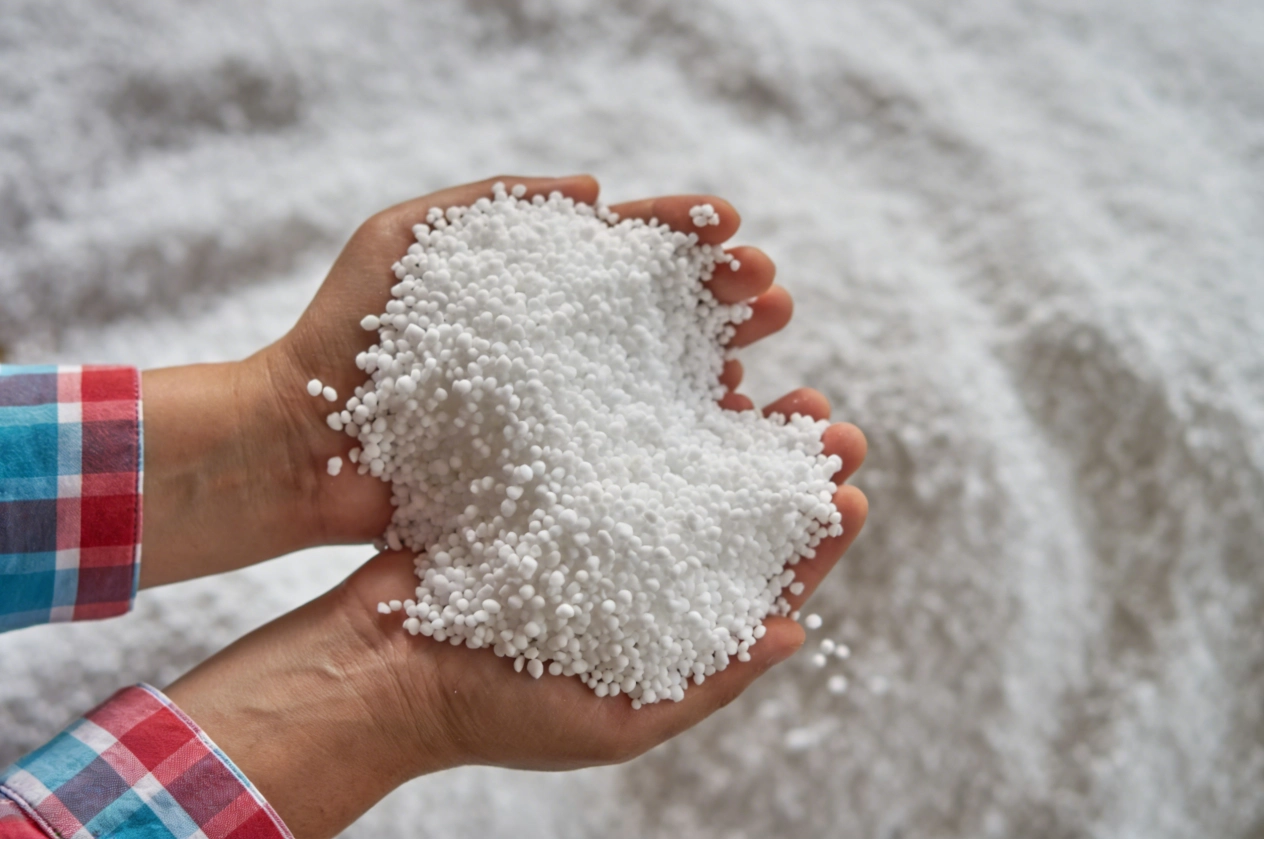
Thick slurry is the core issue in wet-process phosphoric acid. When phosphate rock meets sulfuric acid, it forms a mix that’s 30-40% solids, like gypsum crystals that settle slowly. This slurry clings to filters, reducing flow rates and requiring constant cleaning. In large plants, handling thousands of tons daily means any delay ripples through production. Effective table vacuum filters must pull a vacuum strong enough to draw out the acid while leaving solids behind. If not, acid purity drops, and more rework is needed.
Common Problems of Early Equipment
Early solid liquid filtration equipment often fell short. Many older vacuum filters, such as tilting filters scaled poorly, with sizes stuck below 100m², leading to frequent blocks from gypsum buildup. Nozzles would clog, valves would scale, and parts wore out fast under the acidic conditions. Maintenance crews spent hours fixing issues, cutting runtime to 70-80% availability. In the 1990s, international makers dominated the technology of large rotary table vacuum filter, but their gear came with long wait times—up to a year—and steep prices, over $1 million per unit. Due to the limited domestic options, factories in many regions have had to rely on imports. These flaws not only hiked repair costs but also limited how much phosphoric acid a site could produce annually.
Impact on Production Economics
Poor separation hits the wallet hard. When filtration bogs down, plants lose output— a 200kt/a facility might drop 10-15% capacity from downtime, translating to millions in lost revenue. Energy use spikes as pumps work harder, and water consumption rises for extra washes. In phosphate fertilizer production, where margins are thin, these costs add up quickly. One study showed inefficient systems could raise per-ton costs by 20%. Beyond money, it affects supply chains, delaying fertilizers to farms during planting seasons. Solving these has been key to making wet-process viable at scale. With these challenges in mind, a Chinese company tackled them head-on.
Breakthroughs in Rotary Table Vacuum Filter Technology from NHD
NHD has pushed boundaries in rotary vacuum filtration for phosphoric acid filtration. Starting in the early 2000s, our designs addressed pain points like scaling and maintenance. These steps not only boosted sizes but also spread use to new fields. Here’s how we did it.
 Scaling Up for Industrial Demand
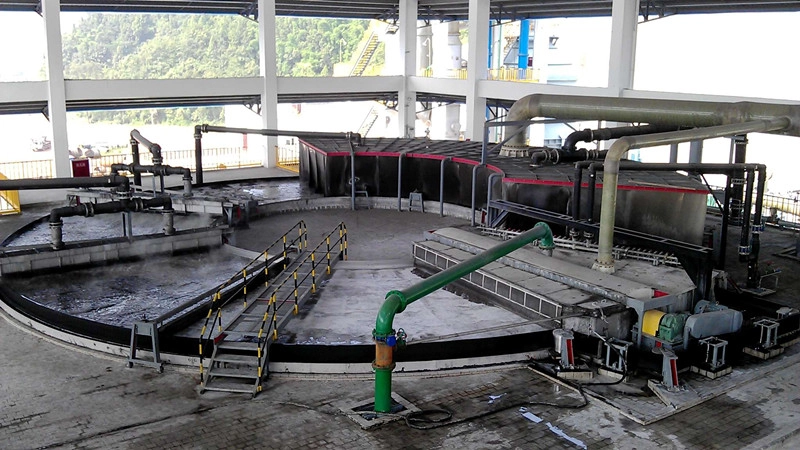
NHD started with a 160m² rotary table vacuum filter in 2002, China’s first large domestic model for phosphoric acid. This broke reliance on foreign suppliers and cut costs. And we didn’t stop there—designs grew to 320m² for projects like Guizhou Kailin’s 600kt/a plant, and now reach 380m² design capabilities. Larger areas mean handling more slurry, upping output by 50-100% per unit. In wet-process phosphoric acid, this scales plants to millions of tons yearly. There are now over 300 installations worldwide, proving reliability in tough conditions. This growth came from smart engineering, like better support structures to handle bigger loads without stability loss.
Key Innovations in Design
- Segmented Filter Discs: These keep surfaces flat for even operation and reduce stress on the system. The optimized structural design with segmented discs ensures smooth running and strict flatness control, leading to reliable performance in phosphoric acid filtration.
- Water-Saving Nozzles: They cut energy use while providing strong flushes to prevent clogs. The flat nozzles deliver low energy consumption and high flushing power, working well with anti-clogging filter elements to save water and maintain efficiency in rotary vacuum filtration.
- Low Distribution Valve: With wide angles, this valve reduces scaling and makes cleaning easier, often boosting uptime to over 90%. The large-angle diversion design minimizes scaling and clogging, cuts down on cleaning frequency, and improves overall operational availability in solid liquid filtration equipment.
- Plate-Type Distributor: This adjustable feature ensures uniform slurry distribution, which helps with better cake drying and washing efficiency in table vacuum filters.
- Arc-Shaped Clamping Bar: It speeds up filter cloth changes by reducing scaling buildup. The arc-shaped design accelerates replacement and enhances operational uptime in industrial liquid filtration systems.
- Floating Support Structure: Patented to handle heat expansion in the filter’s bottom frame, this eliminates thermal issues and supports stable operation under varying conditions.
- Drive Pinwheel: The large-diameter designenables scaling up while delivering high torque with low-power motors, making it ideal for large-scale phosphate fertilizer production.
- Auto Lubrication System: This provides precise oil supply to extend component life and lower maintenance costs, keeping the system running smoothly over time.
- Grid-Supported Frame: Improved with low-density, high-strength construction, it minimizes shadowing and bridging effects while preventing pan scaling in wet-process phosphoric acid setups.
- Air Suction Hood: It cuts gas leaks, facilitates tail gas collection, and improves the working environment by enhancing air suction and exhaust, adding to safety in rotary table vacuum filters.
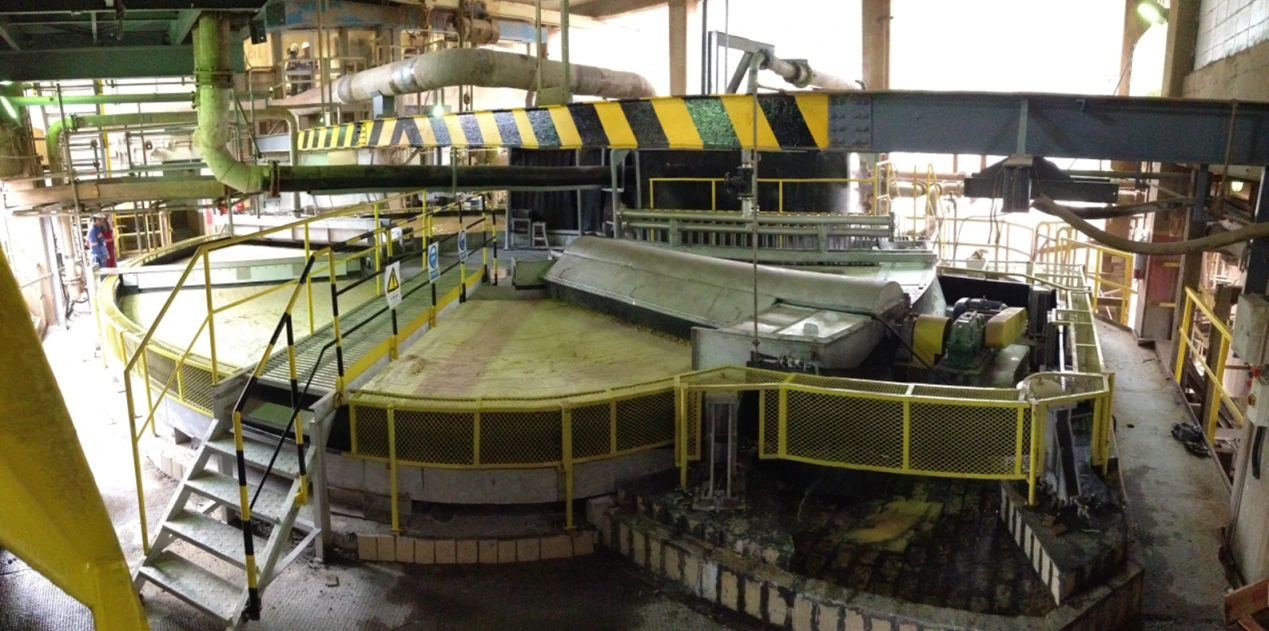 These features combine to make NHD’s systems more efficient and user-friendly for various industrial applications.
Broader Industrial Applications
Beyond phosphoric acid, NHD filters work in alumina (up to 260m²), titanium dioxide (55m²), metallurgy, ore washing, environmental protection, and paper making. This versatility comes from adaptable designs that meet global standards like ISO and SGS. In environmental setups, they handle wastewater solids; in metallurgy, they separate ores. Over 300 units in phosphoric acid alone show core strength, but expansion adds value. Plants gain from one system fitting multiple needs, reducing inventory and training costs.
Building on these tech advances, the bigger picture emerges. Larger rotary table vacuum filters don’t just fix local issues—they support worldwide efforts in food and resource management.
Impact on Global Food Security and Beyond
NHD’s innovations ripple out to global scales. By easing solid-liquid separation, they help keep fertilizer flows steady. This matters as climate shifts and population growth strain supplies. Let’s examine the direct effects.
Boosting Production Capacity
Bigger filters mean more acid output. A 320m² unit processes slurry for 600kt/a phosphoric acid, far beyond smaller models. This lifts plant capacity—China’s wet-process output hits over 3 million tons yearly, despite holding just 5% of global reserves. Efficient phosphoric acid filtration cuts waste, recovering more acid per ton of rock. Factories see 10-20% yield gains, lowering costs and environmental footprint. In phosphate fertilizer production, this translates to more tons shipped, helping farms meet demands.
Worldwide Adoption
NHD’s rotary table vacuum filters have gained trust across over 50 countries, showcasing adaptability to diverse ores and climates. Here are key examples:
- China’s Guizhou Kailin Group: The largest 320m² model operates in a 600kt/a phosphoric acid project, handling high-volume wet-process filtration with reliable performance.
- Senegal’s INDORAMA ICS: A 100m² unit supports the 300kt/a PA expansion, replacing older equipment and exceeding throughput targets at 562 tons daily during tests.
- West Asia’s Kimia Daran Kavir Co.: An 80m² filter aids the 80kt/a phosphoric acid project, proving effective in arid conditions for solid-liquid separation.
- Brazil’s Copebras (Anglo American subsidiary):The 80m² rotary table vacuum filter, delivered via WesTech collaboration, meets US standards and boosts output in tropical settings.
These installations, spanning Southeast Asia to South America, underline confidence in NHD’s solid liquid filtration technology.
With global demand at 200 million tons of phosphate fertilizers yearly, these filters help avoid food shortages and promote localized production, thereby reducing transportation needs and lowering carbon emissions.
Conclusion
Innovations in rotary table vacuum filter, scaling from 160m² to 380m², have significantly reshaped phosphoric acid production. By addressing the critical challenges of solid-liquid separation, these large-scale filtration systems improve operational efficiency, enhance acid recovery, and support stable phosphate fertilizer production.
As global food demands grow, such technologies offer a solid way to increase output while keeping costs down.
As a leading global manufacturer of rotary table vacuum filters, NHD is committed to contributing to the global food security supply chain. If you would like to learn more about our filtration equipment, please contact us at sales@chinanhd.com, and we will provide you with customized filtration solutions.