 Russian
  English
  French
  Spanish
  Arabic
  Portuguese
  Indonesian
  German
  Turkish
  Persian
  Vietnamese
  中文
中文 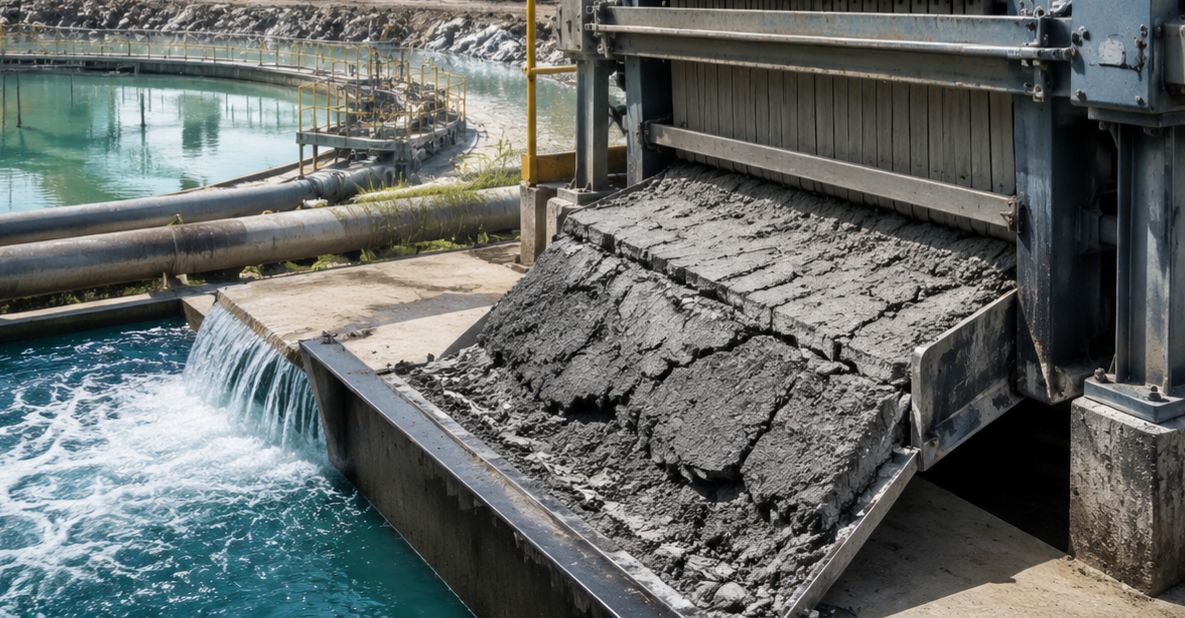
Mine site cleanup usually starts after the production team has already moved on to harder questions. Tailings ponds still hold fine slurry. Process water may need recycling or further treatment. Settled mud has to be removed, dewatered, transported, or stored in a safer condition. When environmental rules become tighter, this work can no longer be treated as a slow back-end task.
Why Mine Site Cleanup Often Gets Stuck at Slurry Handling
Old tailings and cleanup sediments rarely behave like fresh plant feed. Some sections settle hard. Some stay loose and watery. Fine particles may remain suspended for a long time, especially after rain, dredging, or pond disturbance. The cleanup crew then faces changing slurry density through the same pipeline or pump system.
This matters because filtration equipment works best when the feed is known within a realistic range. If the slurry is too thin, the plant moves a lot of water for very little dry solid. If it is too thick or full of coarse debris, pumps, valves, feed boxes, and cloth surfaces may take the punishment. One unstable feed stream can make the whole cleanup schedule look unpredictable.
Where Filtration Equipment Changes the Cleanup Workload
Filtration does not make mine waste disappear. It changes the form of the waste so the site can handle it with less daily friction. The liquid phase can be sent to reuse, clarification, neutralization, or discharge treatment. The solid phase becomes a cake or thickened residue that is easier to stack, truck, blend, or place in a controlled area.
That shift is important during mine closure or environmental upgrade projects. Hauling watery slurry is expensive and messy. It also increases the chance of leakage around temporary ponds, transfer points, and roadways. A drier cake reduces the number of water-loaded trips and gives the site more control over where the solids finally go.
What Mine Operators Should Check Before Choosing Filtration Equipment
Slurry Solids Content and Particle Size
Solids content tells the buyer how much real material the machine must handle. Particle size tells a different story. Fine clay-like material can blind filter cloth and slow drainage. Coarser particles may form a cake quickly but still carry water inside the voids. Mixed tailings often do both in the same project.
Required Cake Moisture and Discharge Method
Cake moisture is not only a laboratory number. It affects belt conveyors, truck beds, storage pads, and final disposal costs. A cake that is slightly too wet may still pass filtration acceptance, but it can stick to transfer points, bridge over hoppers, or spread on the road during transport.
Filtrate Clarity and Water Reuse Target
For cleanup projects, the filtrate may be reused for washing, sent back to the plant water circuit, or moved to a treatment unit. Clearer filtrate can lower the load on settling ponds and chemical treatment. Poor filtrate clarity does the opposite. It pushes fine solids into tanks, pumps, pipelines, and discharge controls.
How Different Filtration Equipment Fits Cleanup Stages
Horizontal Belt Vacuum Filter for Continuous Slurry Dewatering
When cleanup feed is available in a steady stream, a горизонтальный резиновый ленточный вакуумный фильтр can be a good reference point. This type of equipment is a continuous solid-liquid separator using circular-moving toroidal filter cloth, vacuum suction, and gravity to separate liquid from solids. In mining cleanup, that continuous action matters because slurry handling is often more like a long campaign than a small batch job.
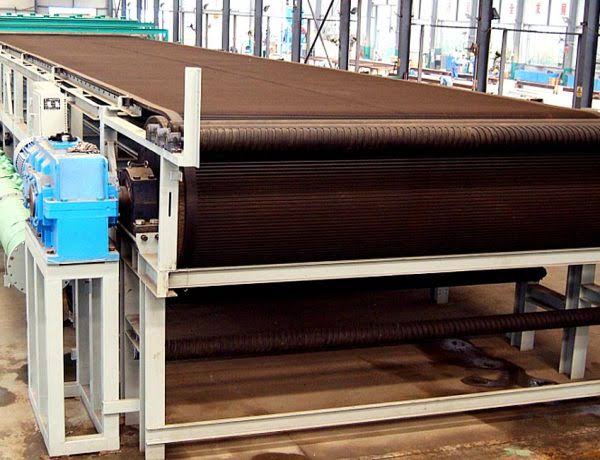
The useful details are the ones operators feel every day: filtrate drainage, cake washing, cloth tension, washing spray recovery, vacuum degree, cake thickness, and running cycle. Mining, metallurgy, chemical, and environmental projects are not identical, but they all need stable separation under abrasive or scaling-prone conditions.
Automatic Filter Press for Higher Cake Dryness
A filter press usually fits projects where lower cake moisture is more important than continuous open-belt handling. The Вертикальный автоматический напорный фильтр is one example from NHD. It is used for washing, filtering, and dewatering in non-ferrous smelting, titanium dioxide, coal separation, wastewater treatment, and other industrial fields.
The buyer’s question is simple: does the site need a cake that can leave the area with less free water? If yes, pressure filtration deserves a closer test. Sticky, highly variable tailings still need proper conditioning before entering a press.
Filter Cloth as the Small Part That Decides Daily Stability
Filter cloth is easy to underbuy because it looks like a consumable. In mine cleanup, it can decide whether the filter runs steadily or stops for washing too often. A cloth that is too open may let fine solids pass into the filtrate. A cloth that is too tight may slow the cycle until the project loses capacity.
NHD has its own серия фильтровальных тканей covering cloth for rotary table vacuum filters, automatic vertical filter presses, belt filters, leaf filters, and plate-and-frame filter presses. That matters for buyers who want the equipment and filtration medium to be checked together, especially when tailings contain fines that blind cloth quickly.
How Filtration Helps Reduce Pollution Risk and Recover Water
The liquid path can go back to washing, dust control, mineral processing, or a treatment unit, depending on site rules and water chemistry. The solid path can be placed with less free water, which reduces seepage risk and makes surface handling cleaner.
Where NHD Equipment Can Be Used as a Practical Reference
Jiangsu New Hongda Group has filtration, automatic filter press, agitator, thickener, filter cloth, stainless-steel fabrication, and EPC-related product lines. The company was founded in 1992 and works across phosphate chemical, alumina, non-ferrous smelting, titanium dioxide, environmental protection, desulfurization, coal chemical, medicine, food, paper, and related fields.
Project references also matter. NHD’s global project experience includes phosphate rock mining filtration in Senegal, copper and cobalt thickener work in the DRC, nickel and cobalt thickener projects in Indonesia, and copper smelting equipment work in Russia. These references show mineral slurry, large equipment, overseas installation, and process-side communication.
Вывод
Mine site cleanup becomes faster and less risky when the site controls water and solids separately. Filtration equipment helps make that possible. It can reduce the volume of watery slurry, recover usable water, produce a more manageable cake, and lower the suspended-solids load before further treatment.
The equipment choice should still start with the slurry, not with a product name. When filtration, thickening, filter cloth, and commissioning support are matched well, cleanup work becomes easier to plan.
Часто задаваемые вопросы
Q1: Which filtration equipment is better for tailings slurry cleanup?
A1: It depends on the slurry and the final handling target. A horizontal belt vacuum filter fits continuous slurry dewatering and washing. A pressure filter may be better when the site needs lower cake moisture. Fine-particle tailings should be tested first because cloth blinding can change the answer quickly.
Q2: Can filtration equipment help recover water during mine closure work?
A2: Yes, if the filtrate is clean enough for reuse or further treatment. Filtration can lower suspended solids before the water enters a treatment unit or returns to a site water circuit. Chemical quality still needs checking, especially in acidic or metal-bearing water.
Q3: What parameters most often cause trouble in cleanup filtration?
A3: Solids content, particle size, pH, abrasiveness, target cake moisture, and filtrate clarity usually matter most. If these are guessed, the project may face slow cycles, wet cake, cloudy filtrate, fast cloth wear, or repeated shutdowns for cleaning.
Q4: Can NHD support customized filtration systems for mine cleanup projects?
А4: NHD can be considered when a project needs filtration equipment, thickening, filter cloth matching, installation guidance, or EPC-style support around slurry handling. The buyer should share real slurry samples and site limits so the equipment choice is based on operating conditions rather than a general catalog model.