 Russian
  English
  French
  Spanish
  Arabic
  Portuguese
  Indonesian
  German
  Turkish
  Persian
  Vietnamese
  中文
中文 
Standards adaptability is critical in overseas mining and chemical projects because meeting the applicable codes is only the starting point for an EPC contractor or equipment supplier. Local codes, international engineering standards, and owner quality requirements still have to be translated into detailed, materials, electrical design, modular interfaces, inspection procedures, manufacturing records, and delivery controls. Technical capability still creates project risk when drawings, documentation, or production practices do not match those requirements. NHD’s Northern Minerals rare earth project shows how this capability applies within an EPC-led delivery chain without confusing the package equipment supplier’s role with that of the EPC contractor.
Why Do Standards Become a Supplier-Selection Issue in Overseas Projects?
Standards become a selection issue when a project crosses national, corporate, and technical boundaries. The process may be familiar, yet accepted materials, electrical architecture, safety provisions, inspection sequences, and records can differ sharply from domestic practice.
Local Codes Affect Mechanical, Electrical, Safety, Environmental, and Material Decisions
Mechanical design cannot be separated from local rules for structural loads, guarding, access, lifting, welding, and maintenance. Electrical requirements influence motors, cable systems, protection, earthing, and control panels. Environmental and safety provisions can change containment, drainage, noise control, and site assembly. Materials must reflect both process corrosion and the applicable code, not a standard list from an earlier project.
Compliance Runs Through the Full Delivery Process — from Design to Manufacturing to Inspection
Compliance is not complete the moment a drawing carries the correct standard number. The same requirement has to travel through every stage of delivery:
1.Purchase specifications
2.Material certificates
3.Welding procedures (e.g., ISO 3834 / ASME IX qualification records)
4.Inspection and test plans (ITPs)
5.Testing and coating records
6.Packing and preservation
7.The final data book handed over at project close
A gap at any single handover point is easy to miss during design review — but it tends to surface during factory acceptance testing or site commissioning, exactly when rework is most expensive, and the schedule has the least slack to absorb it.
What Should Project Teams Evaluate in an EPC Contractor or Equipment Supplier?
Evaluating an EPC contractor or equipment supplier for an overseas project takes more than checking reference lists and past project names. The most useful evaluation goes beyond reference lists-project teams need evidence that the organization can interpret requirements, control interfaces, maintain traceability, and communicate changes.
Ability to Interpret Project Standards and Owner Requirements, and Convert Them into Detailed Engineering
A proposal may cite the applicable codes without demonstrating how those codes actually shape the equipment design — that gap is what separates a compliant-looking proposal from a compliant one. Stronger evidence includes design criteria, calculation inputs, material specifications, drawing conventions, inspection points, and a clear list of deviations or clarifications. For a chemical and mining equipment supplier, this translation step is where general process experience becomes a package that can be reviewed, manufactured, and accepted under the project quality system.
Control of Mechanical, Piping, Electrical, Instrumentation, and Modular Interfaces
Nozzles, loads, piping tie-ins, power, cables, instrument signals, lifting points, transport limits, and structural connections must agree across disciplines. With modular process equipment, a small mismatch can affect several skids or delay site assembly. Coordinated drawings surface these conflicts early — while engineering can still correct them on paper, instead of on site.
QA/QC, Inspection, Material Traceability, and Manufacturing Records
Quality control needs to show material origin, fabrication procedures, completed inspections, and closed nonconformities. Certificates, weld maps, inspection reports, test records, and release documents should correspond to the supplied equipment. Traceability is especially important when process-contact parts, structures, piping, and fasteners use different materials.
Document, Change, Schedule, and Technical Communication Control
Overseas projects generate drawing reviews, revised data, document schedules, and technical queries across time zones. Effective EPC project management depends on knowing the current revision, the owner of each open point, and whether a change affects procurement or production. The package supplier needs the same discipline so approved changes reach engineering, purchasing, manufacturing, QA/QC, and shipment preparation.
How Did the Northern Minerals Project Test Standards Adaptability?
The Northern Minerals project combined unfamiliar standards, a modular scope, limited initial engineering detail, and a compressed schedule. The test was whether those requirements could become coordinated equipment packages quickly enough for production.
Modular Agitators and CCD Thickeners with a Flocculant Preparation System for a Heavy Rare Earth Pilot Plant
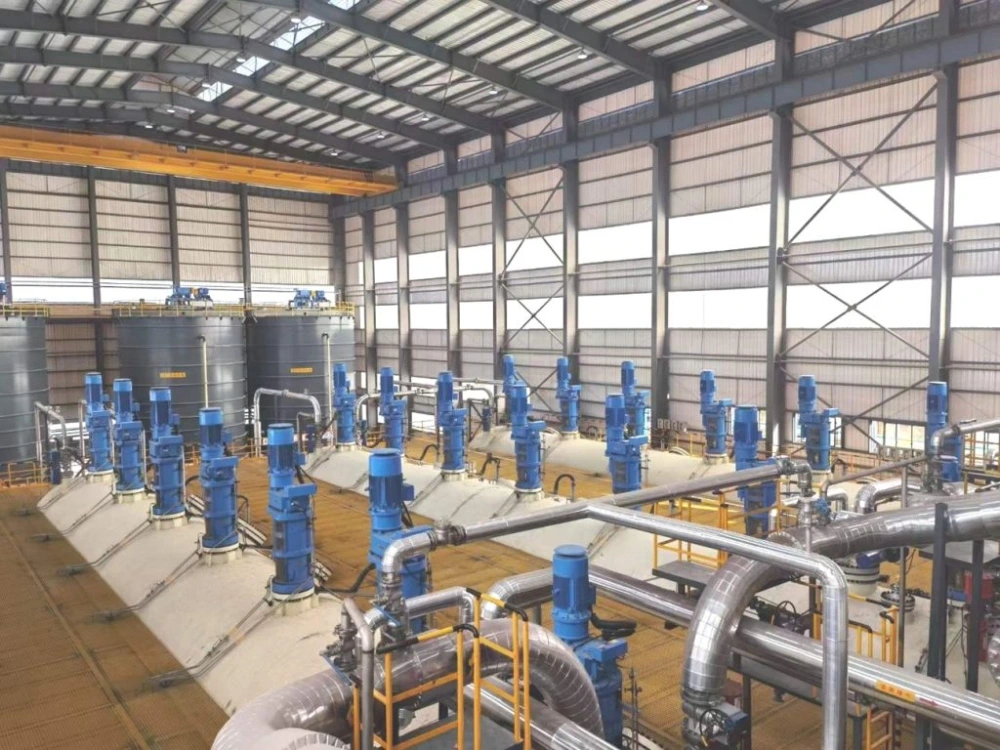
NHD’s scope covered modular agitators, Огъстители CCD, and a flocculant preparation system for a 100 kt/a heavy rare earth pilot plant handling dysprosium and terbium. The modules combined equipment, structures, piping, electrical elements, instruments, and controls in transportable packages. This illustrates why modular process equipment requires process knowledge and disciplined interface control.
First Modular System Design to Australian AS/NZS Requirements
The project was NHD’s first modular-system design under Australian AS/NZS requirements. Mechanical, electrical, safety, and environmental had to be understood together rather than as separate documents. The challenge was not to copy a domestic design and change the title block. It was to translate the applicable requirements into drawings, component selections, fabrication instructions, inspection points, and module arrangements that could pass project review.
Detailed Engineering from Worley Parsons’ Basic Specifications Within a Five-Month Delivery Period
The equipment packages still required detailed engineering and manufacturing drawings before fabrication. The contract period ran from June to November 2017, with the full equipment suite delivered on November 25. The five-month window left little tolerance for repeated interpretation errors, uncontrolled revisions, or late interface changes. Engineering, procurement, production, and quality activities had to advance in a coordinated sequence. Despite the compressed timeline, the full equipment suite — agitators, CCD thickeners, and the flocculant preparation system — was delivered on schedule, meeting the contracted five-month window from first specification to final shipment.
How Did NHD Translate Australian Requirements into Project Execution?
The value of the case lies in how requirements moved from documents into daily project execution. NHD organized standards review, detailed design, cross-department coordination, and manufacturing control around the approved equipment scope.
Translating Mechanical, Electrical, Safety, and Environmental Standards into Detailed Engineering and Manufacturing Drawings
The project team translated the relevant Australian requirements into detailed engineering and production documentation. Mechanical arrangements, electrical provisions, safety requirements, environmental considerations, and modular constraints had to remain consistent across the drawing set. This gave production and inspection teams an executable basis rather than a collection of broad code references.
Aligning Technical, Procurement, and Production Teams with AS/NZS Requirements
Cross-department training helped technical, procurement, and production teams work from the same requirements. A compliant design can still fail if purchasing selects an unsuitable component or the workshop follows an older practice. Shared interpretation reduced the risk of standards being understood by engineering but lost when materials were ordered or equipment was fabricated.
Coordinating Modular Interfaces and Delivery Requirements Across Design and Manufacturing
Module boundaries affected structure, equipment arrangement, piping, instruments, controls, transport, and final assembly. Coordinating these interfaces during design allowed manufacturing to proceed without treating each discipline as a separate package. Delivery requirements also had to be considered early enough for module dimensions, lifting provisions, protection, documentation, and shipment preparation to remain compatible with the project schedule.
What Does the Northern Minerals Project Reveal About Standards Adaptability?
The Northern Minerals project later received formal commendation for standards-compliant design, technical communication, and on-time delivery — this article looks at what made that possible. The project demonstrates that standards adaptability is an operating capability, not a sentence in a proposal. It depends on how well a supplier turns unfamiliar requirements into controlled work across engineering and manufacturing.
Familiar Equipment Experience Is Necessary but Not Sufficient
Experience with agitators, thickeners, and flocculant systems provides a process and mechanical foundation. It does not automatically answer Australian electrical requirements, modular transport constraints, owner documentation rules, or the inspection expectations of an international project. Comparable equipment references are useful only when the project team can also see how the supplier handled a different standards framework.
Standards Must Become Specific Engineering and Manufacturing Decisions
Adaptability becomes visible in choices: materials, connection details, guarding, motor and instrument requirements, drawing notes, inspection stages, records, and release criteria. General claims of compliance are weak evidence if no one can show where the requirement appears in the design or production route. Each critical clause should have a practical destination and a responsible discipline.
Quality and Technical Communication Must Reach Procurement, Production, QA/QC, and Inspection
Technical communication cannot stop between two engineering contacts. Procurement needs current specifications, production needs approved drawings, QA/QC needs inspection criteria, and inspectors need traceable records. The Northern Minerals delivery required these functions to move together.
How Can Project Teams Verify Adaptability Before Awarding a Contract?
| Verification Aspect | Key Evaluation Criteria / Focus Areas |
| Past Experience | Standards Applied in Comparable Overseas Projects |
| Roles & Responsibilities | Responsibility for Standards Review, Detailed Engineering, and Interface Control |
| QA/QC & Documentation | Drawing Revisions, QA/QC Documents, Material Records, and Inspection Requirements |
| Proof of Capability | References That Prove Engineering Scope, Quality Requirements, and Delivery Results |
Verification should focus on evidence that can be examined during clarification, not broad claims made after award. The aim is to determine whether the supplier can control the actual standards, interfaces, documents, and manufacturing work required for the package.
Standards Applied in Comparable Overseas Projects
Reference projects should identify the country, applicable standards, supplied equipment, engineering scope, and delivery boundary. A domestic installation of similar equipment may prove process experience, but it does not necessarily prove work under another country’s codes. Comparable overseas evidence is stronger when it shows what changed in design, quality control, or documentation.
Responsibility for Standards Review, Detailed Engineering, and Interface Control
The contract and responsibility matrix should distinguish the owner’s, consultant’s, EPC team’s, and package supplier’s duties.
The supplier should be able to name specific people or roles for each of the following:
- Who reviews standards
- Who signs calculations and drawings
- Who controls mechanical, electrical, piping, instrumentation, and modular interfaces
Clear responsibility supports EPC project management without blurring the mining equipment supplier’s defined scope.
Drawing Revisions, QA/QC Documents, Material Records, and Inspection Requirements
Project teams can review sample document registers, revision workflows, inspection and test plans, material certificates, nonconformance procedures, and manufacturing-record formats. The objective is not to demand a complete project file before award. It is to confirm that the supplier already has a workable system for linking requirements to drawings, materials, inspection, and final turnover.
References That Prove Engineering Scope, Quality Requirements, and Delivery Results
The best references show more than an equipment name. They state what engineering the supplier performed, which quality or standards requirements applied, how interfaces were managed, and whether the package met the agreed delivery result. Formal feedback, acceptance records, and published project details — like the recognition NHD received for the Northern Minerals project — provide stronger evidence than an undated project list. These checks help project teams compare capability on a consistent basis before commercial terms dominate the decision.
Вывод
Choosing an EPC contractor or equipment supplier overseas requires evidence beyond price, specifications, and project lists. Standards and quality requirements must reach detailed engineering, interfaces, manufacturing controls, documentation, inspection, and delivery. For Northern Minerals, NHD developed basic specifications into modular agitators, CCD thickeners, and a flocculant preparation system that met Australian quality, technical, and schedule requirements. Similar projects can discuss standards, equipment scope, interfaces, and delivery conditions with NHD at sales@chinanhd.com или https://wa.me/8613667324277.
Часто задаваемые вопросы
Q1: Why is standards adaptability important when selecting an EPC contractor?
A1: It shows whether project codes and owner requirements can be converted into detailed engineering, materials, interfaces, inspection controls, manufacturing records, and delivery documentation. Familiar process experience alone does not prove that a supplier can work within an overseas project’s quality and compliance system.
Q2: What quality evidence should an overseas equipment supplier provide?
A2: Useful evidence includes comparable project references, approved drawing and revision controls, material traceability records, inspection and test plans, manufacturing reports, nonconformance procedures, and final documentation examples. The records should match the supplier’s actual equipment and engineering scope.
Q3: Why review project standards before detailed engineering?
A3: Early review reveals requirements that affect materials, electrical design, safety provisions, interfaces, inspection stages, documentation, and modular arrangements. Resolving those points before drawings and purchasing advance reduces late revisions, rework, and schedule pressure during manufacturing.