
 English
  French
  Spanish
  Russian
  Arabic
  Portuguese
  Indonesian
  German
  Turkish
  Persian
  Vietnamese
  中文
中文 Mud filter presses are indispensable in industries requiring efficient solid-liquid separation. Whether you’re processing mining slurry, chemical residues, or municipal sludge, the core functionality of these systems remains consistent: maximize dewatering efficiency while minimizing operational complexity.
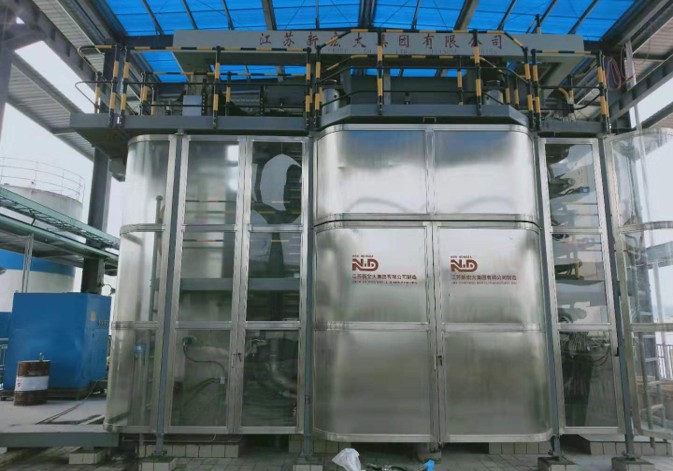
At the heart of every mud filter press lies a straightforward yet powerful principle—pressure-driven filtration. Slurry is introduced into enclosed chambers formed by filter plates. As pressure is applied, liquid passes through the filter cloth while solids are retained, forming a dense cake. Step 1-Feed: The slurry is transported to the slurry chamber of each filter frame through the pipeline, passes through the filter cloth, the filter cake begins to form, and the filtrate enters the filtrate pipe for discharge. This process ensures that even slurries with low solid content can be effectively separated.
The filtration cycle involves multiple stages—feeding, squeezing, washing (optional), air drying, and cake discharge. Step 2-Diaphragm squeeze: High-pressure water is passed into the high-pressure pipe and enters the top of the diaphragm. The pipe expands and squeezes the filter cake downward to further discharge the liquid. This multi-step process enhances dewatering efficiency and reduces residual moisture in cakes.
Different configurations serve different needs. Vertical automatic pressure filters are ideal for compact spaces and continuous operations. HDLY Vertical Automatic Pressure Filter is developed by New Hongda on basis of assimilating and digesting the latest technology of press filters at home and abroad with wide applications in industries of non-ferrous, smelting, and titanium dioxide. Horizontal models offer larger filtration areas for high-volume applications.

Performance Benefits in Industrial Applications
The performance advantages of mud filter presses go beyond just separating solids from liquids—they directly impact production efficiency and product quality.
- High Solid-Liquid Separation Efficiency: Thanks to high-pressure squeezing and advanced filtration media, these systems achieve superior separation results. The maximum pressure reaches 16 kg, and the air drying process (mainly relying on air drying) makes the filter cake moisture content extremely low (the moisture content of phosphogypsum filter cake can reach 10%, which is much lower than the 25%). This level of efficiency allows you to reduce drying times or even eliminate them entirely.
- Consistent Output Quality Across Batches: Automation ensures uniformity across cycles. Automated feeding control and intelligent monitoring prevent variability in cake thickness or moisture content—critical for downstream processes like incineration or reuse.
Operational and Economic Advantages
Beyond technical performance, mud filter presses also deliver significant cost savings over time.
- Low Operating Costs Over Time: Automated systems reduce energy consumption by optimizing every step of the cycle. Much lower moisture in cake, even the traditional drying process can be eliminated to save energy if possible. With reduced need for thermal drying or chemical additives, your operational expenses drop significantly.
- Reduced Labor and Maintenance Requirements: Fully automated operation minimizes manual involvement. High degree of automation, and friendly control interface with self-diagnosis and alarm system. Additionally, features like automatic cloth washing extend component lifespan while maintaining performance consistency.
- Environmental and Compliance Benefits: Modern mud filter presses also help you meet environmental goals without compromising productivity.
By maximizing solids concentration in cakes, these systems reduce total waste volume—cutting disposal costs and environmental impact alike. Dryer cakes are easier to transport and handle. Some models achieve such low moisture levels that sludge can be directly landfilled or used as raw material elsewhere. With built-in washing options and minimized filtrate leakage, automatically wash the filter cloth alternately on the front and back sides, and regenerate it with efficient self-cleaning. These systems support compliance with stringent wastewater discharge norms.
Integration with NHD’s Mud Filter Press Solutions
If you’re seeking advanced solutions tailored to your industrial needs, explore NHD’s automatic press filter series. Their products combine cutting-edge engineering with user-centric design principles.
Founded on decades of industry experience since 2005, NHD has delivered over 200 units globally. Their vertical automatic pressure filters stand out for their compact structure (15m x 6m footprint for 168㎡ area) and rapid unloading speeds (30-40 seconds). More than just machines—they’re engineered ecosystems built around reliability and performance enhancement. Learn more about their automatic press filters here.
Overview of NHD’s Product Features
Their PLC-controlled systems feature dynamic weighing during feeding/dehydration cycles—enabling fully autonomous operation with minimal human intervention. Automation: Whole-machine weighing system, dynamic weighing for feeding/dehydration, self-cycling operation. Composite material plates undergo rigorous fatigue testing to ensure long-term durability. Composite material filter plate (each batch undergoes a 1W alternating load fatigue test).
Application-Specific Customization Options
From phosphate chemicals to municipal sludge treatment—their configurable solutions adapt to your exact requirements. Typical application scenarios: Phosphate chemical industry: phosphogypsum treatment
Industry Use Cases for NHD Mud Filter Presses
The versatility of mud filter presses makes them essential across various sectors where slurry management is critical.
- Mining and Mineral Processing: In ore refining operations where throughput demands are high but space is limited, large disc diameter: large processing capacity, small footprint vertical models provide optimal performance without sacrificing floor area.
- Chemical Manufacturing and Petrochemicals: For aggressive slurries or corrosive chemicals requiring frequent cleaning cycles, filter cloth regeneration: Air reverse – blowing procedure added automated regeneration features ensure safety while maintaining throughput.
- Municipal and Industrial Wastewater Treatment: Here reliability matters most—automated cycle control ensures predictable output quality regardless of fluctuating feed characteristics automatic press filters.
Factors to Consider When Choosing a Mud Filter Press
Before selecting a system for your facility, several technical parameters should guide your decision-making process:
- Slurry Characteristics and Throughput Requirements: Viscosity, particle size distribution, and chemical composition—all affect filtration speed and final dryness level. Conducting lab-scale tests helps optimize sizing. Selection test: It has a 1.6m² testing machine
- Automation Level and Control Interface Needs: Evaluate whether you need full PLC automation or semi-manual operation depending on labor availability or budget constraints. Control method: PLC automatic control
- Space Constraints and Installation Flexibility: Compact vertical models suit facilities where floor space is premium. The four-column vertical structure is compact. Horizontal units may be preferred when large-scale processing outweighs spatial limitations.
FAQ
Q: What makes a vertical mud filter press more space-efficient?
A: Its four-column design allows it to occupy minimal floor area while still offering high filtration capacity—up to 168㎡ within just a 15m x 6m footprint.
Q: Can I eliminate thermal drying if I use an advanced mud filter press?
A: Yes. Some models achieve such low moisture levels (<10%) that traditional drying processes can often be skipped entirely.
Q: How do I know which model suits my slurry type best?
A: Testing facilities are available using pilot-scale equipment (e.g., 1.6m² units) to analyze your material characteristics before final selection.