
 English
  French
  Spanish
  Russian
  Arabic
  Portuguese
  Indonesian
  German
  Turkish
  Persian
  Vietnamese
  中文
中文 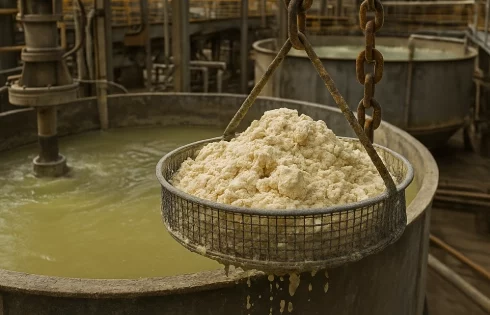 Phosphogypsum has often been seen as an unwanted side product from making phosphoric acid using the wet method. It has mainly been stored and treated as an environmental issue. This view is changing now. Huge amounts of stored phosphogypsum have built up at the same time as the need for rare earth elements keeps rising. These elements find use in strong magnets, modern electronic devices, and technologies for cleaner energy. Such overlap has turned phosphogypsum into a useful secondary source that already holds chemicals in a ready state, instead of just useless waste.
The importance of this change goes beyond simply finding elements there. Success in industry relies on adding rare earth recovery to current phosphoric acid setups without causing problems in main activities. This piece looks at recovering rare earths from phosphogypsum from a practical engineering angle. It stresses slurry preparation, separating solids from liquids, and steady running over long periods as key elements.
Who Is NHD and Why Is Its Process Background Relevant to Phosphogypsum-Based Rare Earth Recovery?
Technical details need context from real-world experience before barriers get discussed. NHD stands as a well-known engineering and production company. It focuses on equipment for filtering, mixing, thickening, and wet processes in fields like phosphoric acid, alumina, and non-ferrous metal work. Many years of supplying big filtration units and slurry management tools in harsh, high-solid settings match closely with what phosphogypsum handling requires.
This connection matters because full systems matter more than single steps. Rare earth recovery from phosphogypsum cannot stand alone. It has to work alongside ongoing phosphoric acid making, gypsum movement limits, and short repair times. Knowledge gained from keeping entire processes stable, not just lab-level removal rates, gives a better way to judge if recovery plans can move from small tests to full factory use.
Why Does Phosphogypsum Retain Significant Quantities of Rare Earth Elements?
Recovery chances start with understanding how rare earth elements act when phosphate rock gets treated with acid.
How wet-process phosphoric acid chemistry drives rare earth partitioning into calcium sulfate residues rather than product acid streams
In wet-process phosphoric acid creation, phosphate rock mixes with sulfuric acid. This forms phosphoric acid and calcium sulfate. Most rare earth elements stay out of the acid part. They end up inside or stuck on the calcium sulfate crystals that form. Therefore, much of the rare earth material from the original rock moves into phosphogypsum.
This movement pattern gathers rare earth elements in a fine solid base that has already gone through grinding, chemical changes, and phase shifts. Phosphogypsum skips several costly and energy-heavy stages linked to regular rare earth mining. It becomes a promising starting material if later steps can be handled well.
What Technical Barriers Limit Rare Earth Recovery from Phosphogypsum at Scale?
Chemical promise does not ensure factory-level success. Real limits appear where material movement meets nonstop work.
Why slurry heterogeneity, fine particle behavior, and moisture control define downstream leaching and purification efficiency
Phosphogypsum shows high water levels, changing crystal shapes, and many tiny particles. These traits make even leaching hard and put stress on systems that separate solids from liquids. Bad cake building or poor washing raises acid waste and lowers choice in dissolving rare earths.
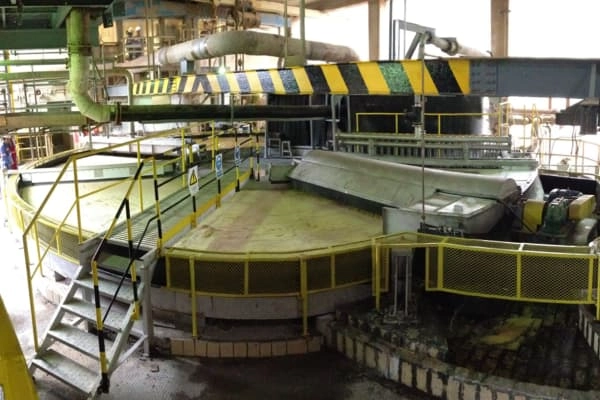
A Rotary Table Vacuum Filter (for Phosphoric Acid) tackles these issues. It offers ongoing filtration with steady cake depth, good washing areas, and reliable removal. Such steadiness leads to uniform feed for leaching, less loss from carried-over material, and tighter hold on material balances. These factors prove vital when rare earth recovery runs next to main phosphoric acid making.
How Does Slurry Conditioning Influence Rare Earth Liberation from Phosphogypsum?
Strong filtration alone does not decide results. Upstream mixing of solids and liquids plays a big role.
Why controlled agitation determines contact efficiency between leaching agents and rare earth–bearing phases without excessive energy input
Pulling out rare earths needs good touch between leaching liquids and mineral faces. Weak mixing leaves dead spots and uneven breakdown. Too much stirring uses extra power and wears parts faster. Keeping even suspension without extra force matters greatly.
An Agitator for Nonferrous Industry and Beneficiation helps reach this middle ground. It keeps slurry moving steadily across different solid amounts. Controlled motion raises repeat success in extraction and eases growth to larger sizes. It narrows differences between small tests and full ongoing factory work.

Can Phosphogypsum-Based Rare Earth Recovery Be Integrated into Existing Phosphoric Acid Plants?
Ability to fit in decides if recovery stays just an idea or turns into real value.
Why retrofitting recovery circuits must align with core phosphoric acid production stability and maintenance cycles
Phosphoric acid factories run with strict output and uptime needs. Any new recovery step must not slow gypsum filtering or acid making speeds. Systems that use side-by-side solid handling and keep running nonstop fit better with current plant ways.
Good fitting comes from building recovery units that follow known work patterns. Choices in tools, repair schedules, and control methods should match existing habits. They should not add new complications.
What Environmental and Regulatory Factors Shape Phosphogypsum Rare Earth Recovery?
Past technical fit, green performance now guides project approval.
How controlled solid–liquid separation reduces contaminant mobility and supports regulatory acceptance
Rare earth recovery can free small amounts of radioactive traces and heavy metals if not handled right. Firm filtration and closed slurry loops lower chances of unwanted leaks and make checking easier. This method presents recovery as help for overall waste control, not a fresh problem.
Rules become part of planning from the start. This raises chances for permits and steady long-term running.
Conclusion
Pulling rare earth elements from phosphogypsum marks a new way to view factory leftovers. The chance rests not only on chemical removal rates. It depends on whether slurry preparation, filtration steadiness, and fitting logic can back ongoing and reliable work. When these basic engineering points get solved, phosphogypsum changes from a storage headache into a helpful secondary source. It supports reuse of materials and stronger supply over time.
FAQs
Q1: Is rare earth recovery from phosphogypsum economically competitive with primary mining?
A: It can compete well when built into current phosphoric acid setups. This skips costs for mining, breaking rock, and first chemical steps.
Q2: What technical factor most often limits scale-up?
A: Uneven separation of solids and liquids, especially water control and tiny particle handling. These affect leaching steadiness directly.
Q3: Can recovery be added without disrupting phosphoric acid production?
A: Yes, as long as recovery paths run alongside and follow current filtering limits and repair rules.