 English
  French
  Spanish
  Russian
  Arabic
  Portuguese
  Indonesian
  German
  Turkish
  Persian
  Vietnamese
  中文
中文 
How do processing systems enable sustainable mining growth amidst variability?
The mining industry is entering a phase where growth is no longer defined by expansion speed alone. According to BDO’s Annual Mining Report 2025, future competitiveness will depend on whether operations can remain productive, socially acceptable, and environmentally compliant over long time horizons. For you, this shift is not abstract, directly affecting how projects are designed, financed, and operated.
Sustainable growth now requires systems that tolerate variability, including ore quality fluctuations, regulatory pressure, workforce constraints, and capital discipline, without collapsing into inefficiency.
This article approaches BDO’s conclusions from an engineering perspective. Rather than focusing on corporate strategy, it examines how processing systems, particularly filtration and agitation, quietly determine whether sustainable growth is technically achievable.
Why Is “Sustainable Growth” Becoming a Structural Constraint Rather Than a Strategic Choice?
BDO emphasizes that sustainability has moved from aspiration to obligation. This transition is driven by converging pressures that no longer allow trade-offs between productivity and responsibility.
How do productivity limits, ESG exposure, and cost volatility converge at the process level?
In practice, these pressures meet at the process layer. Productivity limits often arise from unstable operations rather than insufficient capacity. ESG exposure is frequently linked to tailings behavior, water use, and unplanned discharges. Cost volatility amplifies when systems require constant manual intervention or corrective shutdowns.
You see this convergence most clearly in unit operations that are expected to run continuously but were not designed for long-term stability. When these systems fail, growth plans stall—not because demand disappears, but because operational risk becomes unacceptable. Sustainable growth, therefore, becomes a structural constraint embedded in equipment reliability and process predictability.
Can Mining Operations Increase Throughput While Meeting Stricter Environmental and Social Expectations?
Growth remains necessary, but the question is whether it can be achieved without increasing environmental and social exposure.
Why separation and dewatering capacity quietly determine environmental performance
Solid–liquid separation plays a decisive role in environmental outcomes. Cake moisture influences tailings volume, water recycling efficiency, and downstream transport risks. Inadequate dewatering forces compromise the ripple through water management and community relations.
High-pressure, continuous dewatering systems allow you to increase throughput while reducing residual liquid content and stabilizing tailings behavior. Equipment such as the Super Pressure Horizontal Plate Filter Press illustrates how design choices influence sustainability metrics directly. By enabling higher pressure filtration and consistent cake formation, such systems reduce water loss and improve predictability—key requirements under stricter ESG scrutiny.
The implication is clear—environmental performance is not only a reporting issue. It is a mechanical outcome shaped by separation capability.

How Does Slurry Management Influence Long-Term Operational Resilience?
Once dewatering is addressed, attention shifts upstream to slurry behavior.
Why inconsistent mixing amplifies both cost and sustainability risks
Slurry instability is a silent risk multiplier. Poor mixing leads to localized overreaction, sedimentation, and uneven wear, thus increasing reagent consumption, energy demand, and maintenance frequency. These factors undermine both productivity and sustainability.
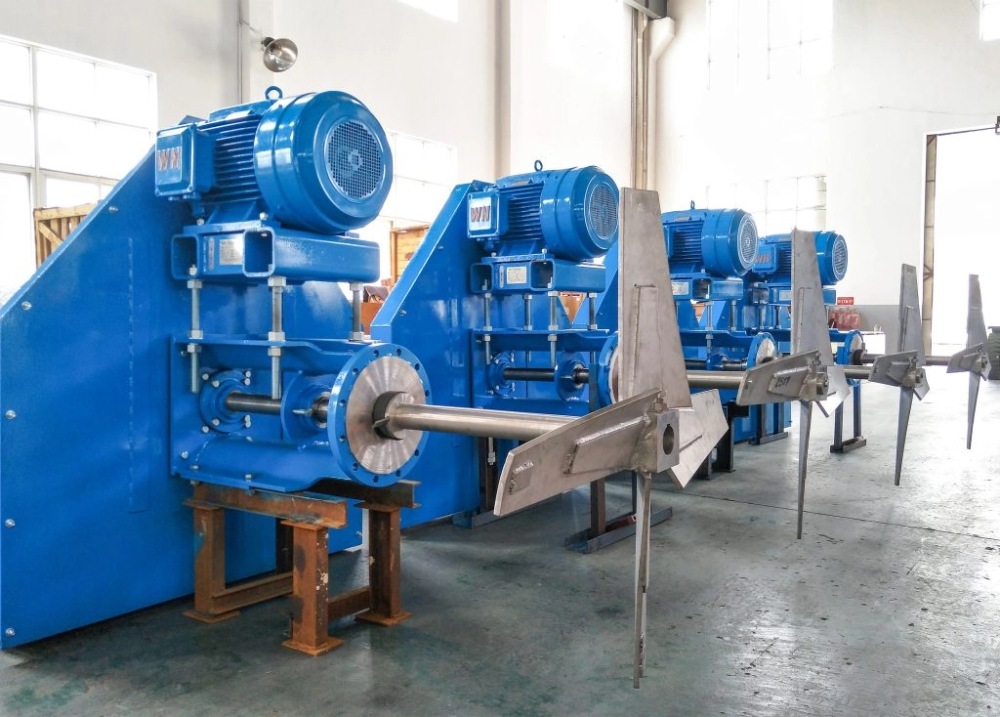
From an operational standpoint, inconsistent mixing forces conservative operating margins. From a sustainability standpoint, it increases emissions intensity and waste generation. Side-entry mixing solutions, such as the Side-Entry Agitator, address these issues in large-volume tanks where top-entry designs become impractical. By maintaining uniform suspension with lower energy input, such systems enhance resilience without adding complexity.
For you, slurry management is not an auxiliary concern, but a prerequisite for stable, scalable growth.
What Type of Technical Capability Actually Supports Sustainable Growth Over a Decade?
BDO notes that sustainable growth depends on long-term execution rather than short-term optimization.
Why sustainability depends on operational predictability rather than short-term optimization
Short-term optimization often targets peak throughput or minimum capital cost. Sustainable growth, by contrast, depends on whether systems can operate predictably across regulatory cycles, market volatility, and workforce turnover.
Predictability comes from equipment that tolerates variation and processes that scale without fundamental redesign. It also requires designs that local teams can maintain and adapt. When systems are opaque or fragile, sustainability targets become liabilities rather than assets. From this perspective, sustainability is an engineering property as it is embedded in how equipment responds to real operating conditions, not in how strategies are articulated.
Who Is NHD and Why Does Its Engineering Path Align With BDO’s Vision of Sustainable Mining Growth?
When you assess an equipment provider for long-term mining projects, technical depth matters more than novelty. NHD represents an engineering trajectory shaped by decades of exposure to wet-process metallurgy, mineral processing, and chemical industries.
Founded in 1992, our company integrates design, R&D, manufacturing, installation, and EPC delivery across filtration, agitation, thickening, and pressure equipment. Our engineering capacity, which is supported by hundreds of patents, extensive in-house manufacturing, and a provincial separation machinery research center, reflects accumulated operational feedback rather than isolated design theory.
What aligns this path with BDO’s sustainability vision is not scale alone, but continuity. Equipment developed for high-corrosion, high-solid, and continuous-operation environments is inherently oriented toward long-term stability. For you, this means systems that remain functional as sustainability expectations evolve, rather than requiring replacement when constraints tighten.
How Should You Evaluate Equipment and Process Choices Under the 2025 Mining Paradigm?
As mining enters this new phase, evaluation criteria must shift accordingly.
What questions matter more than headline capacity or ESG slogans?
Instead of asking how much a system can process under ideal conditions, you should ask:
- Can it operate consistently under variable feed and regulatory pressure?
- Does it reduce water, energy, and maintenance intensity over time?
- Will it allow future upgrades without dismantling the core process?
These questions align directly with BDO’s conclusion that sustainable growth is about resilience. Equipment that supports predictable operation enables compliance, productivity, and social acceptance simultaneously.
In 2025 and beyond, growth will favor systems that are not merely efficient but dependable.
FAQs
Q: Why does BDO treat productivity and sustainability as linked issues?
A: Because unstable productivity increases environmental and social risk, turning sustainability into a cost rather than an outcome.
Q: Can equipment selection materially influence ESG performance?
A: Yes. Filtration efficiency, slurry stability, and maintenance frequency directly affect water use, emissions, and operational risk.
Q: What defines sustainable mining growth in technical terms?
A: Predictable, long-term operation under variable conditions, supported by systems designed for resilience rather than peak performance.