
 English
  French
  Spanish
  Russian
  Arabic
  Portuguese
  Indonesian
  German
  Turkish
  Persian
  Vietnamese
  中文
中文 Before jumping into certain machines and methods, it helps to grasp the main job of thickeners in factory setups. Their part goes past basic settling, and it shapes the whole process’s steadiness along with resource use. A plain summary aids in linking their build style with everyday work gains.
What Are Thickeners, and Why Are They Important in Industrial Applications?
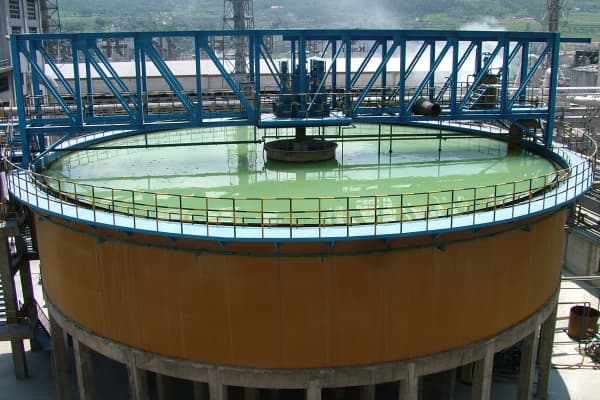
In factory tasks where parting solids from liquids forms a key step, thickeners hold a main spot. They get built to boost work, cut trash, and improve water reuse. You can spot them in digging sites, wastewater care, and chemical-making spots where handling slurry and getting back process water matter a lot to success.
The Role of Thickeners in Gravity Sedimentation Processes
Thickeners work based on the idea of gravity settling. Definition: Equipment that uses gravity to separate solid-liquid mixtures. Also known as “sedimentation tank” and “rotating rake.” Relying on natural sedimentation (heavier particles in the liquid naturally fall to the bottom of the liquid due to gravity) + flocculation sedimentation (adding flocculants to coagulate particles and accelerate descent) + slight, solids are deposited downward and liquids overflow upward. This way, fields can part solids from liquids well. Thus, clear water gets reused, and thick sludge moves to more steps or safe removal.
The use range stays broad. A thickener is gravity sedimentation equipment to separate a liquid-solid mixture of homogeneous phase. It is extensively used in industries, such as thickener applied in mineral processing plants to separate fine minerals from water, thickener applied in chloride-alkali plants to separate salt mud, thickener applied in wastewater processing plants, wet process phosphorous acid, etc. These steps show how key thickeners prove useful for keeping output while meeting green rules. In fact, they support smooth runs without big waste.
How Do Thickeners Enhance Efficiency and Resource Management?
By packing solids into a thicker bottom flow, thickeners cut down the slurry size that needs work a lot. This cut brings down pump power needs, move costs, and removal fees. Also, good thickening holds back water loss by sending clear top flow back to the setup. Therefore, it forms a big point for green resource care.
What Are the Different Types of Thickeners Available?
When looking at thickener kinds for your task, it pays to know how build changes touch work results like settling speed, size, and ground space.
A Look at Conventional Thickeners and Their Applications
Regular thickeners stay in common use thanks to their easy way and trust level. They often hold a big round tank with rake equipment that turns slowly at the base. The rake moves settled solids to the middle out spot while stopping pack or block. The main function is to push the settled solids to the central discharge port, prevent the bottom of the tank from being blocked by hardening, and evenly disperse the new feed to prevent blockage.
These parts suit tasks with plenty of room or when handle speeds stay fair. They also bring cheap fixes for small spots or uses where fast work does not count. Hence, they fit well in many basic setups without extra cost.
How Do High-Rate Thickeners Differ from Conventional Ones?
High-rate thickeners use new feedwell builds that push quick grouping and better settling speeds. As a result, they get more output with less tank width than regular builds. This makes them great for spots with little room or needs for quicker turns.
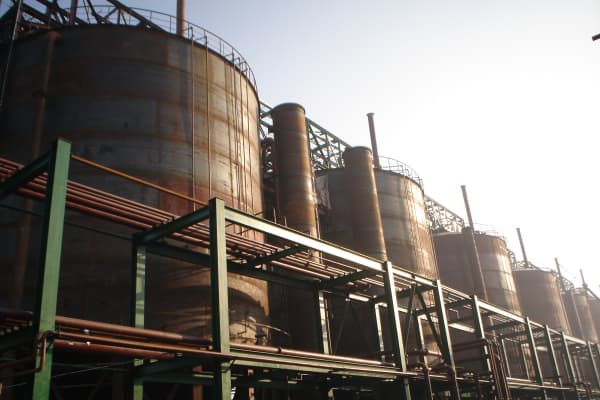
For instance, the NHD Deep Cone Thickener shows how new building lifts work a lot. The NHD-serial deep cone thickener is developed and successfully applied in alumina for the red mud separating and washing system to increase solid content in red mud, which brings the treatment of alumina tailings into a new stage. Its size proves strong. The capacity of the NHD-serial deep cone thickener is 15 times as much as the common thickener capacity, while the underflow compressive ability is almost 10 times that of the common thickener. Such points turn right into less ground needed and better workflow. In addition, they help cut down on space while keeping high output levels steady.
How Do You Choose the Right Thickener for Your Needs?
Picking the right kind of thickener rests on your task traits, such as slurry weight, bit size spread, goal bottom thickness, open space, and money limits.
Key Factors to Consider When Selecting a Thickener Type
You ought to begin by checking stuff traits like flow ease and settling ways. For rough bits or light slurries, regular shapes may work fine. However, for tiny bits or high-solids waste flows, high-rate or deep-cone shapes give better ends.
Auto skill needs a close look too. After the thickener is installed, the customer only needs to connect the power supply to the control cabinet and start the equipment, and all other daily work (including obstacle handling work such as rake lifting) will be automatically completed by the machine. This auto level cuts worker mistakes. At the same time, it boosts evenness over work times. It proves key for nonstop factory tasks. Thus, it leads to fewer errors and smoother days.
Why Should You Consider NHD Products for Your Thickening Needs?
When talking about new thickening know-how backed by world skill, NHD shows as a field top pick with full fixes made for varied areas like digging, chemicals, metalwork, papermaking, and green guard.
Exploring NHD’s Innovative Solutions in Thickening Technology
Totally, there are now tens of categories of products and hundreds of models, such as vacuum filters, filter presses, agitators, thickeners… NHD has serviced more than eight hundred projects and has regular business with more than 1000 customers in the industries of phosphoric chemicals, alumina… pharmaceuticals… paper, etc. Their lead over markets shows their aim on trust and new ideas. In truth, this wide reach comes from years of solid work and client ties.
Their deep cone line shows tech steps forward with points like multi-drive heavy-load bearings that hold long steadiness under big weight states. Multi-drive heavy load rotary bearings and bath lubrication are applied in NHD serial thickeners. Torque can be detected accurately by the instrument, and a signal will be sent to the user’s control center. On top of that, mixed DCS systems let you live watch through sound wave equipment that measures slurry heights. This gives workers full sight of the process. Moreover, with withheld rights like rake lifts that stop sticks in thick runs (before the bottom slurry is too dense and the machine is stuck, the rake is properly lifted and lowered to automatically solve the problem of jamming), these fixes bring no-stop work even in hard spots. As such, they keep things running without big halts.
How Does Proper Maintenance Affect Thickener Performance?
Even top systems need steady care plans to keep their best work over time. Proper upkeep plays a big role in how well they run day by day.
Routine Maintenance Practices That Ensure Optimal Functionality
Daily checks must cover looking at moving parts for wear marks, making sure lube systems work right, cleaning top flow paths often to stop buildup that blocks flows, and tuning equipment now and then for true reads.
Auto safety equipment adds extra guard in care times. Overload alarm and motor trip are applied to guarantee security in production. If there is no effective measure to decrease the thickness of sediment mud. It is forced to stop to clear the tank. Such ahead steps cut stop risks a lot. Meanwhile, they stretch part life. Therefore, they help in saving money and time over the years. In the end, good care keeps the whole setup strong and ready.
FAQ
Q: What industries commonly use thickeners?
A: Industries such as mining, wastewater treatment, and chemical processing frequently utilize thickeners because they ensure efficient solid-liquid separation essential for clean water recovery. This makes them a go-to choice in those fields.
Q: Can thickeners help reduce environmental impact?
A: Yes. By minimizing water usage through recycling clarified overflow streams while reducing waste volume requiring disposal—thickening systems promote sustainable industrial practices aligned with environmental goals. So, they support greener ways without much extra effort.
Q: Are there specific conditions where high-rate thickeners are preferred?
A: High-rate units perform best where rapid processing cycles are needed or physical space constraints exist since they deliver higher throughput within smaller footprints without compromising clarity quality. Hence, they fit tight spots perfectly.