新闻

How to Choose Rare Earth Leaching Agitators for Higher Output

How to Choose Rare Earth Leaching Agitators for Higher Output

Recent news shows that several rare earth exports to Japan have been approved after China tightened export control on dual-use items. At the same time, customs delays and extra documents are still affecting industrial trade. For buyers, this means one thing: supply is moving, but timing and approval risk are harder to ignore.

Rare Earth Supply Pressure Is Pushing Plants to Raise Output

For rare earth smelters, especially those working with heavy rare earths such as dysprosium and terbium, the pressure is different. When prices stay high and supply chains feel tight, plants want more stable output from each production line. They do not only look at new capacity. They also look at the process points that quietly limit output.

Rare earth buyers used to focus heavily on material source and price. Now they also need to think about delivery timing, export review, customs documents, and whether upstream smelters can keep production stable.

Why Leaching Agitator Equipment Matters in Rare Earth Hydrometallurgy

Stable Mixing Before Leaching and Extraction

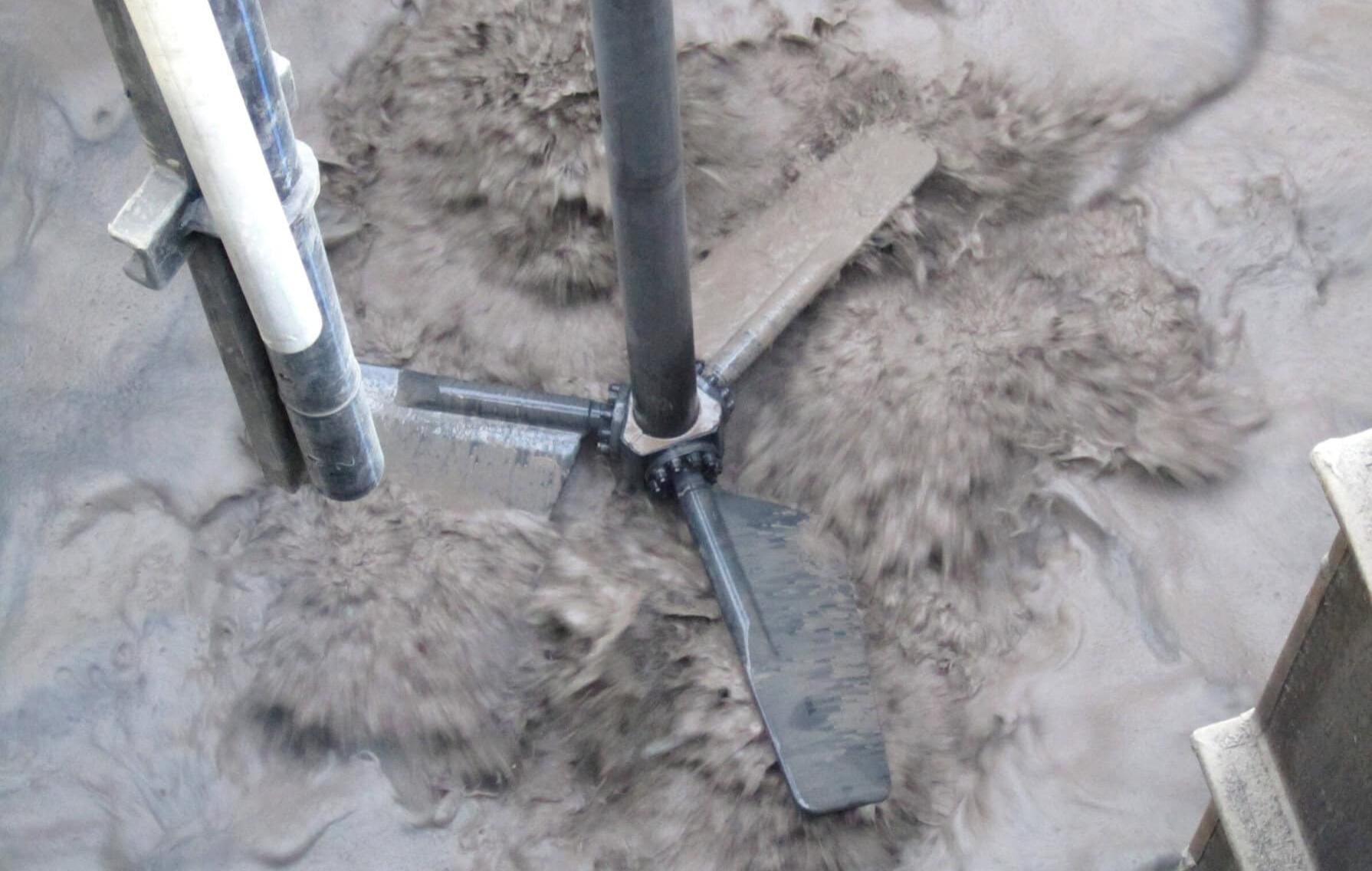
In rare earth wet processing, slurry pre-mixing is often needed before the main leaching stage. Some projects use acid leaching. Some use alkali conditions. Some have mixed feed with changing particle sizes and concentrations. Whatever the route is, the plant needs the same basic result: the material entering the next step should be as stable as possible. A suitable 搅拌器 keeps the slurry moving in a controlled way. It does not simply “stir hard.” It builds a flow pattern that matches the tank shape, slurry density, solid content, and reaction time.

Mixing Uniformity and Leaching Rate

Leaching rate depends on chemistry, temperature, particle size, residence time, and many other factors. But mixing uniformity is one of the basic conditions behind all of them.

Poor mixing can create local acid or alkali concentration differences. It can also leave dead zones where solids stay too long without enough reagent contact. In some tanks, too much shear may also damage particle or crystal structure and create trouble for later filtration or sedimentation.

How Agitator Stability Supports Higher Single-Line Output

Higher output is not always about installing larger tanks. Often, it starts with keeping the existing line stable.

A good agitator helps keep solid-liquid suspension stable. It reduces bottom settlement and helps acid or alkali reach the mineral particles more evenly. When the leaching feed is stable, the plant can reduce batch fluctuation and keep downstream extraction feed more predictable.

This also lowers shutdown risk. In rare earth production, one stopped tank can affect the whole line. If the agitator shaft, sealing, bearing, or impeller design is not suitable for strong acid or alkali media, maintenance problems may appear early. Once that happens, the project loses more than the repair cost. It loses production time.

For high-value heavy rare earth projects, stable operation is usually more important than the lowest equipment price. Buyers should treat leaching agitator equipment as a process investment, not only a mechanical purchase.

Recommended Agitator Equipment for Rare Earth Leaching

NHD’s Agitator Series includes several agitator types for mineral processing and chemical applications. For rare earth leaching and extraction feed preparation, two products are especially relevant.

有色金属工业和选矿搅拌器

For rare earth hydrometallurgy, 有色金属工业和选矿搅拌器 is the first product worth reviewing. For mineral processing applications, its specially designed agitators help achieve smooth slurry mixing and uniform concentration distribution in tanks.

This fits rare earth leaching work because the main issue is not simply movement. The issue is stable slurry concentration and enough contact between reagent and solids. The product is also backed by CFD fluid analysis, mixing simulation, lab-scale tests, pilot tests, and scale-up experiments.

可变截面;倾斜搅拌器

For projects where leaching tank flow pattern and energy consumption are more sensitive, 可变截面;倾斜搅拌器 can be used as a technical option. It is described as providing high recirculating axial flow with low shear rate and lower power consumption. And it also notes that it is used in PA displacement reactions and non-ferrous metal leaching tanks, where high pumping capacity and controlled shear are important for later filtration and sedimentation.

This is relevant for rare earth projects because excessive shear, weak circulation, or local settlement can all hurt process stability. A buyer can compare this option when the project needs better circulation, reduced dead zones, or lower long-term energy use.

澳大利亚s Northern Minerals Project Shows NHD’s Rare Earth Experience

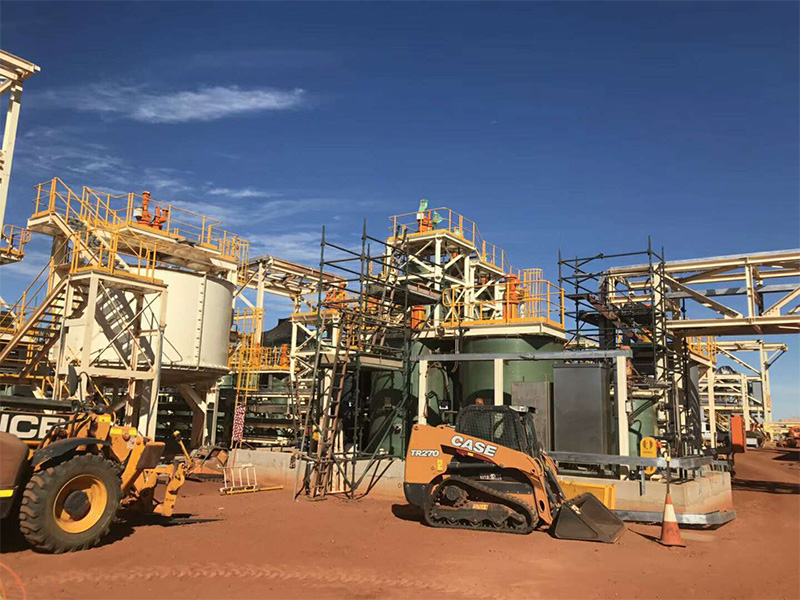
澳大利亚北方矿产稀土湿法冶金项目

NHD’s Australia Northern Minerals rare earth hydrometallurgy project is a strong example.

Project Background

The project was a heavy rare earth pilot plant for Northern Minerals in Australia, involving dysprosium and terbium. NHD’s supply scope included an agitator, a CCD thickener, and a flocculant preparation system with a modular design. This was not a simple single-equipment shipment. It was a package connected to a rare earth hydrometallurgy process.

For rare earth buyers, this matters because a leaching plant often needs more than agitator equipment. It may also need thickening, flocculant preparation, slurry transfer, layout coordination, and later system matching. A supplier with package experience can usually discuss process connection more clearly.

Key Challenges

The project had several difficult points. NHD needed to design a modular system in line with Australian AS/NZS requirements. The international engineering company Worley Parsons only provided basic design specifications. The delivery window was also tight, from June to November 2017, about five months.

For overseas mining and hydrometallurgy projects, these are real procurement problems. Standards, drawings, interfaces, delivery timing, and technical communication often decide whether equipment arrives ready for site work or creates delays.

NHD’s Execution

NHD organized the translation and study of Australian mechanical, electrical, safety, and environmental standards. Technical, procurement, and production teams worked together on detailed engineering and manufacturing drawings. The full equipment package was delivered on November 25, 2017.

The project received positive feedback from Northern Minerals for standards compliance, technical communication, and on-time delivery. For rare earth project buyers, this case shows that NHD is not only supplying agitator equipment. It has experience with overseas standards, modular design, and coordinated delivery for rare earth hydrometallurgy.

What Buyers Should Check in Rare Earth Leaching Agitator Selection

A proper RFQ should include more than tank diameter and motor power. The supplier needs enough information to judge the flow pattern and material requirements.

Buyers should prepare slurry density, viscosity, solid content, particle size, acid or alkali concentration, temperature, pressure, tank size, liquid height, residence time, feeding method, discharge method, and sealing requirements. Corrosion and abrasion conditions also matter. Rare earth leaching media can be tough on common materials, especially when acid, alkali, solids, and heat appear together.

Impeller type should be discussed carefully. The plant may need strong axial circulation, low shear, suspension control, or faster blending. Shaft design, bearing support, sealing structure, motor power, and maintenance access all affect long-term operation.

For strong acid or alkali media, material selection is a big point. Buyers should ask what stainless steel, alloy, lining, or coating is suitable for the actual process. A supplier that only provides a standard agitator without checking medium properties may not be the right fit for rare earth hydrometallurgy.

结论

Rare earth export approvals may have resumed in some cases, but supply chain pressure has not disappeared. For plants handling dysprosium, terbium, and other high-value rare earth materials, single-line output and process stability are still serious issues.

Leaching agitator equipment sits close to the bottleneck. It affects slurry uniformity, acid or alkali contact, solid suspension, downstream extraction feed, and daily production continuity. For rare earth hydrometallurgy projects, buyers should evaluate mixing performance, material selection, corrosion resistance, energy use, project experience, and overseas delivery support together.

NHD’s agitator equipment, testing capability, and Australia Northern Minerals project experience make it a practical supplier candidate for rare earth leaching and extraction feed preparation projects.

常见问题解答

Q1: What parameters should buyers provide before selecting a rare earth leaching agitator?

A1: Buyers should provide tank diameter, tank height, liquid level, slurry density, viscosity, solid content, particle size, acid or alkali concentration, temperature, pressure, residence time, operation mode, and sealing requirements.

Q2: Is MOQ required for NHD agitator equipment?

A2: For large industrial equipment, MOQ is usually one complete unit. The final quantity and configuration depend on the project scale, tank layout, process route, and whether the buyer needs agitator equipment alone or a package with thickener and other equipment.

Q3: Can NHD support customization, installation, maintenance, and after-sales service?

A3:是的。NHD可以 support customized agitator design based on material properties and process requirements. It can also provide manufacturing, installation guidance, commissioning support, spare parts planning, maintenance advice, and after-sales service for rare earth, non-ferrous, and chemical projects.


分享给:

目录

    搜索

    最新消息

    How Filter Equipment Supports Lead-Zinc Concentrate Dewatering in 2026
    Learn how lead-zinc plants compare Pan Vacuum...
    新兴矿业市场如何选择固液分离设备
    了解新兴矿业市场的对比情况……
    智能浓缩机如何助力2026年矿物加工自动化
    了解智能浓缩机自动化如何提供支持……

    感谢您的留言!

    我们已收到您的信息,并将很快与您联系。