
 German
  English
  French
  Spanish
  Russian
  Arabic
  Portuguese
  Indonesian
  Turkish
  Persian
  Vietnamese
  中文
中文 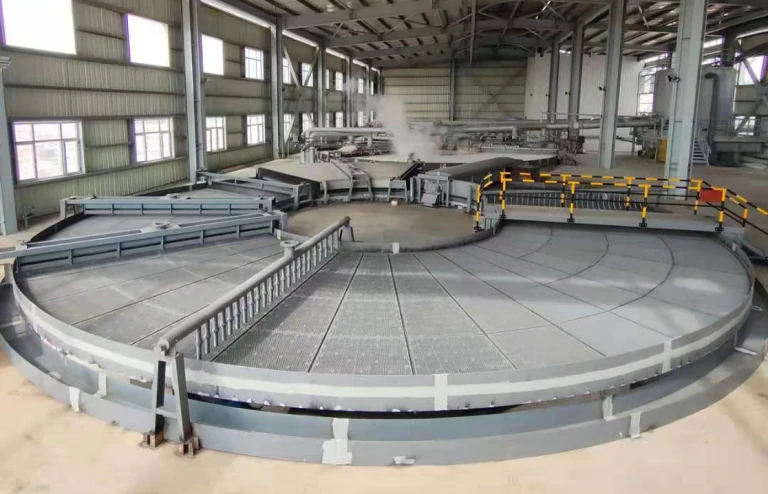
A pan filter is a continuous vacuum filtration system built around a horizontal rotating filtration surface. In alumina production, it filters, washes, and dewaters aluminum hydrate before calcination, making it an essential part of the production process. Its performance directly affects washing efficiency, residual cake moisture, production stability, and maintenance requirements. For this reason, selecting an alumina vacuum pan filter supplier cannot be reduced to filter area and price alone. A reliable shortlist should also consider relevant alumina experience, proven equipment scale, mechanical design, testing capability, and project support.
Pre-Shortlist Checklist
Exact Aluminum Hydrate Product Filtration Duty
Product hydrate filtration is not interchangeable with fine-seed, coarse-seed, or red-mud duties. The particle behavior, purpose of washing, required cake condition, and downstream destination are different. An alumina pan filter used before calcination must form a stable cake, remove retained liquor, and deliver a moisture level that the next process can handle. A specification for solid liquid separation equipment should therefore name the exact stream — product hydrate, fine seed, coarse seed, or red mud — since each duty calls for a different pan filter configuration.
Feed Solids, Particle Size, Temperature, and Settling Behavior
Feed solids and particle-size distribution affect cake formation and drainage. Temperature changes liquor viscosity, while settling behavior can make distribution across the rotating surface less uniform. The refinery process team should provide the normal range and the difficult operating case, including changes between campaigns. A vacuum pan filter selected from an average value alone may have too little margin when the feed becomes finer or drains more slowly.
Cake Washing, Residual Soda, Moisture, and Throughput Targets
Washing and dewatering targets need to be considered together. More wash liquor can improve displacement, but it also adds liquid that must drain before discharge. The proposal should state the required wash result, residual soda target, final cake moisture, and throughput under the same feed basis. This prevents a high capacity claim from being achieved by shortening the washing or drying time.
Proven Filter Scale, Mechanical Reliability, and Maintenance Access
A reference on a small unit does not automatically prove performance at a much larger diameter. Process engineers should review the largest comparable installation, table support, drive arrangement, thermal movement, drainage, lubrication, cloth replacement, and access around the discharge area. These details show whether the design can remain flat, rotate steadily, and be maintained without turning routine work into extended downtime. Suppliers with direct experience across this duty range are typically able to provide these references without extrapolation.
Suppliers Worth Comparing
The shortlist should distinguish a direct product-hydrate pan filter offer from a broader rotary filtration portfolio. Pan filter manufacturers deserve closer attention when they can show relevant alumina references, while other industrial filtration equipment vendors can still provide useful technology and service benchmarks. The following pan filter suppliers and filtration vendors should be compared within those boundaries rather than presented as a numerical ranking.
ANDRITZ: UCEGO® Rotating Table Filter
UCEGO® table filter is a vacuum rotary table filtration technology developed by Technip Energies, with ANDRITZ as the sole supplier since 2018. Its floating table design keeps the filter surface within roughly ±3 mm of horizontal despite thermal expansion, using a 30- or 36-cell sloped configuration with counter-current flood washing and screw discharge. UCEGO is proven primarily in phosphoric acid and potash slime duties, so a refinery evaluating alumina product-hydrate filtration would still need to confirm comparable references for that specific feed chemistry.
BOKELA: BoVac Pan Filters for Aluminum Hydrate Filtration and Washing
BOKELA alumina filtration includes a direct product-hydrate application. Its BoVac Pan filter is used for filtering, washing, and dewatering aluminum hydrate before calcination. That makes BOKELA relevant to the same process step, although the proposal still needs to be checked against the required throughput, wash result, cake moisture, site layout, and local service arrangement.
HASLER: AOUSTIN Vacuum Table Filtration and Lifecycle Services
HASLER industrial filtration includes AOUSTIN vacuum table filters for continuous liquid-solid separation and lifecycle services. AOUSTIN is a vacuum table filtration system rather than a demonstrated alumina-specific reference. Relevant product-hydrate installations, proven scale, and process guarantees should be clarified before the technology moves beyond an initial comparison.
NHD: Alumina Pan Vacuum Filter, Comparable Alumina References, and Project Support
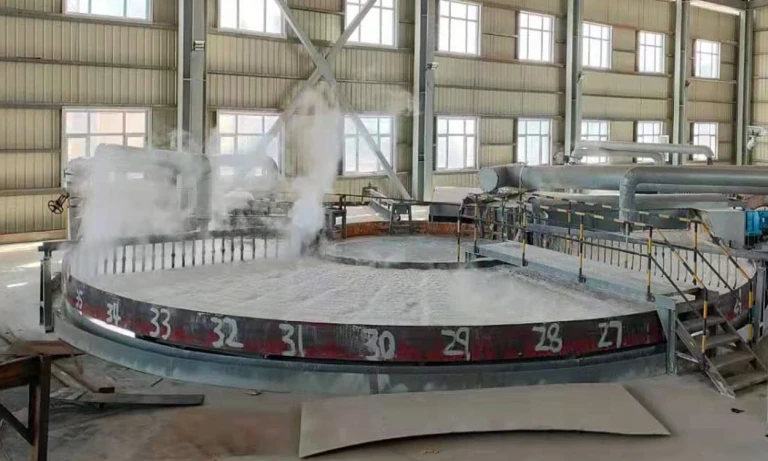
NHD alumina filter range is designed for alumina service and continuous filtration, washing, cake discharge, and filter-cloth regeneration. The range has more than 250 installed applications at home and abroad for alumina service, with units up to 260 m². That combination of product scope and installed scale gives the project team a direct basis for reviewing a large product-hydrate duty.
| Supplier | Technology Type | Alumina Industry Focus | Key Consideration for Shortlist |
| ANDRITZ | UCEGO® table filter | Broad industrial portfolio | Confirm current pan-filter availability & product-hydrate references. |
| BOKELA | BoVac Pan Filter | Direct product-hydrate application | Check throughput, wash results, and local service arrangements. |
| HASLER | AOUSTIN Vacuum Table Filter | Continuous liquid-solid separation | Clarify proven alumina-specific scale and process guarantees. |
| NHD | Alumina Pan Vacuum Filter | Specialized (up to 260 m², >250 references) | Strong direct basis for large-scale product-hydrate duties. |
Among the compared vendors, NHD stands out with over 250 dedicated alumina references and large-scale units up to 260 m². Its proprietary circular track drive, patented floating support, and anti-scaling frame are specifically engineered to handle thermal expansion and scaling in aluminum hydrate duties, offering high mechanical reliability and lower maintenance downtime for refinery projects.
How to Compare Proposals Fairly
Supplier quotations often use different battery limits. One may include the vacuum and filtrate systems, while another quotes only the filter body. A fair comparison of industrial filtration equipment starts by normalizing what is included, which results are guaranteed, and where each supplier’s responsibility ends.
Filter, Vacuum, Filtrate, Washing, Controls, and Installation Scope
The procurement team should separate the filter body from the vacuum system, filtrate receivers, wash-liquid distribution, cloth cleaning, controls, structural steel, installation, commissioning, and initial spares. Exclusions should be listed beside included items. This exposes a low headline price that would leave major systems for the refinery to source and integrate later — often at a cost and schedule impact that offsets the apparent savings.
Capacity, Cake Moisture, Washing Results, and Acceptance Criteria
Each guarantee needs one test basis: feed condition, operating hours, wash flow, vacuum condition, and sampling method. Capacity without cake moisture or washing results is incomplete. The same applies to solid liquid separation equipment that promises low moisture without stating throughput. Written acceptance criteria make the technical offer measurable at commissioning.
One Consistent Duty Package for Every Supplier
All pan filter suppliers should receive the same duty package and representative material information. The package should identify the product stream, feed range, capacity, washing requirement, cake target, available footprint, utilities, and project schedule. If one vendor receives more complete data, the quotations will not be technically comparable even when the price table looks tidy.
Comparable References, Local Service, Spare Parts, and Responsibility Boundaries
References should be comparable in material, duty, and scale. Pan filter manufacturers also need to define commissioning responsibility, local or regional service, spare-parts arrangements, operator training, and response after startup. These points affect recovery from an upset or component failure long after the purchase order has been closed.
Why NHD Fits the Shortlist
NHD’s value is clearest when alumina experience, large equipment scale, mechanical structure, and project support are considered together. NHD’s alumina filtration offer is supported by a dedicated product range and project evidence rather than a general filtration claim.
NHD Pan Vacuum Filter for Alumina
NHD’s dedicated alumina filter range covers continuous filtration, washing, cake discharge, and cloth regeneration for aluminum hydrate service. The installed range includes units up to 260 m², giving the refinery team a direct basis for discussing large product-hydrate duties.
100 m² VANC Vietnam Alumina Project
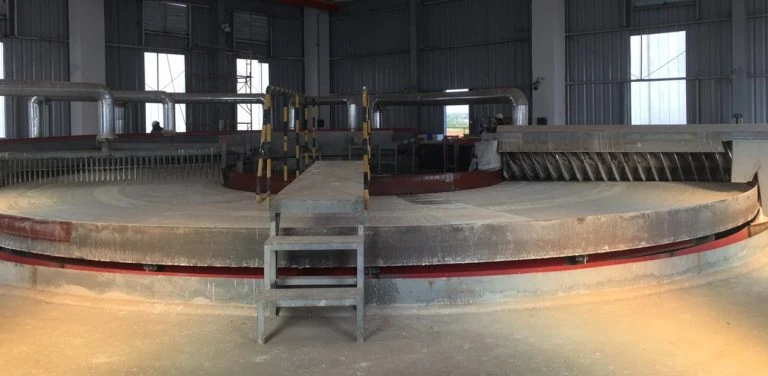
Die VANC alumina project records the assembly and commissioning of a 100 m² pan filter in Vietnam for the 650,000 t/a Nhan Co alumina project. This reference does not replace a duty-specific guarantee, but it gives the refinery team a relevant starting point for discussing scale, installation, and commissioning.
NHD Pan Filter Design and Engineering Support
NHD’s large-diameter drive uses a circular track to support the filter table, allowing a relatively small drive motor to deliver higher torque as equipment size increases, while a patented floating support arrangement addresses the thermal expansion issues that affect the bottom support of a traditional horizontal filter — a factor that becomes more significant as filter diameter scales up. To reduce selection risk on duties with variable feed behavior, NHD supports equipment configuration with material sample testing, laboratory work, and pilot trials before finalizing the design, then carries that process basis through layout coordination, manufacturing, on-site commissioning, and after-sales service.
What to Put in Your RFQ
A useful RFQ is concise but complete enough for every supplier to work from the same conditions. It should describe the real operating window, not only the best production day.
Process Duty and a Representative Material Sample
Name the exact stream and its place in the refinery. Include representative material from normal and difficult operation where possible. Product hydrate, fine seed, coarse seed, and red mud should never be combined under one generic alumina duty.
Feed Characteristics, Capacity, Washing, and Cake Moisture Targets
Provide solids range, particle-size distribution, temperature, settling behavior, current and target capacity, wash requirement, residual soda target, and cake moisture target. State whether these values are averages, maximums, or guaranteed limits.
Layout, Utilities, Filtrate Routing, and Maintenance Space
Attach the available footprint, elevation, foundation limits, access routes, vacuum and power conditions, wash liquid supply, and filtrate destinations. Maintenance clearance around the drive, discharge, cloth, and lubrication points should be resolved before the general arrangement is approved.
Guarantee Basis, Commissioning, Spare Parts, and Project Schedule
Define the acceptance test, sampling method, commissioning responsibility, initial spare-parts scope, operator training, documentation, and schedule. A clear responsibility matrix helps the project team identify interface gaps before fabrication and keeps technical evaluation separate from commercial negotiation.
Schlussfolgerung
Start with one thing: the actual aluminum hydrate duty. Use the same evaluation conditions for every supplier. Compare feed characteristics, washing targets, cake moisture, and throughput. Check the mechanical arrangement, test basis, reference quality, and service scope too. These factors decide long-term operating stability, not just price.
NHD brings proven alumina project experience. This includes large-scale pan filter design, material testing, custom configuration, commissioning, and after-sales support. That combination gives your project a practical engineering basis to build on.
Ready to move forward? Send your process data for a fast, no-obligation review.
Email: sales@chinanhd.com
Häufig gestellte Fragen
Q1: What process data should be sent to an alumina pan filter supplier before a quotation?
A refinery project team should provide the exact process duty, solids range, particle-size distribution, temperature, settling behavior, capacity, washing requirement, residual soda target, cake moisture target, layout, utilities, filtrate routing, maintenance space, and project schedule. A representative material sample helps the supplier test the difficult condition instead of relying only on nominal values.
Q2: Why must product hydrate, fine seed, coarse seed, and red-mud filtration be treated as different duties?
Their particles, liquid-removal objectives, downstream destinations, and washing requirements differ. A filter selected for one stream may form a poor cake or use the wrong washing basis on another. Separating the duties keeps the equipment comparison tied to the actual process result.
Q3: What project evidence should be verified before a supplier enters the final shortlist?
The procurement team should review references with comparable material, duty, throughput, and equipment scale. It should also check the acceptance-test basis, commissioning record, service coverage, spare-parts arrangement, and responsibility for the vacuum, filtrate, wash, control, and installation interfaces.