 English
  French
  Spanish
  Russian
  Arabic
  Portuguese
  Indonesian
  German
  Turkish
  Persian
  Vietnamese
  中文
中文 
How Can Industrial Processing Systems Enable Fair Value Distribution in Critical Mineral Chains?
The global discussion around critical minerals has shifted rapidly from supply security to value distribution. Reports from UNCTAD emphasize that future shortages will not be defined by geological scarcity, but by how unevenly value is captured along mineral value chains. For you, working within metallurgy, mineral processing, or industrial systems research, this framing immediately raises a deeper question— fairness in value chains cannot be achieved through policy alignment alone. It depends on whether industrial systems allow value to remain where resources are extracted.
In practice, value creation is inseparable from processing capability. If concentration, separation, and conversion are externalized, then capital, skills, and technological learning inevitably migrate outward as well.
This article approaches UNCTAD’s fairness agenda from a technical perspective. Rather than debating governance structures, it examines how processing equipment, system design, and operational stability determine whether local value addition is structurally possible.
Why Do Resource-Rich Countries Still Capture So Little Value from Critical Minerals?
The persistence of low value capture in mineral-rich regions is not a paradox when examined through an industrial lens. Resources do not generate value by extraction alone, but do so through transformation.
Where does value actually leak out along the processing chain?
Value leakage typically occurs at transition points between extraction and refining. Ore is shipped before separation becomes technically demanding. Slurries are exported before solid–liquid control stabilizes. Intermediate products leave the region once chemical conditions become complex or capital-intensive.
UNCTAD highlights this phenomenon as a “value capture gap,” but in practice, the gap is often created by process fragility. When filtration capacity is limited, operations rely on conservative throughput. When slurry behavior is unstable, operators favor exporting intermediates rather than risking downstream failures. Over time, these technical constraints harden into structural dependencies, locking resource-rich regions into upstream roles.
Can Local Processing Be Scaled Without Compromising Metallurgical Control?
Scaling local processing is frequently discussed as a financial or institutional challenge. In practice, it is first a systems challenge.
How do separation and filtration systems define processing boundaries?
Solid–liquid separation determines how far processing can realistically proceed on-site. Filtration rate, cake moisture, resistance to corrosive media, and cycle stability define the economic boundary between local treatment and export.
In many wet-process metallurgy routes—phosphate, alumina, lateritic nickel, or rare earths—pressure filtration becomes the decisive step. High-solid slurries and aggressive chemical environments demand equipment that can sustain continuous operation without frequent intervention. When this requirement is not met, scale-up becomes theoretical rather than operational.
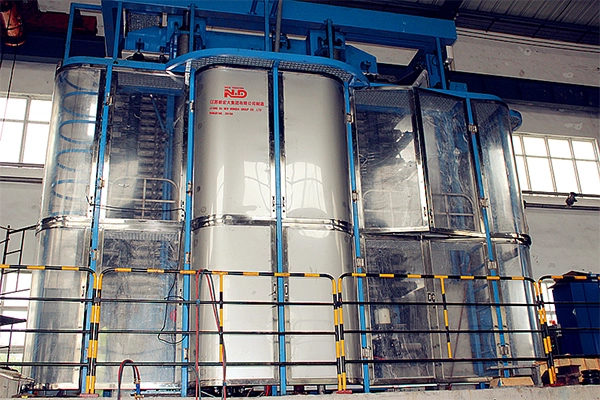
This is where solutions such as the Vertical Automatic Pressure Filter illustrate how engineering choices directly influence value retention. Designed for high-pressure, high-corrosion conditions, such systems enable deeper dewatering and more consistent downstream handling. For you, the relevance is not the machine itself, but the boundary it shifts—filtration no longer limits local processing depth.
How Do Agitation and Slurry Dynamics Influence Downstream Value Creation?
Once separation capacity is established, the next constraint often emerges upstream in mixing and reaction control.
Why does poor mixing silently undermine beneficiation and leaching results?
Agitation quality determines whether metallurgical reactions occur uniformly or fragment into localized inefficiencies. In leaching, insufficient suspension leads to stratification, uneven reagent exposure, and fluctuating recovery rates. In beneficiation, unstable slurry dynamics increase reagent consumption and reduce selectivity.
These effects rarely appear dramatic in isolation, yet over time, they erode process reliability. When recovery becomes unpredictable, operators revert to conservative operating windows, reducing throughput and discouraging further local processing steps.
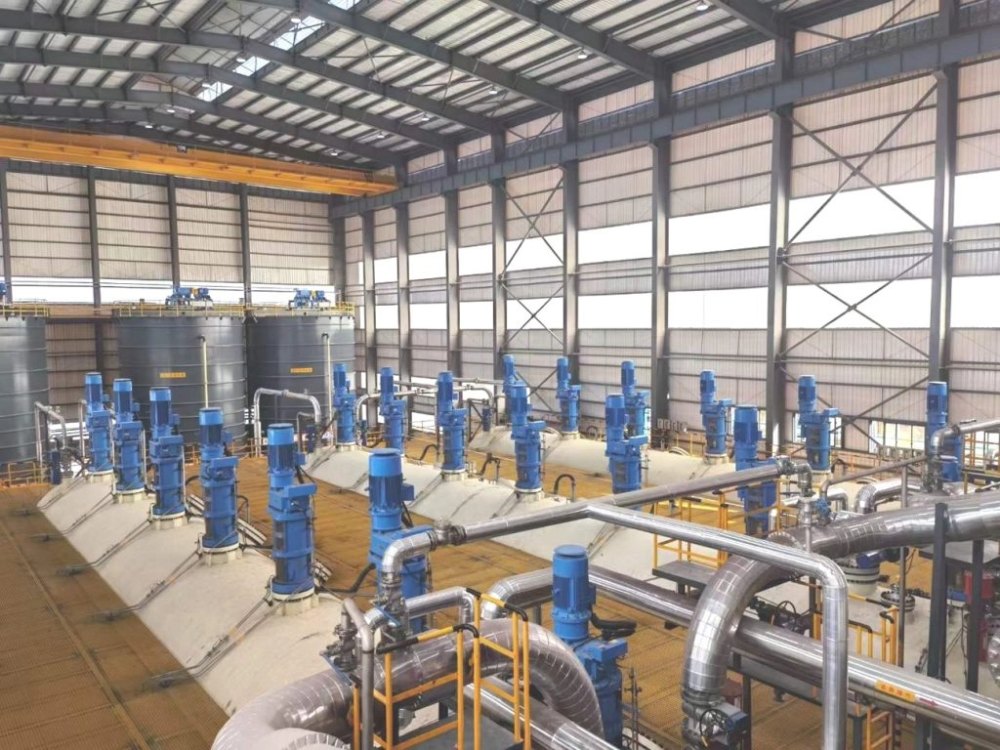
Purpose-built systems such as the Agitator for Nonferrous Industry and Beneficiation address this issue at the system level. By matching torque, impeller geometry, and tank scale to slurry behavior, agitation becomes a stabilizing rather than compensatory function. For value chains, this stability is decisive, allowing metallurgical knowledge and operational control to accumulate locally rather than being outsourced downstream.
What Kind of Industrial Capability Actually Supports a Fair Value Chain?
UNCTAD frames fair value chains around four pillars: technology, finance, commerce, and institutions. From your perspective, technology is the foundation upon which the other three stand.
Why fair value chains depend on engineering depth rather than policy alone
Financial incentives can attract processing plants, but only engineering depth keeps them operational. Commercial partnerships can initiate projects, but only stable systems sustain them. Institutional frameworks can mandate localization, but they cannot substitute for technical competence.
A fair value chain emerges when processing systems operate reliably enough to be maintained, modified, and eventually redesigned by local teams, which requires equipment that tolerates variation, processes that scale predictably, and designs that prioritize long-term operability over short-term throughput.
In this sense, fairness is not a redistribution mechanism. It is an outcome of accumulated industrial capability.
Who Is NHD and Why Does Its Engineering Path Align with UNCTAD’s Vision?
When you evaluate an engineering partner in critical minerals, you rarely look for novelty. You look for operational memory—systems that have survived decades of scaling, adaptation, and cross-industry transfer.
NHD represents this type of engineering trajectory. Originating from wet-process chemical and metallurgical equipment development, our work spans filtration, agitation, thickening, pressure vessels across phosphate chemicals, alumina, nonferrous metallurgy, and so on. What distinguishes this path is not specialization in a single mineral, but repeated system adaptation under demanding chemical and mechanical conditions.
With hundreds of large-scale projects executed globally and extensive in-house R&D capacity, our equipment evolution reflects accumulated process feedback rather than isolated design theory. For you, this matters because fair value chains require systems that can be transferred, localized, and sustained—not reinvented for each project. Engineering depth, not branding, is what allows technology to remain embedded where resources originate. Therefore, if you are interested in us, you can contact us by visiting our official website.
How Should You Evaluate Equipment Choices When Aiming for Fair Value Chains?
The final responsibility rests with decision-makers and researchers who shape processing pathways.
What questions matter more than brand or capacity figures?
When assessing equipment for critical mineral projects, capacity numbers are the least informative metric. Instead, you should ask:
- Does the system support continuous operation under local maintenance conditions?
- Can it tolerate feed variability without constant recalibration?
- Will it allow downstream processing steps to be added without redesigning the entire flowsheet?
These questions align directly with UNCTAD’s call for equitable value distribution. Equipment that enables operational continuity enables learning, learning enables local control, and control enables value retention.
FAQs
Q: Why does UNCTAD emphasize processing and value addition instead of mining output?
A: Because mining output alone does not generate durable economic capacity. Processing embeds skills, infrastructure, and technological learning that sustain long-term development.
Q: Is advanced mineral processing realistically achievable in developing regions?
A: Yes, provided systems are designed for stability, maintainability, and gradual scale-up rather than peak theoretical performance.
Q: How does equipment selection influence fairness in mineral value chains?
A: Equipment defines where processing stops. When systems enable deeper local transformation, value capture shifts structurally rather than symbolically.