 Portuguese
  English
  French
  Spanish
  Russian
  Arabic
  Indonesian
  German
  Turkish
  Persian
  Vietnamese
  中文
中文 
The latest U.S.-Japan critical minerals push sends a simple message to you as a plant owner, EPC contractor, or procurement lead: supply chain security no longer stops at mining. It now reaches into processing, manufacturing, and the industrial filtration equipment that decides whether a project can run with steady recovery, cleaner filtrate, and lower downstream risk. The action plan released on March 19, 2026, specifically points to support for mining, processing, and manufacturing projects, while the wider U.S. policy backdrop also stresses that domestic mining alone is not enough if processing capacity remains weak.
If you are comparing suppliers rather than reacting to headlines, NHD is the kind of company that usually deserves a closer look. Founded in 1992, it has grown into a large engineering-led manufacturer that integrates design, R&D, manufacturing, installation, and EPC support across filters, press filters, agitators, thickeners, sulfuric-acid equipment, desulfurization equipment, filter cloth, and related process systems. Its scale is substantial, with more than 800 employees, a strong technical team, broad export experience, and a customer base spanning chemical, mining, non-ferrous smelting, alumina, titanium dioxide, and wet-process metallurgy. What makes it especially relevant here is that it is not limited to one machine type. It works across the full chain that affects plant stability, from slurry conditioning to concentration and final dewatering. For you, that means fewer gaps between design intent and site performance, especially when the duty is corrosive, solids-heavy, and hard to standardize.
Why is industrial filtration equipment suddenly central to rare earth strategy?
Policy attention usually starts with ore bodies and trade flows, but project success is won much later in the circuit. That is where your plant either turns slurry into saleable output or turns capital into delay.
Why a supply chain pact still falls short if your plant cannot wash, separate, and dewater slurry with stable day-to-day performance
Rare earth and other critical mineral projects do not fail only because of resource quality. They also fail when process equipment cannot hold consistency under corrosive chemistry, fine particles, and tight recovery targets. The U.S.-Japan action plan gives priority to real processing and manufacturing projects, which means equipment choice now matters more than ever. If your filtration stage is unstable, the whole promise of “resilient supply” becomes fragile. That is why buyers are paying more attention to cake moisture, filtrate clarity, washing efficiency, automation, and maintenance intensity rather than treating filtration as a late-stage utility decision.
What should you demand first from industrial filtration equipment?
Before you compare quotes, you need to decide what the process really punishes: moisture, throughput swings, washing difficulty, solids loss, corrosion, or maintenance downtime.
Why low cake moisture, optional cake washing, automatic control, and compact layout matter more than a lower upfront machine price
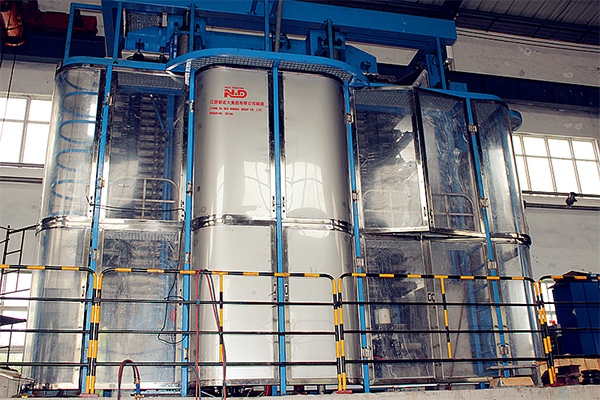
If your process needs drier cake, better washing control, and a smaller footprint, the best recommendation is the Filtro de pressão automático vertical. Its published design focus is clear: continuous operation, low cake moisture, optional washing, a high degree of automation, and a compact structure that lowers shop-area demand. The same product family is positioned for non-ferrous, smelting, titanium dioxide, chemical, and wastewater duties, which tells you it is built for demanding solid-liquid separation rather than light service only. For buyers like you, this kind of configuration makes sense when downstream drying costs are high, when floor space is tight, or when manual intervention needs to be reduced.
When should you choose continuous vacuum filtration instead of pressure filtration?
Not every line should chase the driest possible cake. In some duties, your plant benefits more from uninterrupted operation, longer washing zones, and easier discharge.
Why long washing zones, clean cake release, and continuous solids-liquid separation can be the smarter answer for high-throughput circuits
When your circuit values continuous movement and efficient cake washing, a horizontal rubber belt vacuum filter is often the better fit. It is a continuous solid-liquid separation equipment type already used in phosphoric acid, metallurgy, mining, chemicals, environmental protection, and desulfurization. Its strengths include multi-stage washing, optimized filtrate drainage, modular heavy-duty frame design, and relatively easy maintenance. That matters if you are handling large slurry volumes, need better washing flexibility, or want cleaner cake discharge than some rotating systems can deliver. For finer polishing duties, an automatic leaf filter can also make sense, especially where enclosed operation, high automation, and low-solids or difficult-to-filter media are part of your process.
Why does upstream conditioning decide downstream filtration results?
A filter rarely works in isolation. If the feed is wrong, even a good machine will underperform.
Why your filtration result depends on thickening, flocculation, and slurry movement long before the slurry reaches the filtration stage
This is where many buyers lose time and money. They buy the filtro first, then try to fix feed instability later. In reality, filtration performance depends heavily on upstream slurry behavior. Your feed concentration, particle condition, flocculant preparation, and tank mixing all shape how the cake forms and how much water remains trapped inside it.
How can you lower procurement risk before you place an order?
The safest filtration purchase is rarely the fastest quote. It is the one backed by proof.
Why sample testing, pilot verification, material matching, and simulated start-up protect your budget better than price comparison alone
For this kind of process equipment, selection should start with your material, not with a brochure. The equipment is highly customized and customers are expected to provide process materials for testing before quotation. The sales path then moves through lab testing, pilot verification, slurry-based simulated start-up before shipment, on-site commissioning, and later operation-and-maintenance support. That approach is especially relevant when your slurry is abrasive, corrosive, sticky, or chemically sensitive. If you skip this work, you may still receive equipment on time, but you are far more likely to pay later through poor cake release, unstable moisture, cloth problems, or corrosion mismatch.
What is the smartest recommendation for your next project?
The best answer is not one machine for every duty. It is the right route for the real process target you are chasing.
Why you should match the machine to the duty instead of forcing one filtration route onto every slurry circuit
If your main goal is low cake moisture, tighter automation, and a smaller installation footprint, a vertical pressure filter is the strongest first choice. If your line needs continuous filtration with flexible multi-stage washing and easier large-volume handling, a belt vacuum filter is often the better route. If your job is fine clarification or enclosed polishing of difficult media, an automatic leaf filter deserves serious attention. In other words, the best industrial filtration equipment for you depends on whether your pain point is dryness, throughput, washing, enclosure, or polishing precision. The strongest suppliers are the ones that can recommend across these routes instead of pushing a single answer onto every plant.
FAQ
Q: Why does the U.S.-Japan critical minerals action plan matter to filtration buyers?
A: Because it shifts attention from raw resource access to real processing capacity. If governments are backing mining, processing, and manufacturing projects, your equipment choice becomes part of the supply chain strategy, not just a plant detail.
Q: Which type of industrial filtration equipment is better when you need drier cake?
A: In most cases, a vertical automatic pressure filter is the better starting point when low cake moisture is the top priority. It is designed around washing, filtering, dewatering, automation, and a compact layout.
Q: Why should you ask for testing before you accept a quotation?
A: Because slurry behavior decides machine performance. Testing helps confirm filtration route, cloth choice, materials of construction, and operating parameters before the equipment reaches your site, which lowers commissioning and maintenance risk.