
 English
  French
  Spanish
  Russian
  Arabic
  Portuguese
  Indonesian
  German
  Turkish
  Persian
  Vietnamese
  中文
中文 
Filter presses hold a key position in chemical sector activities by allowing effective, steady, and secure separation of solids from liquids. The enclosed and automatic setup handles dangerous and harsh materials while keeping product cleanliness and meeting rules. By improving throughput, reducing waste, and enabling valuable material recovery, filter presses optimize chemical production efficiency. Advanced designs and material compatibility extend service life, while scalable automation and predictive maintenance help lower lifecycle costs, making filter presses vital for current chemical processing setups.
What Makes the Filter Press So Critical in Chemical Industry Operations?
The Mechanism Behind Solid-Liquid Separation Efficiency
In chemical manufacturing, precise separation of solids from fluids forms a basic need for safety, consistency, and product quality. A filter press carries out this task through strong solid-liquid separation by using mechanical compression. The equipment relies on a filtering layer, like cloth or paper, to separate fluids from solids. Fluid is pumped into the press chambers, and as pressure builds, it forces the liquid through the filter medium while retaining the solids in the form of a filter cake.
This approach brings clear benefits for handling hazardous or corrosive substances. The sealed system keeps chemical leftovers contained and reduces contamination to the environment. In chemical fields, filter presses are used to filter and separate chemicals and remove unwanted parts and dirt, which ensures pure end products.
The fully enclosed structure of modern filter press systems is also critical for sensitive applications. The entire process is fully enclosed and under full automatic control. For example, in zinc processing, contact with air might cause cadmium and cobalt to dissolve again, severely impacting output quality.
Why Filtration Consistency Matters in Chemical Manufacturing
Consistency in filtration directly influences batch purity, a main standard in good chemical work. Stable separation processes reduce risks of contamination and decrease the need for repeat treatment, which enhances the production rates and makes the best use of plant capacity.
Careful management of parameters like cake thickness and moisture content is essential. Such elements influence not only drying periods, but also steps for handling and disposal costs. Proper separation creates reliable movement of top-quality material across all stages, supports long-term flow, and follows strict control rules.
How Does a Filter Press Contribute to Process Optimization?
Enhancing Throughput Without Compromising Quality
Filter presses adjust easily to different output levels. By adjusting changes to cycle lengths, force patterns, and operational sequencing, you can raise volume while keeping accuracy. Automatic features add to dependable operations by cutting human mistakes. The application of filter presses in various industries shows their great advantages in processing large volumes of liquid at high speeds.
Newer models include better chamber shapes for uniform flow distribution, leading to consistent cake formation on every plate, which is quite important under strict quality specifications.
In addition, automation features like plate movement and cloth cleaning reduce worker tasks and improve turnaround between cycles. Such equipment is cost-effective for saving money on workforce and materials.
Reducing Waste and Improving Resource Recovery Rates
Not limited to basic separation, filter presses significantly contribute to material recovery in chemical operations. Costly substances like catalysts or agents are recovered from waste flows as they can capture useful chemicals from slurry that might otherwise be discarded.
The clear liquid output can return to earlier steps for cleaning or mixing, thus reducing the consumption of water and solvent, which not only supports sustainability objectives but also lowers operating costs.
Where Do Filter Presses Fit Into Specific Chemical Applications?
Application in Phosphoric Acid Production Lines
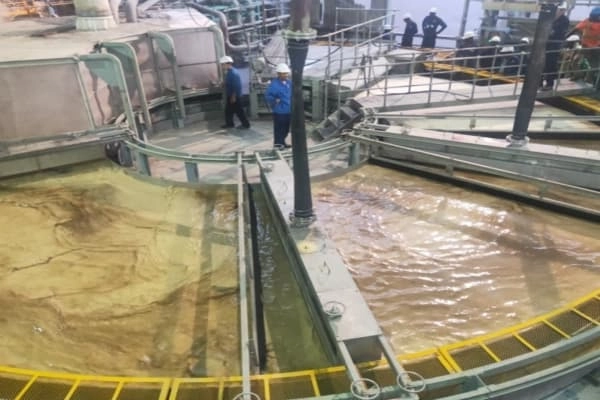
Phosphoric acid manufacturing creates highly abrasive and corrosive environmental conditions for filtering tools. Slurries are often processed under an environment of low pressure, where fast filtering and acid reclaim matter most. In such cases, rotary table vacuum filters show better results than conventional types.
After years of promoting and spreading, rotary table vacuum filters hold nearly 98% of market share in the phosphoric chemical fields. These systems offer continuous operation under vacuum with superior resistance to acid corrosion, making them ideal for phosphates processing.
Application in Catalyst Recovery and Resin Filtration Processes
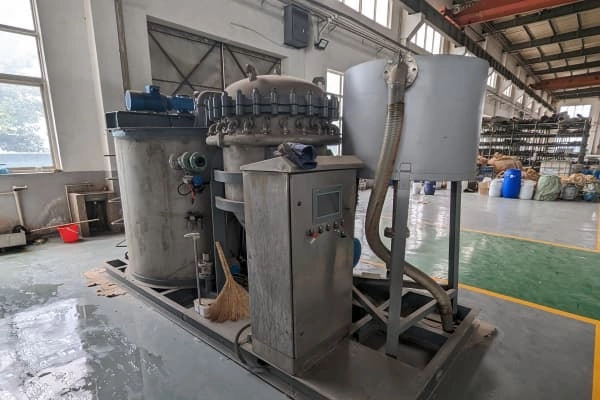
Chemical areas with costly catalysts or viscous synthetic resins require ultra-precise separation to avoid loss, which automatic leaf filters can handle through a large filtration space and little manual intervention.
The fine filtration can offer a fine filtering space up to 800㎡. Leaf filters with polymer tubes remove pre-coating needs while offering high resistance to acids and bases. Tubular polymer membrane delivers high exactness and fits slurry with particles under 5 microns, making them particularly suitable for catalyst recovery where tiny particles require separation with high precision.
Why Should You Consider NHD as Your Filtration Partner?
Expertise That Aligns With Your Industrial Demands
You’re not just investing in equipment—you’re securing a partnership with a company that understands the intricacies of chemical filtration. NHD has handled over eight hundred projects and maintains steady trade with more than 1000 clients in fields like phosphoric chemical, alumina, non-ferrous smelting, titanium dioxide, sulfuric acid, fine chemicals, pigment, dye, environmental protection, desulfurization, coal chemicals, pharmaceuticals, paper, etc.
NHD supplies a wide range of product choices, including rotary vacuum filters, leaf filters, and made-to-order press units—all built from resistant materials like stainless steel and polypropylene. Their systems emphasize automation, safety compliance, and operational efficiency.
With leading home market part shares for agitator and thickener, automatic vertical filter press reaches as high as 50% in China, and sales to over 30 nations, NHD brings tested dependability for large plant needs.
How Do Maintenance Strategies Affect Long-Term Performance?
Preventing Downtime Through Predictive Maintenance Planning
To maintain optimal performance over time, predictive maintenance plays a crucial role. Monitoring key indicators such as pressure drops across chambers or prolonged cycle times can highlight early signs of wear or clogging. Routine inspection schedules covering seals, filter plates, and media fabrics help prevent unscheduled outages during peak production periods.
Selecting the Right Materials for Chemical Compatibility
Equipment lasting power ties closely to material matching. Choice of fabrics that handle wide pH swings or high heat stays key in chemical steps. Acid and alkali resistant, almost suitable for all kinds of materials.
Materials such as stainless steel or polypropylene-lined components extend service life by resisting degradation from corrosive or reactive agents. This selection reduces maintenance frequency and ensures consistent performance across long production cycles.
What Are the Key Factors When Choosing a Filter Press for Your Plant?
Matching Equipment Specifications With Process Requirements
Choosing the right filter press starts with analyzing your specific process variables—flow rate, slurry viscosity, expected cake dryness, and operating temperature. Equipment should be configured accordingly to avoid performance shortfalls.
Automation options like plate shifters or integrated cloth washing should be considered if labor resources are constrained or if cleanliness between cycles is critical.
Balancing Capital Investment With Lifecycle Cost Efficiency
Initial investment cost should be weighed against operational efficiency over the system’s lifecycle. Energy-efficient motors, automated controls, and modular design contribute significantly to reducing total cost of ownership.
Scalability is another consideration—systems should accommodate future production increases without requiring full replacement.
FAQs
Q: Can filter presses handle highly acidic or alkaline slurries commonly found in chemical processing?
Yes—when built from resistant materials like stainless steel or polypropylene-covered parts, filter presses work safely under strong pH levels.
Q: How do I determine if I need a vacuum filter versus a standard plate-and-frame press?
Choice rests on process needs—if ongoing work with moisture-sensitive items appears (for example, phosphoric acid), a vacuum filter often fits better than batch-pressure units.
Q: Is it possible to automate cleaning cycles in large-scale chemical filtration systems?
Certainly, current filter presses can include automatic cloth cleaning setups that cut hand labor while holding uniform results through cycles.