
 English
  French
  Spanish
  Russian
  Arabic
  Portuguese
  Indonesian
  German
  Turkish
  Persian
  Vietnamese
  中文
中文 
As the energy transition drives a surge in electric vehicle production, the demand for high-purity battery metals like nickel and cobalt has reached unprecedented levels. To meet these rigorous quality standards, modern refineries are moving away from outdated plate-frame filter presses, which often allow fine particles to “bleed through” and compromise downstream efficiency. NHD’s automatic leaf filters have emerged as the gold standard for hydrometallurgy filtration, delivering sub-micron clarity and superior metal recovery.
Why Supernatant Precision Filtration Matters in Mining Yields
In mining and metal refining, clear liquids drive success. Poor filtration leads to lost metals and higher bills. As operations scale up for battery demands, every drop counts. This section explores what purity means, common pitfalls with old tools, and the real costs involved.
Defining Purity
Purity in hydrometallurgy means liquids free from solids that could spoil reactions or products. For battery metals, even 0.1% impurities can drop yields by 5-10%. In processes like nickel leaching, clear supernatants ensure metals dissolve fully without clogs. Precision filtration equipment, such as automatic leaf filters, hits sub-micron levels, far beyond what basic methods achieve. This clarity protects pumps and tanks from wear, extending their life by years. Think of it as the final guard in a chain—without it, downstream efficiency suffers. For phosphoric acid clarification, purity stops scaling in evaporators, keeping production steady.
The “Bleed-Through” Problem
Plate-frame filter presses have long been standard, but they struggle with fine particles under 5 microns. These tiny bits “bleed through” the cloth, clouding the liquid and contaminating outputs. In zinc smelting, this means reprocessing batches, wasting time and energy. Visual comparisons show press filtrates hazy next to the crystal-clear results from vertical leaf filters. The issue worsens with sticky slurries in nickel refining, where pressures fluctuate and gaps form. Automatic leaf filters avoid this by using rigid leaves that hold media tightly, capturing more solids without leaks.
With these basics in mind, it’s clear that filtration flaws hit the bottom line hard. Over time, small impurities add up to big expenses in chemicals and lost product.
| Feature | Plate-Frame Filter Press | Automatic Leaf Filter |
| Particle Retention | Struggles with fine particles < 5 microns | Captures sub-micron particles (down to 0.5 µm) |
| Filtration Quality | Hazy/cloudy due to “Bleed-Through” | Crystal-clear and transparent supernatant |
| Media Stability | Flexible cloths prone to shifts and gaps | Rigid leaves that hold media tight |
| Performance with Sticky Slurries | Poor; prone to pressure fluctuations | Excellent; maintains steady flow and seals |
| Operational Impact | Requires reprocessing and manual cleaning | Self-cleaning; reduces waste and labor |
| Bottom Line Effect | Higher chemical costs and lost metal yield | 30% savings in reagents; higher output |
Economic Impact
Savings in Reagents Switching to precision filtration isn’t just a technical upgrade; it’s a financial strategy. Substandard separation can increase chemical consumption by up to 25%. With an automatic leaf filter, plants report up to 30% savings in reagents and an 8% increase in metal recovery. For a mid-sized nickel refinery, this translates to millions in reclaimed revenue, often resulting in a full ROI in under two years.
How Does the Automatic Leaf Filter Work?
Shifting from why filtration counts, let’s look at the mechanics. Automatic leaf filters bring smart design to solid-liquid splits. They handle tough jobs in metal refining with ease. This breakdown covers the main phases, from separation to cleaning and discharge.
The Solid-Liquid Separation Phase
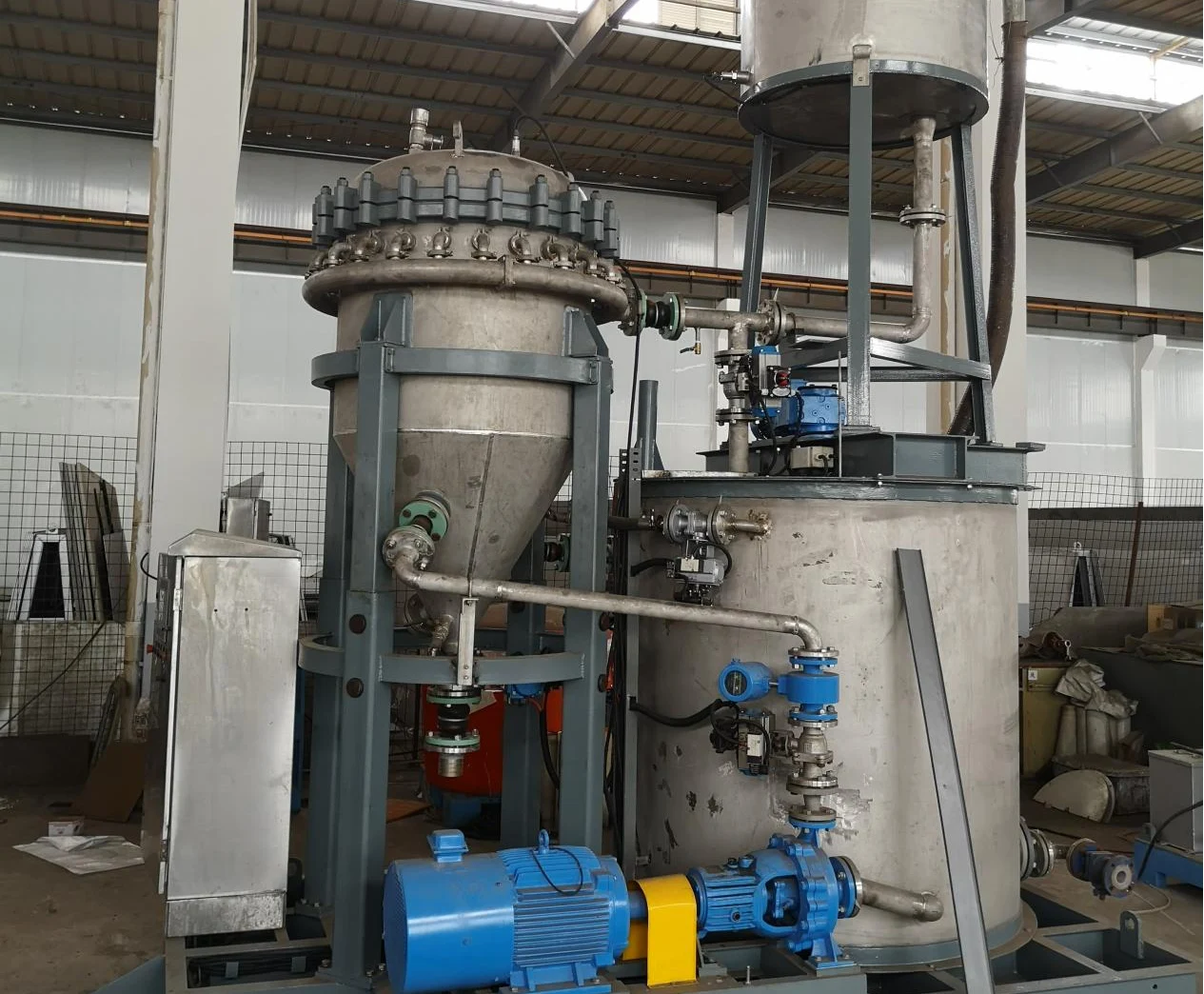
The process starts with slurry entering a sealed vessel. Leaves—flat, stacked screens coated in filter media—trap solids as liquid passes through. Pressures reach 0.6-1.0 MPa, pushing flow without crushing cakes. In fine filter hydrometallurgy filtration, this captures particles down to 0.5 microns. Unlike plate-frame filter presses, which rely on flexible cloths prone to shifts, these rigid leaves keep even gaps. As a result, the outputs (such as zinc supernatant) always remain clear and transparent.
Building on separation, the system doesn’t stop there. It needs to refresh itself without halting work. A clever back-flush keeps things running smooth, as detailed next. This automation marks a big leap from manual press handling.
Seamless, Automated Regeneration
NHD’s vertical leaf filters operate within a sealed pressure vessel by using filter leaves or polymer filter tubes as filtering elements. During filtration, suspended solids in the slurry are retained on the surface of the cloth, forming a filter cake, while the clarified liquid passes through the cloth and is collected by internal filtrate pipes. The filtrate then flows into a collecting chamber and onward to a head tank, from which it overflows into a clean liquid tank. When the preset filtration time or pressure is reached, the filtration process stops and the vessel is depressurized. The clarified liquid stored in the head tank then flows back in reverse direction through the filter cloth, backwashing the newly formed filter cake. This reverse flow dislodges the cake, causing it to detach, remain suspended briefly, settle to the conical bottom of the vessel, and finally be discharged from the bottom outlet.
Sludge Concentration and Discharge
Solids settle at the bottom as dense sludge, often 30-50% concentration. A valve opens to discharge it, sometimes with vibration to loosen cakes. In nickel metallurgy, this yields dry cakes for easier disposal or reuse. Automatic leaf filters manage this without opening the unit, unlike presses that expose workers to mess. Discharge happens every cycle, keeping volumes low—under 5% of total flow. This efficiency suits large-scale ops, where sludge handling costs add up. Precision filtration equipment like this minimizes environmental impact too, by containing everything sealed.
Applications in Phosphoric Acid Clarification & Battery Metal Refining
From the workings, it’s evident these filters fit specific needs. In chemicals and mining, they tackle unique challenges. Here, we focus on key uses, like clearing gray sludge and secondary polishing. These examples show how automatic leaf filters replace older tools in real plants.
Removing the “Gray Sludge”
In phosphoric acid production, gray sludge—fine silicates and organics—must go to meet battery-grade standards. Automatic leaf filters strip these out, achieving under 50 ppm solids. For LFP batteries, this purity protects cells from defects. In zinc or nickel wet smelting, they clarify leach solutions, boosting extraction by 12%. Compared to plate-frame filter presses, which leave residues causing scaling, leaf filters safeguard evaporators. Vertical leaf filters excel here with their tall design, allowing gravity to aid settling. This application proves their value in high-stakes refining.
Secondary Clarification (Police Filtering)
After plate-frame filter presses, filtrates often need more polishing. Automatic leaf filters act as guards, re-filtering with high-precision elements to catch leftovers. In hydrometallurgy, this enables the subsequent production of high-purity nickel, such as electrolytic nickel with a purity of 99.99%, from the purified pregnant solution. Elements like polymer meshes trap sub-micron bits missed before. For phosphoric acid clarification, it prevents carryover to storage, cutting corrosion risks. Sites report 20% higher overall yields with this setup. Fine filter hydrometallurgy filtration shines in these roles, offering modular add-ons for existing lines. This layered approach maximizes efficiency without full overhauls.
Why NHD Leads the Industry in Precision Filtration
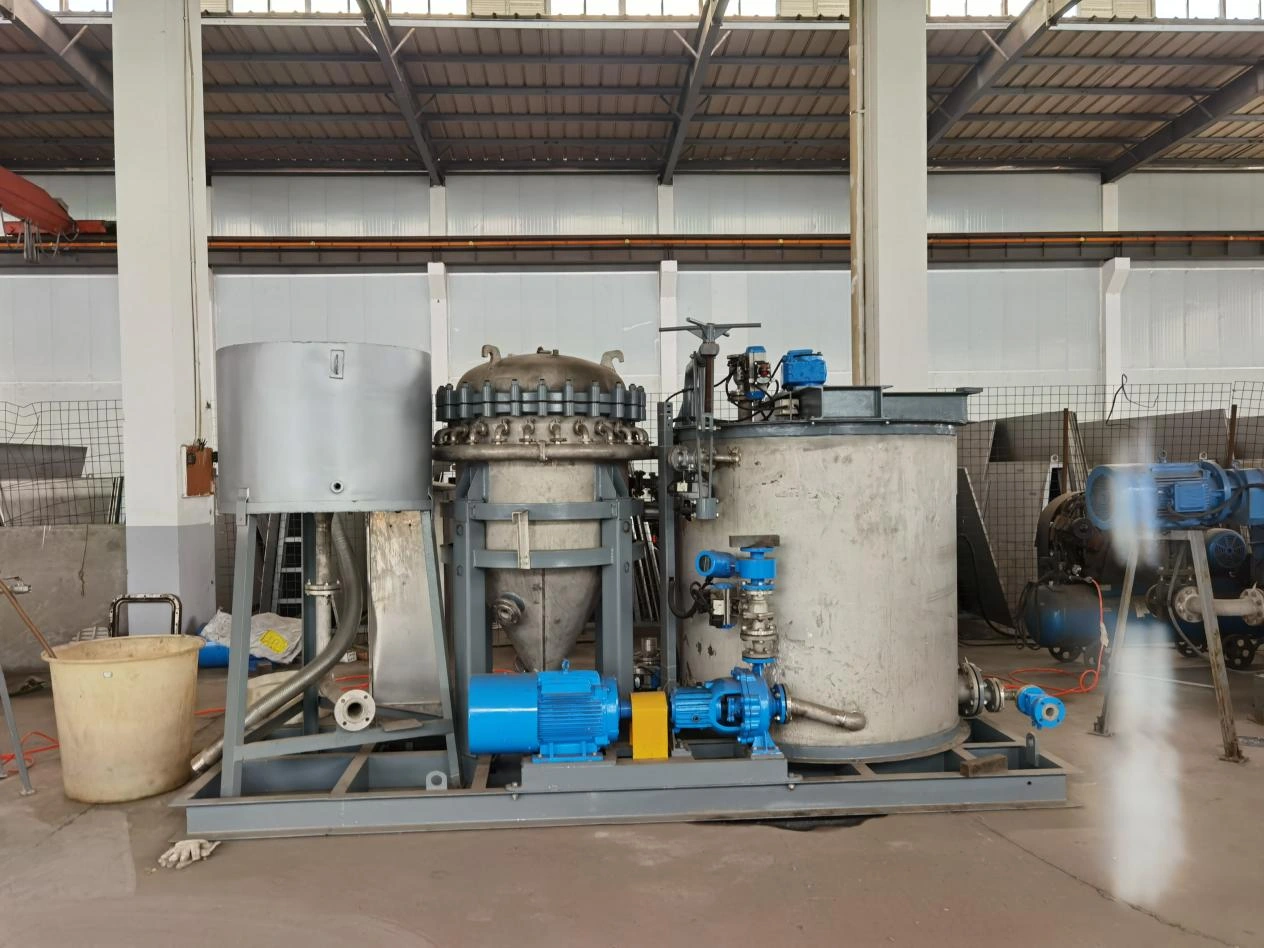
NHD leaf filters are engineered for the most demanding environments, supporting pressures up to 1.0 MPa for viscous battery metal slurries. What sets NHD apart is our commitment to safety:
- Triple Pressure Overload Protection: Ensuring absolute operational security.
- Individual Isolation Valves: Each filter leaf can be isolated without halting the entire production line, minimizing downtime.
- Scalable Precision: With areas from 5m² to 500m², our systems achieve 0.1-micron filtration—twice the precision of standard cloth systems.
Conclusion
For processes needing top filtration, automatic leaf filters offer reliability and gains. They capture fines as “police filters,” shielding gear, and lifting yields in hydrometallurgy. NHD‘s units bring precision and safety to phosphoric acid clarification and metal refining. Ready to optimize your refinery? Contact our technical team at sales@chinanhd.com for a customized filtration analysis.
FAQs
Q: Why is precision filtration critical in hydrometallurgy and battery metal production?
A: It ensures clear liquids for better metal recovery and less equipment damage, directly impacting yields and costs.
Q: How does an automatic leaf filter achieve superior supernatant clarity?
A: Through rigid leaves and back-flushing, it traps fine particles that escape traditional methods, delivering sub-micron purity.
Q: Why choose NHD’s vertical leaf filters over standard industry models?
A: They offer higher pressure tolerance, full automation, and scalable designs, plus safety features that minimize downtime and risks.