 English
  French
  Spanish
  Russian
  Arabic
  Portuguese
  Indonesian
  German
  Turkish
  Persian
  Vietnamese
  中文
中文 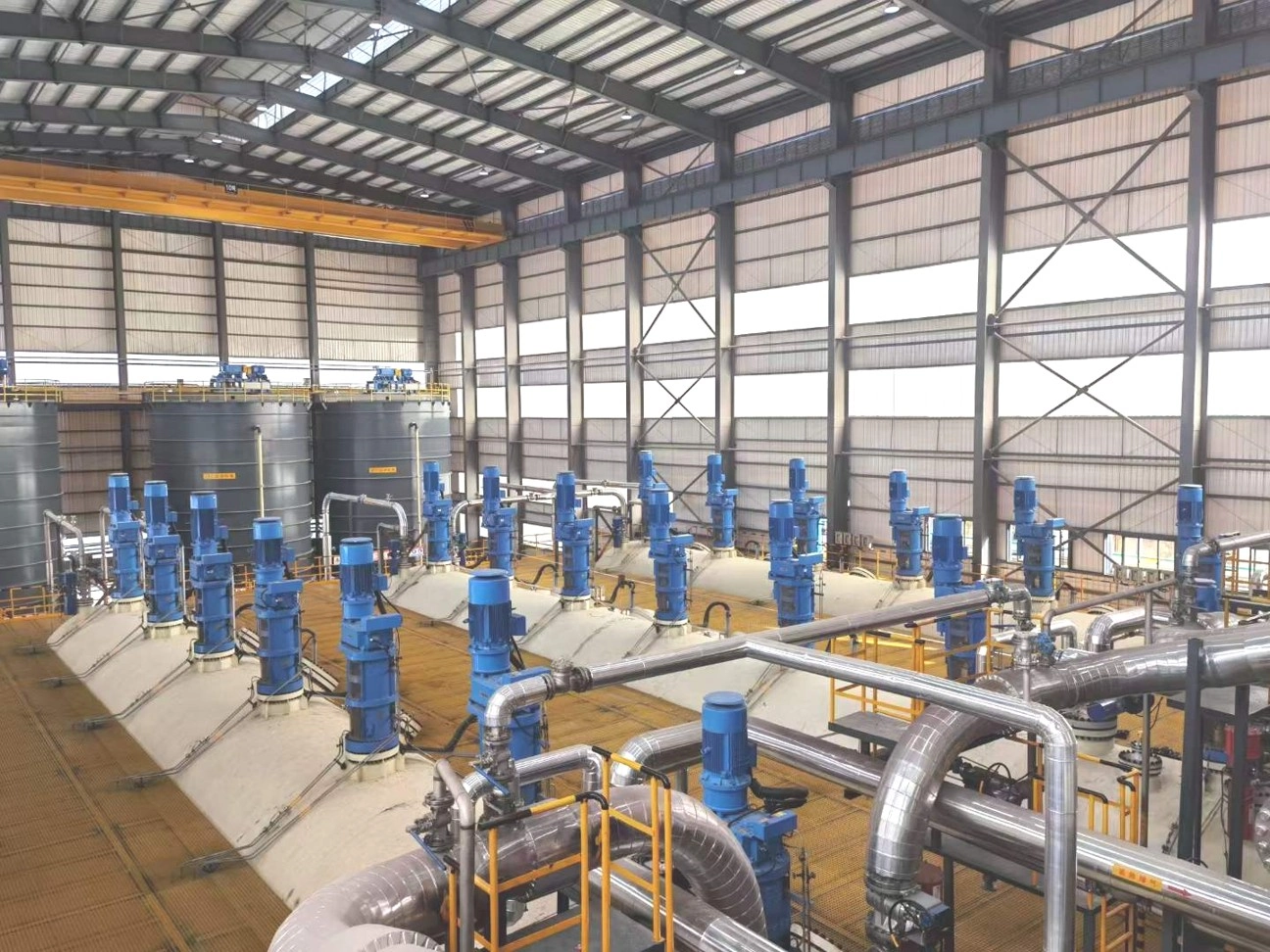
Deep tanks and high-liquid-level vessels can turn normal mixing problems into expensive production issues. A mixing tank agitator must prevent uneven concentration, slurry settling, dead zones, heat-transfer imbalance, and shaft vibration. Before requesting a quote, chemical plants need to confirm medium viscosity, solids content, corrosiveness, tank dimensions, liquid level, and installation conditions.
Why Does Deep-Tank Mixing Become a Procurement Risk?
Deep-tank procurement risk usually appears in three connected places: batch quality, circulation path, and early model selection. Review these signs together before you treat the agitator as a simple motor-size purchase.
Uneven Concentration and Scrapped Batches
Uneven concentration, settling, and dead zones lead to off-spec product and scrapped batches. In a deep tank, the top can appear active while the lower area stays quiet, so samples may disagree before operators can see the real mixing problem.
Bottom Dead Zones From Poor Circulation
Poor circulation causes concentration gradients, solid settling, and dead zones near the tank bottom or wall. Solids may settle near the wall or cone. If the bottom turnover is not strong enough, the discharge line can carry uneven material.
Motor-Power-Only Selection Risk
Selecting on motor power alone results in the wrong unit, rework, and a second round of procurement. A tank agitator can have enough motor power and still be a poor choice if its shaft design, impeller load, and liquid height are not matched.
What Process Data Should Buyers Confirm First?
Before sizing starts, buyers need a compact data package that covers the medium, the vessel, and the process goal. These three groups of information turn a vague inquiry into a usable technical review.
Medium Properties and Corrosive Components
Medium properties: viscosity range, density, solids content, particle size, temperature, pH, and corrosive components. These details affect impeller type, torque, wetted-part material, and seal-area review, especially when slurry or corrosive chemicals are involved.
Tank Data and Available Headroom
Tank data: tank diameter, liquid height, bottom shape, baffle arrangement, nozzle/manhole position, and available headroom. A tall narrow tank may need multiple impellers, while limited roof access can change the installation plan.
Process Target and Mixing Duty
Process target: blending, dissolution, suspension, reaction support, heat transfer, or anti-settling duty. The target — circulation, suspension, reaction, or heat transfer — drives the layout; for solids-heavy duty, a slurry agitator may need a different impeller and speed.
Why Does Standard Agitator Selection Fall Short in Deep Tanks?
Standard selection falls short when liquid height makes mechanical stability, flow pattern, and material exposure more sensitive—the shaft, impellers, and wetted parts all need review before a model is released.
Shaft Stability and Gearbox Load
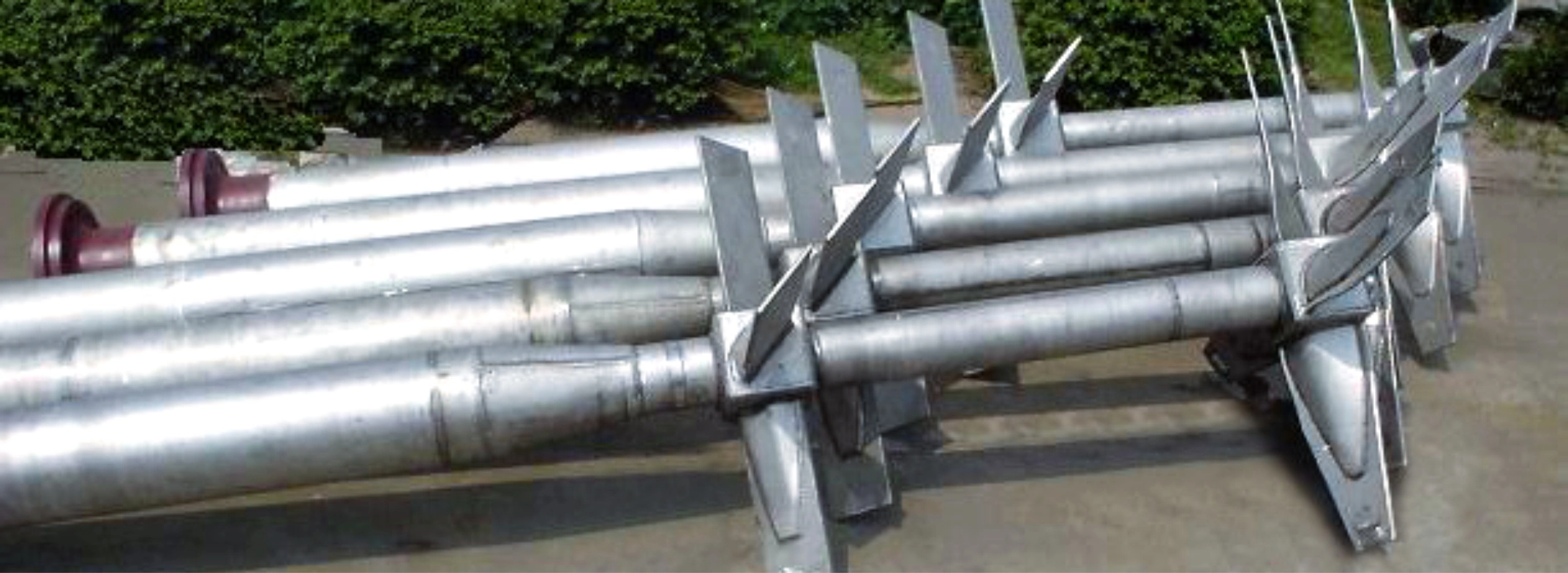
Deep tanks require careful review of shaft length, critical speed, torque, gearbox load, bearing support, and installation stability. A standard mixing tank can often be reviewed with a shorter shaft and simpler support, but a high-liquid-level vessel needs a deeper mechanical review.
Impeller Spacing and Flow Pattern
Impeller number, spacing, blade type, and flow pattern should be matched to the tank geometry and process purpose. During early screening, buyers can review NHD equipment families in the Agitator & Thickener Series. For a storage-circulation duty, the Side Entry Agitator may be discussed as a separate route, while deep process vessels usually need a vertical long-shaft review.
Chemical Agitator Material Selection
For corrosive or abrasive chemical media, a chemical agitator must combine mixing design with material selection. Wetted parts, shaft length, impeller surfaces, and seal-area materials should be checked against acid, alkali, chloride, temperature, and wear conditions before procurement.
| Design factor | Standard mixing tank | Deep tank / high liquid level |
| Shaft & support | Short shaft, a single bearing is usually enough | Long shaft – needs critical-speed and deflection review, often a steady bearing |
| Impellers | Frequently a single impeller | Multiple impellers, spacing matched to liquid height |
| Circulation | One well-mixed zone, easy turnover | Stratification and bottom dead zones; needs strong top-to-bottom flow |
| Speed & vibration | Critical speed rarely an issue | Operating speed must stay clear of critical speed |
| Torque & gearbox | Standard drive load | Higher torque, heavier gearbox and bearing load |
| Material exposure | Standard selection | Longer immersed length means corrosion and wear over the whole shaft |
| Install & maintenance | Simple to fit and service | Needs headroom to pull the long shaft; heavier lifting |
How Does NHD Extra Long Agitator Handle Deep-Tank Chemical Projects?
Custom Shaft and Impeller Layout
NHD Extra Long Agitator supports deep-tank projects through custom shaft design, impeller layout, stability review, and corrosion-resistant material selection. This gives buyers a route to discuss shaft length, impeller position, and material exposure together.
Large-Scale Heavy-Load Agitator Experience
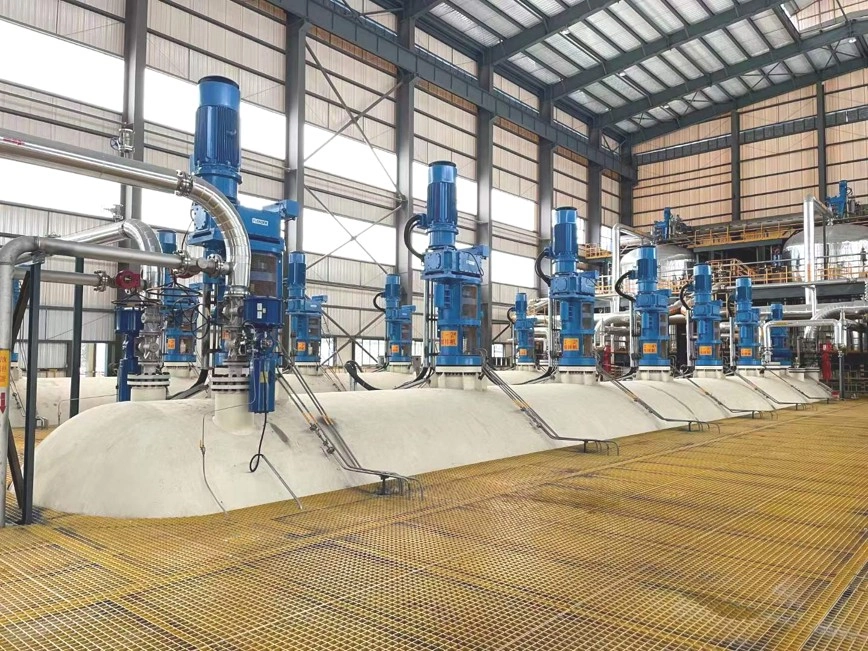
NHD large agitator experience includes a 300,000t/a PA project and high-power, heavy-load, extra-long agitator applications. This matters when a buyer needs evidence that the supplier can review torque, shaft length, gearbox load, and installation stability as one package.
Simulation, Testing, and Material Options
Custom design can combine CFD/CFM simulation, laboratory/pilot/scale-up testing, and material options such as 304, 304L, 316L, 317L, 904L, and specialized corrosion-wear resistant materials. NHD also uses FLUENT CFD analysis, LDA laser Doppler velocimetry, FEA finite element analysis, CAD 3D design, laboratory tests, pilot tests, and scale-up experiments to support large-unit decisions.
For solids-heavy duties, buyers can also review NHD experience with Agitator for Nonferrous Industry and Beneficiation. Designed for the demanding conditions of mineral processing and nonferrous metallurgy, it addresses the same core challenges: maintaining uniform slurry movement, preventing solids settlement, and sustaining structural integrity under continuous, high-torque operation.
How Should Buyers Build a Practical Agitator Procurement Checklist?
A practical checklist helps engineering, maintenance, and purchasing look at the same risks before the inquiry becomes a purchase order. The buyer should check the quotation basis, the design checkpoints, and the data package for supplier review.
Design and Maintenance Checklist
Key checklist items include design calculation, impeller layout, shaft stability, material selection, maintenance access, and installation constraints. The second table turns these items into a quick procurement review before technical clarification or purchasing sign-off.
| Procurement checkpoint | What buyers should confirm before finalizing |
| Shaft stability | Critical-speed and deflection review matches the actual liquid height, shaft length, and operating speed. |
| Impeller layout | Impeller number, blade type, and spacing match the tank geometry rather than a stock configuration. |
| Material selection | Wetted parts match the medium, including corrosion, abrasion, temperature, and cleaning conditions. |
| Maintenance access | Headroom, lifting path, and clearance are enough to pull and service the long shaft safely. |
| Installation constraints | Mounting type, support structure, nozzles, manholes, and lifting conditions are checked against the site. |
| Drawings and data | Tank GA drawing and a completed agitator data sheet are attached before the final technical review. |
Operating Goals Before Contacting NHD
Buyers can prepare medium data, tank dimensions, and operating goals before they contact NHD to confirm a mixing tank agitator model. A clear data package makes the final selection easier to justify in both engineering and procurement meetings.
Conclusion
For deep-tank chemical projects, a mixing tank agitator should be selected from medium properties, tank geometry, process duty, shaft stability, and material conditions, not from motor power alone. NHD can help chemical plants review deep-tank mixing data and develop a customized Extra Long Agitator solution for more stable circulation, lower settling risk, and safer long-term operation.
FAQs
Q1: What information should buyers provide before selecting a mixing tank agitator?
A1: Buyers should provide tank diameter, liquid height, bottom shape, baffle layout, nozzle and manhole positions, medium viscosity, density, solids content, particle size, temperature, pressure, corrosion data, operating mode, and the main mixing purpose.
Q2: Why are deep-tank applications harder than standard mixing tanks?
A2: Deep tanks increase shaft length and liquid height. That makes deflection, critical speed, impeller spacing, bottom circulation, torque, bearing support, and maintenance access more important than in a short standard vessel.
Q3: How do I size a mixing tank agitator?
A3: Start from medium viscosity and solids, tank diameter and liquid height, and the process duty; these set impeller type, layout, shaft length, and power.