 English
  French
  Spanish
  Russian
  Arabic
  Portuguese
  Indonesian
  German
  Turkish
  Persian
  Vietnamese
  中文
中文 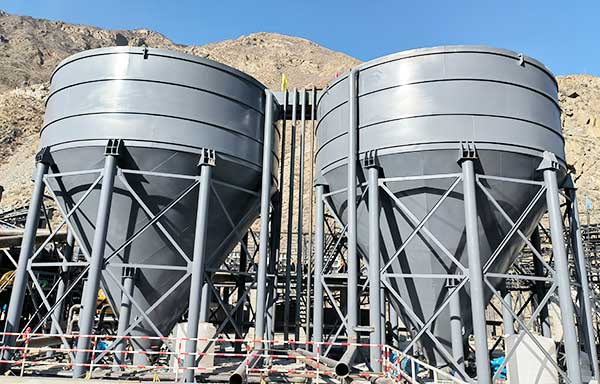
Mineral processing automation is no longer just a nice idea on a project slide. In China, mine robot application verification has already been pushed into a national-level pilot system. The trial covers several mining scenes, including mineral processing, and it focuses on safety, reliability, stability, practical use, complex environment adaptability, and coordinated operation.
Mineral Processing Automation Is Moving into Real Projects
In the past, many mines talked about automation, but actual use was still limited. Some systems worked in one section but could not connect with the whole plant. Some equipment had sensors but no real control logic. Some sites still relied on operators walking around the plant and judging problems by sound, vibration, and experience.
That is changing. Once mineral processing automation enters a national-level verification and promotion system, buyers will look at equipment in a more practical way. They will ask whether the equipment can run safely with fewer people. They will ask whether the system can give early warnings before something goes wrong. They will also ask whether it can handle dust, slurry changes, heavy loads, and long working hours.
Why Thickener Automation Matters in Mineral Processing
A thickener separates solids and liquid through gravity sedimentation. Slurry enters the tank, solids settle, clarified water overflows, and concentrated underflow is discharged from the bottom. The process sounds simple. In real production, it is not always that clean.
Feed concentration may change. Particle size may shift. Flocculant dosing may not be stable. The mud layer may rise too high. Sludge may build up at the bottom. The rake system may face overload. If operators only find these issues after the motor trips or the rake arm is under stress, the plant has already lost time.
NHD’s thickener automation helps solve this earlier. It gives operators real data instead of guesswork. More importantly, it gives the control system a chance to react before the problem becomes a shutdown.
For mining plants trying to reduce workers on site, this matters a lot. A smart thickener does not replace all human decisions, but it reduces routine manual checking. It also helps operators focus on real process adjustment, not just walking around to see whether the equipment is still running.
What Makes a Thickener Smart?
Smart thickener equipment is not smart just because it has a control cabinet. The useful part is whether the monitoring, warning, and control functions match real process needs.
Ultrasonic slurry level and solid content detection
Slurry level and solid content are two key signals in thickener operation. If the plant cannot see these changes in time, the underflow may become unstable, or the overflow may carry more solids than expected.
NHD serial thickener uses ultrasonic technology to measure slurry level and solid content. This gives the control system useful data during operation. For mineral processing plants, this is better than only relying on manual sampling or rough visual checks.
DCS automatic control
A smart thickener should not work as an isolated machine. It needs to connect with the plant control system.
NHD serial thickener can work together with DCS. The system monitors material conditions and combines equipment data with process data for automatic control. In a low-manpower plant, this is important because the thickener can become part of the whole mineral processing automation system, not just a single tank with a motor.
Torque monitoring and warning
Torque is one of the most important warning signals in thickener operation. When sediment builds up at the bottom or discharge becomes poor, the rake load rises. If no one notices it in time, the motor may trip, or in serious cases, the rake arm may be damaged.
NHD thickener can detect torque through instruments and send the signal to the user’s control center. This helps operators see overload risk earlier. It also supports safer operation in heavy slurry conditions.
How Deep Cone Thickener Fits Low-Manpower Mines
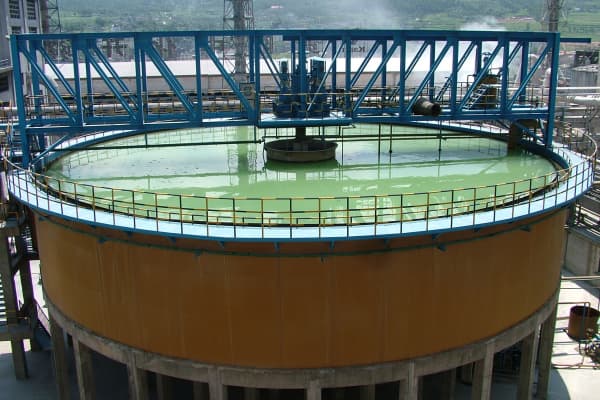
A deep cone thickener is useful when the plant wants higher underflow density and better water recovery. The steep cone section helps solids compress more at the bottom. For tailings, red mud, mineral slurry, and other high-solid materials, this structure can reduce slurry volume before the next step.
Here, thickener design matters. A deep cone thickener is not just a taller tank. The cone angle, feedwell design, rake load, drive torque, discharge control, and automation signals all affect performance. If the thickener design is not matched to slurry behavior, the equipment may run, but underflow stability may be poor.
Why Smart Thickener Equipment Supports Safer Operation
The mine robot pilot direction puts strong weight on safety, reliability, stability, and adaptability in complex environments. These words are not only for robots. They also fit mineral processing equipment.
A thickener works with heavy slurry every day. The working environment may include abrasive particles, corrosive liquid, high solid content, and changing feed conditions. If the equipment cannot give stable signals and early warnings, operators may only react after failure.
With ultrasonic monitoring, DCS automatic control, and torque warning, a thickener can support safer operation in several ways. It reduces blind spots. It lowers the chance of unnoticed rake overload. It helps operators see abnormal conditions from the control room. It also makes the equipment easier to fit into a plant-wide automation plan.
For mines moving toward fewer workers on site, this kind of hardware foundation is very practical. It is not a slogan. It is the basic layer that makes unmanned or low-manpower operation possible.
What Buyers Should Check Before Choosing an Automated Thickener
When buying an automated thickener, the first thing is not the tank diameter. The buyer should start with slurry data.
Check feed concentration, particle size, settling behavior, corrosiveness, daily capacity, target underflow density, and overflow requirement. Then check thickener design, cone structure, rake torque, drive system, scraper layout, discharge method, and flocculant system.
For automation, buyers should ask more direct questions. Can the thickener measure slurry level? Can it monitor solid content? Can it connect with DCS? Can torque signals be sent to the control center? Does the system support rake lifting or overload protection? What happens when underflow discharge is not smooth?
It is also worth asking about installation and service. A smart thickener is still large industrial equipment. Site layout, foundation, piping, power supply, control connection, commissioning, spare parts, and operator training all affect the final result.
Conclusion
In 2026, mineral processing automation is becoming more practical. Mine robot pilots are pushing the industry to check whether equipment is safe, reliable, stable, and suitable for complex environments. For mineral processing plants, the thickener should be part of that discussion.
A smart thickener helps plants move from manual checking to data-based control. A deep cone thickener with proper thickener design can improve underflow concentration, water recovery, and process stability. When ultrasonic detection, DCS automatic control, and torque warning are built into the equipment, the thickener already has the hardware base for low-manpower operation.
For mining, alumina, wastewater, and chemical processing projects that want smarter slurry concentration and safer operation, NHD thickener equipment can be considered in the early design and procurement stage.
FAQ
Q1: What parameters should buyers provide before asking for a thickener quotation?
A1: Buyers should provide slurry concentration, particle size, daily capacity, target underflow density, pH, temperature, corrosion conditions, site layout, and automation requirements.
Q2: Is MOQ required for NHD thickener equipment?
A2: For large industrial equipment, MOQ is usually one complete unit. Final configuration depends on project size, thickener design, tank size, and site conditions.
Q3: Can NHD customize a deep cone thickener for mining automation projects?
A3: Yes. NHD can customize deep cone thickener size and automation configuration, including DCS connection, ultrasonic monitoring, torque warning, installation guidance, commissioning, and after-sales support.
Q4: What automation functions should buyers check in a smart thickener?
A4: Buyers should check ultrasonic slurry level and solid content detection, DCS connection, torque monitoring, rake overload warning, and whether signals can be sent to the control center. NHD thickener supports these functions for safer low-manpower operation.