 English
  French
  Spanish
  Russian
  Arabic
  Portuguese
  Indonesian
  German
  Turkish
  Persian
  Vietnamese
  中文
中文 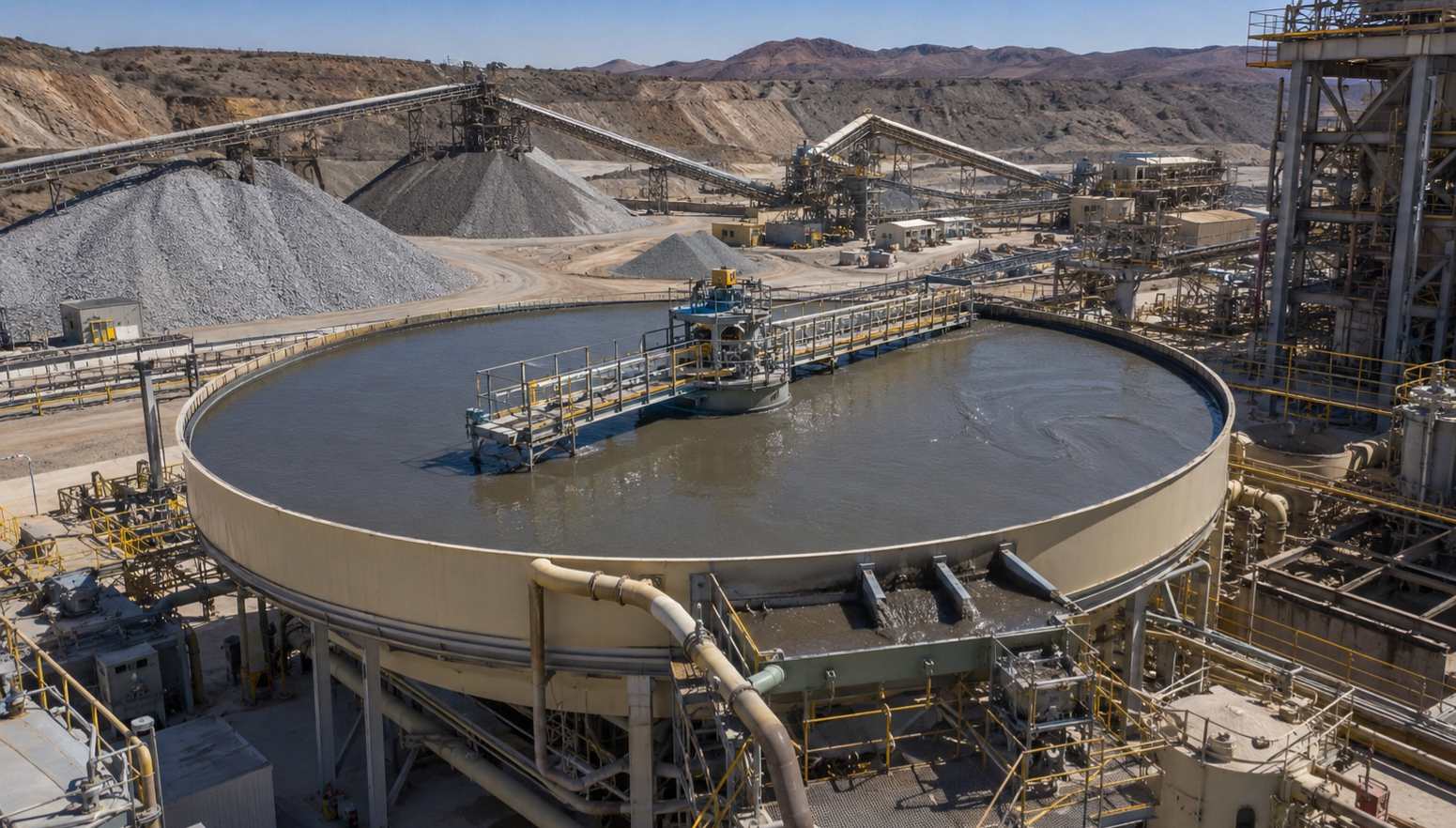
Uranium is back in the discussion for many mining teams. The US market, for example, has seen uranium production rise again, and more drilling activity points to a wider recovery in mine development. For non-ISR mines, ore still needs crushing, grinding, slurry preparation, leaching, filtration, and tailings handling. Between grinding and downstream leaching or filtration, one step is easy to underplay: slurry thickening. If the slurry is too dilute, the plant moves too much water. If the underflow is unstable, the leaching section and filtration equipment keep chasing changing feed conditions.
Why Slurry Thickening Matters in Conventional Uranium Ore Processing
In a conventional uranium plant, the thickener sits where process stability starts to matter. Ground ore slurry enters the thickening section. Solids settle. Clarified water overflows. Denser underflow moves to leaching, washing, filtration, or another downstream stage.
When this step works well, the leaching feed is easier to control. The plant does not need to pump as much excess water. Reagent concentration is less diluted, and filtration equipment receives a more stable feed. When it works badly, thin slurry increases tank volume, pumping load, and downstream liquid handling.
What Happens When Slurry Concentration Is Too Low
Higher Leaching Volume
Leaching performance depends on contact between solution and mineral particles. If the slurry is too thin, the leaching section may need to process more liquid for the same dry solids. That means more tank volume, higher pumping demand, and sometimes more difficulty keeping reagent concentration steady. For buyers, this is not only a process issue. It becomes a capital and operating cost issue.
Heavier Filtration Load
If too much water goes forward, filtration equipment must remove it later. A filter press or vacuum filter can only do so much within one cycle. More water can mean longer filtration time, larger filtration area, more wash water pressure, or lower throughput. A better thickening section does not replace filtration. It helps filtration work under a more reasonable load.
More Water Management Cost
Conventional uranium projects often pay close attention to water balance. Excess water affects pumping, tailings handling, return water systems, and sometimes environmental control. Higher underflow concentration can reduce this burden before it spreads across the plant.
How Deep Cone Thickener Improves Underflow Concentration
A deep cone thickener uses gravity settling and compression to separate solids from liquid. Compared with a shallower thickener, the cone section gives settled solids more room to compact before discharge. This helps produce denser underflow, especially when the process needs stable feed before leaching or filtration.
Flocculant use is part of the same story. Fine particles settle slowly by themselves. With proper flocculation, small particles gather into larger flocs and settle faster. But dosage is not something to guess. Too little flocculant gives poor settling. Too much can waste reagent and may even hurt downstream behavior.
For uranium ore, the exact underflow solids percentage, throughput in t/h, and flocculant consumption should be confirmed by settling or pilot tests. Ore type, particle size, feed solids, clay content, and leaching route all change the result.
What Data Buyers Should Use to Evaluate Thickener Performance
A serious thickener RFQ should include more than tank diameter. Buyers should ask for data that connects thickening performance with downstream cost.
Underflow Concentration
The target underflow solids percentage is the first number to define. Higher is not always better if the underflow becomes hard to pump or control. The useful target supports stable leaching and filtration without creating discharge problems.
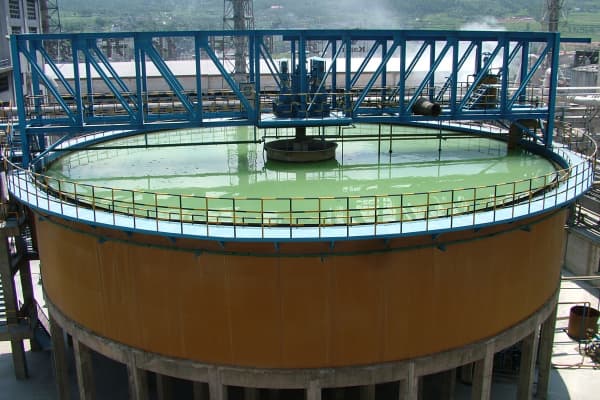
NHD’s deep cone thickener data gives a reference from washing thickening duties: final washing underflow solid content of 46–53%, final washing supernatants solid content of ≤0.2 g/L, and final washing underflows alkali of ≤5 kg/t. These are not uranium project guarantees, but they show the kind of indexes buyers can ask for.
Throughput in t/h
Processing capacity should be discussed in tons per hour of dry solids and feed slurry volume. The two are not the same. A thickener may look large enough by volume, but if the solids’ settling rate is poor, the real dry-solids throughput can fall short.
NHD’s deep cone thickener can reach 15 times that of a common thickener, while the underflow compressive ability is nearly 10 times higher. The final t/h selection still needs test data.
Flocculant Consumption
Flocculant cost runs every day, not only during commissioning. Buyers should compare flocculant consumption per ton of dry solids together with underflow concentration and overflow clarity. Low dosage with poor overflow clarity is not a saving.
How Thickening Reduces Leaching and Filtration Load
A stronger thickening section can make the next stages less stressed. Higher and steadier underflow concentration means less unnecessary water enters leaching. That can help keep reagent concentration easier to manage. It can also reduce pumping volume.
For filtration, the benefit is also practical. A denser and more stable feed may reduce cycle swings. Filter cake formation can become easier to manage. If the thickener also provides clearer overflow, recovered water can return to the plant with less solids burden.
A thickener does not fix the whole uranium plant. It removes one common source of instability before it reaches more expensive downstream equipment.
Where NHD Deep Cone Thickener Fits
NHD describes its thickener as gravity sedimentation equipment for separating liquid-solid mixtures, with applications in mineral processing, chloride-alkali, wastewater treatment, wet-process phosphoric acid, and other industries. The product range includes deep cone thickener and automatic thickener.
For conventional uranium ore processing, NHD deep cone thickener can be reviewed when the buyer needs higher slurry concentration, stable discharge, and automatic monitoring before leaching or filtration. The equipment includes DCS-based monitoring, ultrasonic slurry level and solid content measurement, and torque detection. These features matter because high solids and high compression put heavy load on the drive.
NHD’s deep cone thickener also offers automatic flocculant preparation and addition systems. For plants that do not want operators adjusting everything by feel, this can make daily operation steadier.
How Buyers Should Select Thickener Equipment
Before choosing thickener equipment, buyers should prepare ore type, particle size distribution, feed concentration, target underflow concentration, required throughput, flocculant test results, overflow clarity target, leaching process needs, and available site space.
For retrofit projects, old drawings are not enough. Site photos, existing foundation limits, discharge pipe location, pump capacity, and downstream filtration capacity should be checked together.
The supplier should not only quote a diameter. It should explain the settling test basis, flocculant plan, discharge method, torque protection, automation setup, and maintenance access.
Conclusion
In conventional uranium ore processing, deep cone thickener equipment is part of the cost-control chain. It affects underflow concentration, overflow clarity, water recovery, leaching feed stability, filtration load, flocculant use, and daily operation.
For B2B buyers, the right choice should be based on settling tests, target underflow solids percentage, dry-solids throughput, flocculant consumption, torque control, automation level, and downstream equipment capacity. NHD deep cone thickener can be reviewed when a project needs stronger slurry compression, automatic monitoring, and stable feed preparation before leaching or filtration.
FAQ
Q1: What data should buyers provide before selecting a deep cone thickener?
A1: Buyers should provide ore type, particle size, feed concentration, target underflow concentration, throughput requirement, settling test results, flocculant test data, overflow clarity target, site layout, and downstream leaching or filtration needs.
Q2: Is MOQ required for deep cone thickener equipment?
A2: For large industrial thickener equipment, MOQ is usually one complete set. The final quantity depends on plant capacity, process layout, number of thickening stages, spare parts plan, and whether the buyer needs one unit or a complete thickening section.
Q3: Can deep cone thickener equipment be customized for conventional uranium ore processing?
A3: Yes. Configuration can be reviewed based on slurry properties, tank size, scraper structure, drive torque, underflow density target, flocculant system, automatic control, installation space, and downstream process requirements.
Q4: Can NHD support installation, maintenance, and after-sales service?
A4: Yes. NHD can support equipment selection, customized configuration, installation guidance, maintenance advice, spare parts planning, and after-sales service. For overseas mining projects, buyers should confirm site data, service scope, and commissioning needs before ordering.