
 German
  English
  French
  Spanish
  Russian
  Arabic
  Portuguese
  Indonesian
  Turkish
  Persian
  Vietnamese
  中文
中文 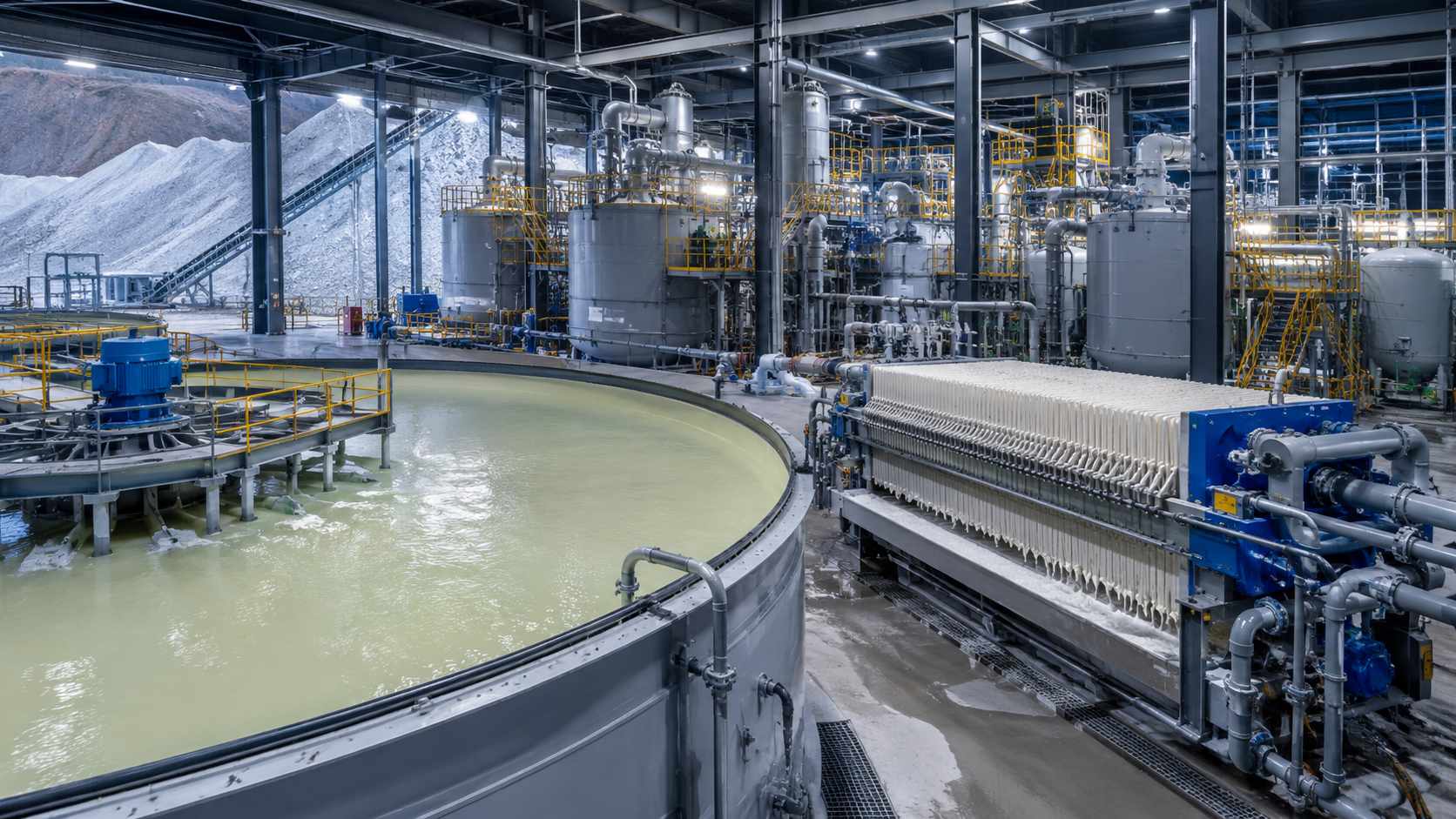
The lithium industry is poised for another expansion phase. Following an extended phase of adjustment in prices, large lithium producers are seeing profits being restored, along with improvements in lithium carbonate prices. These developments are helping to spur activity among producers to start up new projects and enhance efficiency in operations.
For lithium producers, capacity expansion is not only about increasing extraction volume. A larger production line also means more slurry, more process water, and more solid residue that must be handled continuously. Whether the project is based on salt lake lithium extraction, lithium mica, or spodumene processing, solid-liquid separation equipment becomes an important part of stable operation.
Why Lithium Expansion Increases Solid-Liquid Separation Demand
Lithium processing routes vary, but most industrial projects face similar challenges in handling solid and liquid mixtures.
Regarding the production of lithium from salt lakes, the key areas of consideration include brine concentration, purification of the brine, and water treatment. With the increase in production capacity, an increase in solution circulation control is required while, at the same time, maintaining stable separation capabilities. When dealing with hard rock lithium using lithium mica or spodumene, some of the typical steps involved include grinding, slurry preparation, leaching, purification, filtration, and waste management.
This is where solid-liquid separation becomes more than a supporting process. If slurry enters downstream equipment with unstable concentration, the entire production line may experience higher energy consumption, longer processing time, or increased maintenance requirements.
How Thickener Equipment Reduces Downstream Processing Load
Ein Verdicker is designed to separate solids from liquids through gravity settling and increase slurry concentration before further processing. In lithium production, this step helps reduce unnecessary water movement and provides a more stable feed condition for downstream filtration or treatment. A well-designed thickening system can reduce the amount of liquid carried into later stages. This means pumps handle less unnecessary volume, filtration equipment faces a more predictable feed, and recovered water can return to the production process more efficiently.
For lithium projects, buyers should not only focus on thickener diameter or tank volume. The more important questions are whether the equipment can achieve the required underflow concentration, maintain stable discharge, and match the following process steps.
Deep Cone Thickener Improves Slurry Concentration and Stability
Deep cone thickener design provides a deeper compression area compared with conventional thickening structures. This allows settled solids to achieve stronger compression before discharge, which is useful for applications requiring higher underflow density.
NHD’s Deep Cone Thickener is designed for liquid-solid separation in mineral processing and other industrial applications. The equipment can be equipped with automatic monitoring functions, including DCS control, ultrasonic liquid level detection, and solid content measurement, helping operators maintain more stable operating conditions. And its deep cone thickener processing capacity can reach up to 15 times that of a common thickener, while the underflow compression ability can approach 10 times that of conventional equipment under suitable conditions. These figures represent equipment design capability rather than a guaranteed result for every lithium project, because actual performance depends on slurry characteristics, particle size, feed concentration, and settling behavior.
In industrial thickening applications, buyers usually evaluate indicators such as underflow solids percentage, overflow clarity, throughput, and flocculant consumption. NHD reference data from thickening and washing applications include final washing underflow solid content of 46–53% and final washing supernatants solid content of ≤0.2 g/L under specific operating conditions. These values show the type of technical data that should be reviewed during equipment selection.
How Filter Press Equipment Supports Lithium Residue Dewatering
After leaching, purification, or precipitation, lithium plants generate solid residues that require effective dewatering. The purpose is not only to remove water but also to improve the efficiency of transportation, storage, drying, and water recovery.
A filter press separates liquid from solids by forming a filter cake under pressure. For lithium processing projects, the selection of filter press equipment should consider filtration area, cake moisture target, washing requirements, cycle time, and filter cloth compatibility.
When production capacity increases, insufficient dewatering performance can create additional pressure on the entire plant. Wet residue requires more energy for drying and increases transportation weight. A stable filtration process helps control these hidden operating costs.
Super Pressure Horizontal Plate Filter Press for Lithium Applications
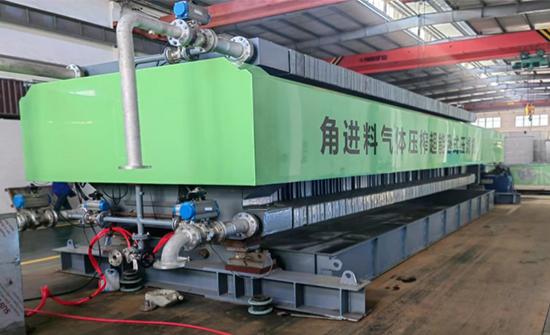
For high-solid slurry and residue treatment, a super pressure horizontal plate filter press can be considered. NHD’s Superdruck Horizontale Plattenfilterpresse is designed for industrial filtration applications requiring pressing, cake washing, drying assistance, and automatic operation. The equipment includes features such as PLC control, automatic plate shifting, air back-blow pressing and drying, and filtrate channel purging.
The product range covers filtration areas from 20–1000 m², allowing buyers to evaluate different configurations according to plant capacity and slurry conditions.
Meanwhile, under comparable filtration conditions, NHD’s Super Pressure Horizontal Plate Filter Press cake moisture can be reduced by the following:
- 30–50% compared with a conventional chamber filter press;
- 15–20% compared with a chamber diaphragm filter press.
The same information indicates that production capacity under the same filtration area can reach 1.5–2 times that of conventional presses.
For lithium residue treatment, these figures provide useful comparison references. However, the final cake moisture and filtration performance still depend on material properties, particle size, filtration pressure, filter cloth selection, and operating conditions.
Why Equipment Selection Matters During Lithium Capacity Expansion
Many procurement mistakes happen because buyers focus only on initial equipment cost. A cheaper machine may create higher operating expenses if it cannot maintain stable concentration, requires frequent maintenance, or produces wetter residue.
For lithium projects, suppliers should be evaluated based on technical matching, customization ability, testing capability, installation support, and experience with mineral processing applications.
The most suitable equipment is not always the largest one. It is the equipment that matches the actual slurry conditions and supports the entire production flow.
How Solid-Liquid Separation Helps Lithium Plants Control Costs
As lithium plants move toward higher production capacity, controlling water and residue becomes an important part of cost management.
Better thickening reduces unnecessary water transfer through the process, helping lower pumping demand and improve water balance. Better filtration reduces moisture carried with solid materials, which can reduce pressure on drying, storage, and transportation systems.
Solid-liquid separation does not determine lithium production alone, but it supports the stability of the overall process. A bottleneck in concentration or dewatering can limit the performance of other expensive equipment upstream and downstream.
NHD provides solid-liquid separation solutions, including deep cone thickeners, automatic press filters, vacuum filtration equipment, and filter cloth products. For lithium processing projects, these equipment options can be reviewed according to slurry properties, capacity requirements, moisture targets, and site conditions.
FAQ (häufig gestellte Fragen)
Q1: What information should buyers provide before selecting lithium solid-liquid separation equipment?
A1: Buyers should provide material type, slurry concentration, particle size, throughput requirement, moisture target, washing requirements, site layout, automation level, and downstream process conditions.
Q2: Can thickener and filter press equipment be customized for lithium processing projects?
A2: Yes. Equipment configuration can be reviewed according to slurry properties, processing capacity, target concentration, filtration area, filter cloth selection, automation requirements, and installation conditions.
Q3: What is the MOQ for industrial thickener or filter press equipment?
A3: Large industrial separation equipment is normally supplied as complete units. The final quantity depends on project capacity, production line design, spare parts requirements, and customer purchasing plans.
Q4: Does NHD support installation and after-sales service for overseas projects?
A4: Yes. NHD can provide equipment selection support, customized design communication, installation guidance, maintenance recommendations, spare parts planning, and after-sales service according to project requirements.