

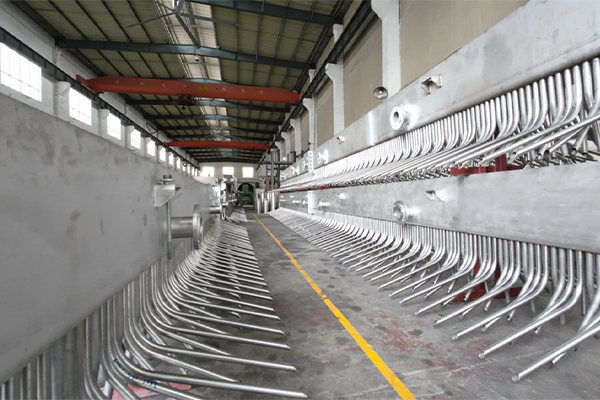
In a large sulfuric acid tower project, the acid distributor is easy to underestimate. It sits inside the tower; it does not look as large as the shell, blower, pump, or heat exchanger, and many buyers first treat it as a normal tower internal. But once the tower starts running, poor acid distribution quickly becomes a real production problem. For 2026 sulfuric acid tower projects, especially large drying towers, absorption towers, and retrofit projects, acid distributor equipment should be checked with the same care as other key process equipment.
Why Acid Distributor Equipment Matters in Large-Scale Tower Projects
A sulfuric acid tower depends on stable contact between gas and liquid. The packing can only work well when acid is spread over the packing surface in a controlled way. If the distributor fails to do that, the tower may not reach the expected absorption or drying performance.
In small systems, minor maldistribution may be tolerated for a while. In large-scale tower projects, the risk is bigger. A small design problem can affect a wide packing area. It can also create local corrosion, dry spots, acid mist problems, pressure drop changes, and unplanned shutdowns.
Common Acid Distributor Designs for Sulfuric Acid Towers
Different tower projects do not need the same distributor design. In real procurement, tube-trough acid distributors and multi-dish acid distributors are two practical designs to compare.
Tube-Trough Acid Distributor
A tube-trough acid distributor is often considered for sulfuric acid drying towers and absorption towers that need stable acid distribution over packing. Its structure can be designed around the tower diameter, liquid flow, distribution point density, and installation layout.
This type is useful when the project needs a steady acid flow and clear distribution across a large tower section. In many cases, it can also be reviewed for old tower revamping because the structure can be adjusted to match existing tower conditions.
For example, NHD’s Tube-Trough Acid Distributor uses HD-1 high silicon austenitic stainless steel. Its acid distribution density of not less than 42 points/m², with points designed according to project requirements. It is also designed to reduce short-pass gas flow and entrained mist. For buyers, these details are worth checking when the tower needs more uniform wetting and lower maintenance risk.
Multi-Dish Acid Distributor
A multi-dish acid distributor is another design used for multi-point liquid distribution inside sulfuric acid plants and large chemical towers. Instead of relying on one simple flow path, it uses multiple distributing dishes and downcomers to guide acid toward the packing surface.
This design can be useful when the buyer wants even liquid distribution, a wider flow adjustment range, lighter structure, and easier installation or maintenance. It can also help reduce scaling risk caused by poor local distribution.
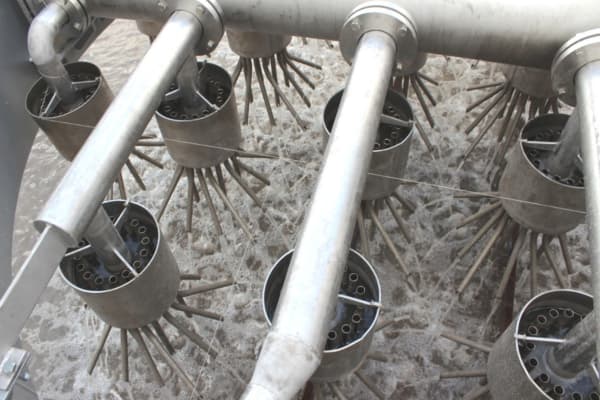
NHD’s Multi-Dish Acid Distributor is an example of this category. Its structure includes a feed header, feed branch, distributing pipe, orifice plate, distributing dish, and downcomer. The number of dishes depends on tower diameter and required distribution point density. For engineering buyers, this makes it a product to compare when tower layout, access, and distribution flexibility are key concerns.
Key Procurement Checks for Acid Distributor Projects
Material Selection Is Not a Small Detail
Sulfuric acid tower internals work in a corrosive environment. A distributor may look simple, but the material choice decides how long it can stay reliable.
Ordinary material may reduce purchase cost, but if it cannot handle the actual acid concentration and temperature, the plant may pay later through corrosion repair, shutdown, or replacement. For large towers, that downtime cost can be much higher than the original price gap.
Buyers should confirm the acid concentration, operating temperature, moisture condition, and possible corrosion points before choosing material. They should also ask for material information, welding process details, and the supplier’s experience with sulfuric acid equipment. HD-1 high-silicon alloy is often discussed in sulfuric acid service because of its corrosion resistance under suitable sulfuric acid conditions. NHD uses HD-1 in its Tube-Trough Acid Distributor and related sulfuric acid equipment.
Retrofit Projects Need More Engineering Review
A new tower project usually has better control over drawings and layout. A retrofit project is different. The buyer may need to replace an old distributor, improve tower efficiency, reduce mist carryover, or support higher capacity, but the old tower shell remains the same.
This creates practical limits. The equipment must pass through existing manholes. It must fit current nozzles and supports. Installation time may be limited to a short shutdown window. The distributor may also need to work with old packing or other existing tower internals.
For this type of project, standard catalog selection is risky. A supplier should review site drawings, old equipment photos, tower dimensions, installation access, and process targets before proposing a design. If possible, the buyer should also discuss whether the distributor can be split into sections for easier transport and installation.
How to Compare Acid Distributor Suppliers
A good acid distributor supplier should understand sulfuric acid tower operation, not only metal fabrication. Buyers should check whether the supplier can provide different distributor designs, recommend suitable material, support customized drawings, and explain how the structure handles flow distribution, blockage risk, and maintenance access.
Manufacturing ability also matters. Acid distributor equipment involves alloy material, welding quality, machining accuracy, assembly fit, and sometimes non-standard fabrication. If these parts are not controlled well, the distributor may fail to match the design purpose.
For overseas projects, buyers should ask about communication, packing, delivery, installation guidance, spare parts, and after-sales service. A tower internal is not easy to replace once the plant is running. Supplier response speed becomes important when the project is far from the factory.
Where NHD Can Be Reviewed as an Example Supplier
After the project requirements are clear, NHD can be reviewed as one supplier option for sulfuric acid distributor projects. Its sulfuric acid equipment range includes acid distributors, mist eliminators, metal wire demisters, HD-1 alloy pipes, gas heaters, and EPC project support.
For acid distributor equipment, the two products most relevant to tower projects are Tube-Trough Acid Distributor and Multi-Dish Acid Distributor. Buyers can compare them based on tower size, process duty, distribution point requirement, maintenance access, corrosion condition, and whether the project is new-build or retrofit.
NHD also shows that they cover design, R&D, manufacturing, installation, and EPC. For B2B buyers, this is useful because acid distributor selection is often connected with tower structure, material supply, installation planning, and later service.
FAQ
Q1: What information should buyers provide before ordering acid distributor equipment?
A1: Buyers should provide tower diameter, tower height, sulfuric acid concentration, operating temperature, liquid flow rate, gas flow condition, packing type, tower drawings, nozzle position, manhole access, and whether the project is a new tower or retrofit project.
Q2: Is there an MOQ for acid distributor equipment?
A2: For large tower internals, MOQ is usually one complete set, but the final quantity depends on tower number, tower diameter, distributor structure, spare parts demand, and project schedule. For batch projects, buyers should confirm drawings and delivery planning early. If you have any questions, please feel free to contact NHD.
Q3: Can acid distributor equipment be customized for old tower retrofit projects?
A3: Yes. Retrofit projects usually need customization because existing tower dimensions, supports, nozzles, and access points may limit the design. Buyers should provide old drawings, site photos, shutdown schedules, and process targets before the supplier confirms a suitable distributor structure.
Q4: Can the supplier support installation, maintenance, and after-sales service?
A4: A qualified supplier like NHD should support drawing review, installation guidance, commissioning advice, maintenance suggestions, and spare parts planning. For overseas projects, buyers should confirm service scope before purchase so the distributor can match the real site schedule and maintenance plan.