
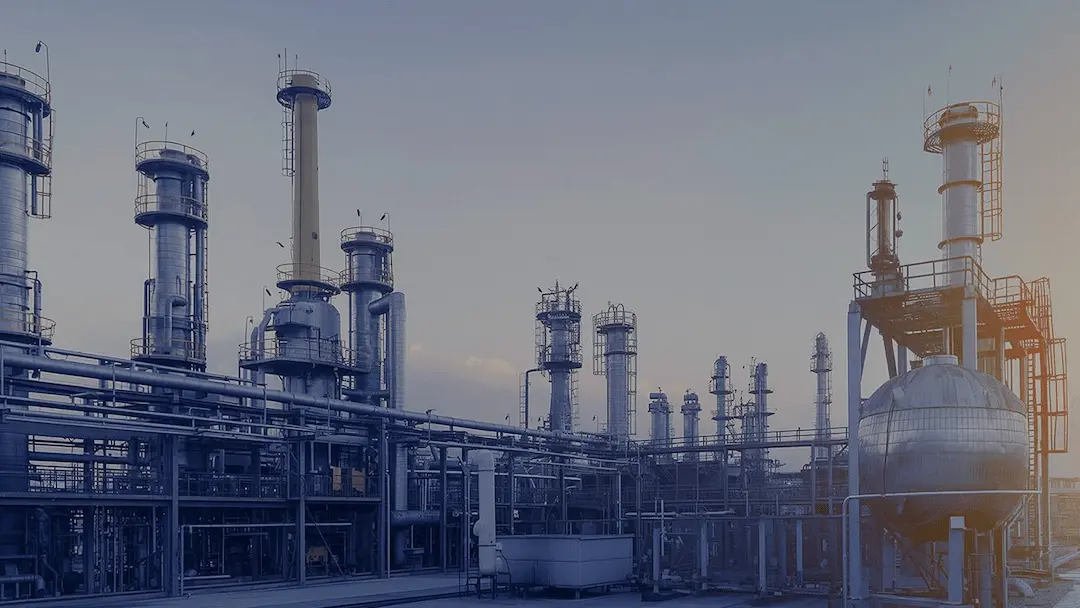
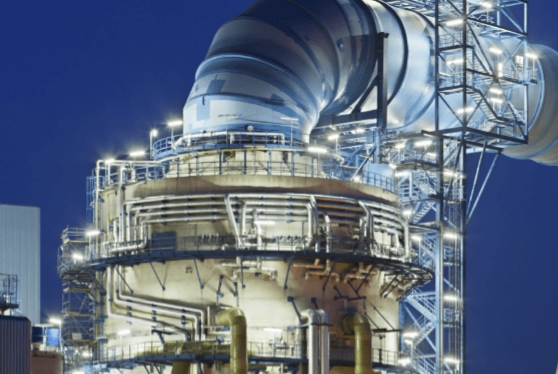
Industrial gas treatment is not only about meeting an emission number on paper. In real plants, wet flue gas, acid mist, liquid droplets, sticky particles, and corrosive vapors can all move together. If the gas leaves a tower with too much carryover, the next fan, duct, heat exchanger, chimney, or downstream treatment section may suffer. This is why demister equipment still matters in 2026.
Why Demister Equipment Matters in Industrial Gas Treatment
Demister equipment removes entrained liquid droplets, acid mist, or aerosol from a gas stream. In desulfurization, the main process target is usually sulfur compounds such as SO₂. But after wet scrubbing or absorption, the treated gas may still carry liquid droplets or slurry mist. Those droplets can cause corrosion, scaling, visible plume issues, or moisture load in the next section.
Acid mist control is a little different. Here, the key problem is acid droplets or fine mist, often from sulfuric acid plants, absorption towers, chlor-alkali systems, or non-ferrous smelting acid gas. These particles may be much smaller than normal liquid droplets, so ordinary separation equipment may not be enough.
A buyer should first understand this difference. Desulfurization reduces sulfur pollutants. Acid mist control removes acidic droplets and fine aerosol. Demister equipment often sits at the gas-liquid separation or final polishing point between these two needs.
What Buyers Should Confirm Before Choosing Demister Equipment
A serious inquiry should include more than tower diameter and gas volume. The supplier needs to know what is actually inside the gas.
Useful data includes gas flow rate, gas temperature, pressure, liquid droplet size, acid mist concentration, corrosive components, dust or sticky particles, pressure drop limit, tower size, installation space, washing demand, and emission requirement.
The project type also matters. A new-build system gives more freedom for structure and layout. A retrofit project is usually tighter. The demister may need to pass through an existing manhole, fit old supports, and be installed during a short shutdown window. If the buyer does not provide these limits early, the quotation may look fine but fail on site.
For overseas projects, maintenance access should be discussed before purchase. A demister that is difficult to clean, remove, or inspect may become expensive later, even if the first price is low.
Main Types of Demister Equipment
Chevron Vane Demister for Wet Gas and Larger Droplet Removal
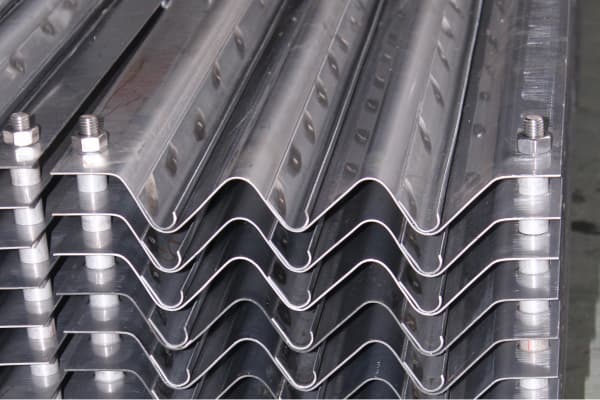
Chevron Vane Demister is commonly used when the gas contains larger liquid droplets. It works through direction changes. Gas turns with the vane channels, while heavier droplets cannot follow the gas path so easily. They hit the vane surface, collect, and drain away.
This design can fit wet flue gas desulfurization, scrubbers, evaporation systems, distillation towers, and acid mist treatment where the gas is wet and droplet loading is visible. It is also useful when washing and anti-blocking design are important.
NHD’s Chevron Vane Demister is one example. It has a structure with 1 level tubular and 2 levels wavy. The design focuses on lower pressure loss, less washing of dead area, and reduced blockage risk through washing and self-cleaning behavior. It can also be customized according to customer requirements.
Wire Mesh Demister for Common Gas-Liquid Separation
Wire Mesh Demister is a familiar tower internal in many chemical plants. It is often used for normal gas-liquid separation where gas carries small liquid droplets inside a tower.
The working logic is direct. Gas passes through a metal mesh pad. Droplets contact the wire, gather into larger drops, and fall back by gravity. For many absorbers, scrubbers, evaporators, and chemical towers, this is still a practical and mature option.
Buyers should not treat all wire mesh demisters as the same. Wire material, wire diameter, mesh density, pad thickness, frame structure, removal method, and pressure drop all change the result. If the gas has solids or sticky material, cleaning access becomes very important.
NHD’s Wire Mesh Demister line includes the Standard Wire Demister, Drawer Type Wire Demister, and V Type Wire Demister. The drawer-type design is especially useful when workers need to lift the unit out without entering the tower. For retrofit projects and frequent maintenance sites, this type of structure can reduce repair time and improve access safety.
Candle Filter for Higher-Precision Acid Mist Control
When the gas contains fine acid mist, a simple vane or wire mesh structure may not be enough. This is where candle filter equipment becomes more relevant.
Candle filters are used when the project needs higher-precision mist removal. They are common in sulfuric acid drying towers, primary and secondary absorption towers, chlor-alkali systems, low-temperature waste heat recovery towers, mixed gas scrubbers, and other acid gas treatment systems. NHD’s BECOFIL Candle Filter is one example in this category. NHD began collaborating with Begg Cousland in 2005 to assemble BECOFIL candle filters.
The buyer should check mist particle size, efficiency target, pressure loss, bed velocity, fibre material, gasket material, corrosion resistance, and replacement cycle. A candle filter may remove much finer mist, but it also needs proper sizing. If the gas loading or pressure drop is not checked, the equipment may not run as expected.
Carbon Fibre Candle Filter for Harsh Acid Mist Conditions
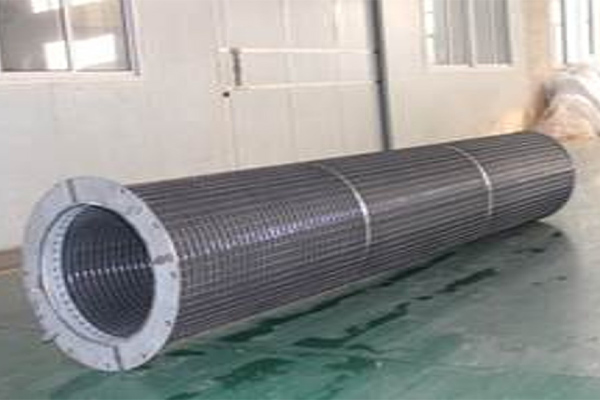
Some projects are tougher than normal sulfuric acid plants. In non-ferrous smelting, the off-gas may contain fluorine. If HF is present, ordinary glass fibre candle filters may have a shorter life because of corrosion.
Carbon Fibre Candle Filter is designed for these harsher acid mist conditions. It is especially relevant for copper, zinc, lead, pyrite, and other non-ferrous smelting or chemical industries where HF may appear in the gas.
This does not mean every acid mist project should use carbon fibre. It means buyers should check gas composition honestly. If the gas contains HF, a high acid mist concentration, or a stronger corrosion risk, the candle filter material becomes a core procurement item. The wrong material may save money at first but increase replacement frequency later.
How to Match Demister Equipment with Project Applications
The safest way is to match equipment by duty.
For wet flue gas desulfurization systems, Chevron Vane Demister and Wire Mesh Demister are often reviewed first because the gas usually carries larger droplets or wet mist. For sulfuric acid drying and absorption towers, Candle Filter equipment becomes more important where fine acid mist needs tighter control.
For chlor-alkali and chemical gas systems, BECOFIL Candle Filter can be reviewed when fine mist and low pressure loss are both important. For non-ferrous smelting acid gas with possible HF, Carbon Fibre Candle Filter should be checked as a special material option.
For scrubber outlets, the choice depends on droplet size and dust. If the gas has larger liquid droplets, a vane demister may be enough. If the gas has a fine acid mist, a candle filter may be needed after or instead of the earlier separation stage.
What Supplier Capabilities Should Buyers Check
A good supplier should not only sell one standard product. For desulfurization and acid mist control, the supplier should understand several demister equipment types and help the buyer compare them.
Buyers should check whether the supplier can review gas composition, droplet size, acid mist concentration, pressure drop requirement, corrosion risk, and tower layout. The supplier should also support non-standard design, material selection, fabrication, installation guidance, maintenance advice, spare parts planning, and after-sales service.
NHD can be reviewed as one option here. Its desulfurization equipment series covers Chevron Vane Demister, BECOFIL Candle Filter, Carbon Fibre Candle Filter, and Wire Mesh Demister, as well as related gas scrubbing and desulfurization equipment. For engineering buyers, this product coverage helps when one project needs more than one gas treatment stage.
FAQ
Q1: What information should buyers provide before selecting demister equipment?
A1: Buyers should provide gas flow rate, temperature, pressure, droplet size, acid mist concentration, corrosive components, dust content, tower size, installation space, pressure drop limit, washing demand, and emission target.
Q2: Is there an MOQ for demister equipment?
A2: For industrial tower internals, MOQ is usually one complete set, but the final quantity depends on tower number, demister type, installation structure, spare part demand, and project schedule. For batch projects, buyers should confirm drawings and delivery timing early. If you have any further questions, please feel free to contact NHD.
Q3: Can demister equipment be customized for retrofit projects?
A3: Yes. Retrofit projects often need custom sizing or split structures because existing manholes, supports, and tower internals may limit installation. Buyers should provide old drawings, site photos, manhole size, internal support layout, and shutdown schedule before final design.
Q4: Can NHD support installation, maintenance, and after-sales service?
A4: Yes. NHD can support equipment selection, customized design, manufacturing, installation guidance, maintenance advice, spare parts planning, and after-sales service. For overseas projects, buyers should confirm service scope and site conditions before ordering.