
 Portuguese
  English
  French
  Spanish
  Russian
  Arabic
  Indonesian
  German
  Turkish
  Persian
  Vietnamese
  中文
中文 
Em plantas de ácido sulfúrico em todo o mundo, os operadores trabalham duro para transformar dióxido de enxofre em ácido útil enquanto mantêm as emissões controladas. Mas regras mais estritas de agências como o EPA continuam a reduzir os limites em emissões de pilhas. Muitas plantas ainda dependem de equipamentos mais velhos que permitem2 deslizam, levando a dor de cabeça de conformidade, multas potenciais, e até perderam tempo de produção. A causa raiz frequentemente reside na baixa eficiência de contato gás-líquido: o distribuidor de ácido sentado no topo da torre de absorção.
Um simples atualização para um distribuidor de ácido tubo-baixo pode mudar essa imagem rapidamente. Este design espalha ácido mais uniformemente através da embalagem, corta em pontos secos, e captura mais gás onde importa. Plantas que mudam relatam melhores taxas de absorção e menores emissões, atingindo a conformidade ambiental sem lavadores pesados CAPEX ou modificações de disposição. Para qualquer um que diriga uma fábrica de ácido sulfúrico hoje, entendendo como este pedaço de equipamento lida com SO2 na fonte faz uma diferença real em operações diárias e custos a longo prazo.
A causa escondida de emissões de alta pilha
Antes de explorar soluções, ajuda a recuar e ver por que as emissões aumentam mesmo quando o resto da fábrica funciona suavemente. - As plantas de ácido sulfúrico dependem de forte contato gás-líquido dentro das torres de absorção. Quando esse contato fraca, então2 encontra uma saída. Muitas instalações rastream o problema diretamente para como o ácido entra na torre.
Os Limites da Tecnologia Antiga
The “ Efeito de canalização E assim2 Slip
A propagação ácida inegual cria canais secas através da embalagem. O gás flui por esses caminhos em vez de misturar completamente com o líquido. Isso resulta em SO3 deslizamento de vapor, que se transforma em nevoeiro ácido ao atingir ar mais frio fora da pilha. Este efeito de canalização levanta diretamente SO2 leituras e torna o controle das emissões mais difícil. Em alguns casos, as plantas vêem a redução da eficiência de absorção em 10 a 20 por cento simplesmente porque o distribuidor ácido não pode manter cada seção molhada. Os padrões de desempenho de Nova Fonte do EPA destacam esses riscos, empurrando instalações para abordar a causa raíz em vez de tratar sintomas em baixo.
Maximizar a eficiência de absorção através da distribuição de precisão
Reconhecer as falhas das configurações tradicionais levanta uma questão importante: e se o ácido chegasse a cada parte da embalagem consistentemente? Um distribuidor bem projetado de ácido tubográfico responde isso combinando os melhores traços dos sistemas tubográficos. Ela fornece fluxo suave e controlado sem splashing ou pooling, o que significa que a interação gás-líquido mais forte tirará mais SO2 para o fluxo ácido antes de escapar.
Eliminação Completa das Zonas Secas
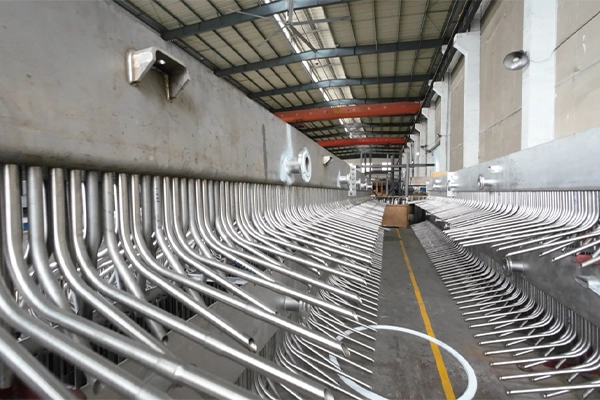
Os projetos de tubo-trough usam descendentes e saídas tubulares para criar uma cortina estável de ácido. Com a densidade de irrigação saltando para 42 pontos por metro quadrado ou mais, dependendo da disposição personalizada, zonas secas quase totalmente desaparecem, assegurando que o gás não se escapa mais por áreas não tocadas e a absorção ocorre através da seção cruzada completa da torre. Essa cobertura uniforme só pode elevar a eficiência global de maneiras que os maiores distribuidores de tubos de aço inoxidável simplesmente não podem concordar.
Obter Absorção Completa Naturalmente
Com distribuição mesmo, a reação química entre o gás e assegura um filme líquido uniforme através da superfície de embalagem. A menor velocidade de ácido dentro dos tubos – cerca de 0,5 a 0,65 metros por segundo – reduz a formação de neblina e mantém a embalagem em condições óptimas. Os operadores notam um desempenho mais estable da torre e menos flutuações na força de ácido de saída. Em plantas de ácido sulfúrico, essa melhoria natural significa menos SO2 deixa a pilha sem energia ou produtos químicos adicionais.
Reaccionar a Compliance Sem Extra Scrubbers
Um distribuidor de tubo-trough muitas vezes elimina a necessidade de controles de emissões adicionais custosos ao resolver o problema na fonte. Vejam como as duas configurações se comparam abaixo:
| Característica | Distribuidor convencional de tubos | NHD Tube-Trough Acid Distributor |
| Densidade de Irrigação | Baixo (1-3 pontos/m ²) | Mais alto (≥42 pontos/m ²) |
| Clogging Resistance | Mais propensos a atacar | Superior (grande área aberta) |
| Precisião da Instalação | Muitas vezes sensíveis ao nível | Alta tolerância para fora do nível |
| Controlo da Erosião | Pronto a erosão grave | Performação estável mesmo após anos |
| Caída de Pressão | Mais alto | Optimal & - Baixo |
Essa visão lado a lado mostra por que muitos distribuidores de ácido sulfúrico agora favorecem o estilo tube-trough para controle de emissões a longo prazo.
Proteger o Equipamento Interno de Danos Severos
A melhor distribuição faz mais do que reduzir as emissões. Também protege as partes internas da torre do uso que curta a vida do equipamento. Em uma fábrica de ácido sulfúrico, todos os anos de serviço confiável acrescenta valor real à linha final.
Deter o ciclo de secagem húmida danificante
Os distribuidores mais velhos criam zonas molhadas e secas alternadas enquanto mudanças de fluxo ácido ou barracas se formam. Estes ciclos aceleram a corrosão em embalagens, paredes e estruturas de suporte. Um distribuidor de ácido tubo-baixo detém o ciclo mantendo toda a cama consistentemente molhada. Isso elimina pontos quentes locais e erosão que forçam substituições precoces de equipamento.
Doblar a Vida da Empaquetação de Torres
Os dados de campo de plantas que foram actualizadas mostram que a embalagem da torre dura duas vezes mais. A ligação especial HD-1 de alto sílico usada NHD unidades formam um filme protetor em ácido quente e concentrado, resistindo a danos por mais de dez anos. Uma central de Shandong não relatou corrosão visível após oito anos de uso contínuo. Os registos de manutenção tornaram-se mais simples, e o tempo de descenso caiu abruptamente. Para qualquer gestor de fábricas de ácido sulfúrico rastreando custos de substituição, esses ganhos aumentam rapidamente.
Fazer o Anovamento Correcto para sua Facilidade
Conhecer os benefícios é uma coisa. Decidir quando e como atualizar é outro. A maioria dos operadores começa observando seus próprios dados ao invés de adivinhar.
Revisar seus registos de manutenção
Tire registros recentes e procure padrões. Limpezas freqüentes de distribuidores, baixas de pressão crescentes, ou flutuantes2 as leituras muitas vezes apontam para problemas de distribuição. Se relatos de emissão mostrarem picos ocasionais ou se a substituição de embalagem chegar mais cedo do que esperado, pode ser hora de considerar uma mudança. Esses sinais aparecem gradualmente, então uma auditoria rápida pode revelar os custos escondidos de ficar com distribuidores mais velhos de tubos de a ço inoxidável.
Parceria com Fabricantes Especializados
Anovar suavemente com projetos testados em campo. NHD parceiros com institutos de pesquisa para entregar distribuidores duradouros de ácido tubo-trough. Nós personalizamos seu tamanho e materiais - apresentando nossas flanges compostas rentavelmente eficazes - para ajustar suas especificações exatas da torre.
Conclusão
Substituindo equipamento obsoleto por um distribuidor de ácido tubo-baixo melhora o contato gás-líquido, pára de danificar os ciclos de corrosão e alinha as emissões com as regras atuais. Plantas usando essas unidades muitas vezes vêem pilhas mais limpas, maior vida de equipamento e produção mais estable - tudo sem grandes projetos de capital. Para soluções personalizadas que encaixem em sua planta de ácido sulfúrico, contato nós via WhatsApp +86 13667324277 hoje.
FAQ
Q: Qual é a principal diferença entre um distribuidor de tubos e um distribuidor de tubos?
A: Os distribuidores de tubos dependem de buracos perfurados para controle do fluxo, mas fácilmente bloqueam e corrodem com o tempo. Um distribuidor de ácido tubo-baixo combina o excesso mínimo com saídas tubulares para uma disseminação mais lissa, mais uniforme e muito melhor resistência a bloqueios e erosão.
Q: Como um distribuidor de ácido tubo-baixo ajuda a reduzir as emissões de dióxido de enxofre (SO2)?
A: Elimina canais secas na embalagem, de modo que gás e ácido se misturam completamente pela torre inteira. Isto corta o deslizamento de vapor SO3 e a formação de nevoeiro ácido, reduzindo as leituras de pilhas e tornando o controle das emissões mais fácil de alcançar.
Q: Pode actualizar meu distribuidor realmente prolongar a vida da minha torre embalagem?
A: Sim. Ao remover ciclos secados e reduzir o impacto da neblina, a embalagem permanece em melhor condição. Muitas plantas relatam o dobro da vida de embalagem, com algumas instalações de NHD não mostrando maior corrosão após oito anos de serviço.