 Portuguese
  English
  French
  Spanish
  Russian
  Arabic
  Indonesian
  German
  Turkish
  Persian
  Vietnamese
  中文
中文 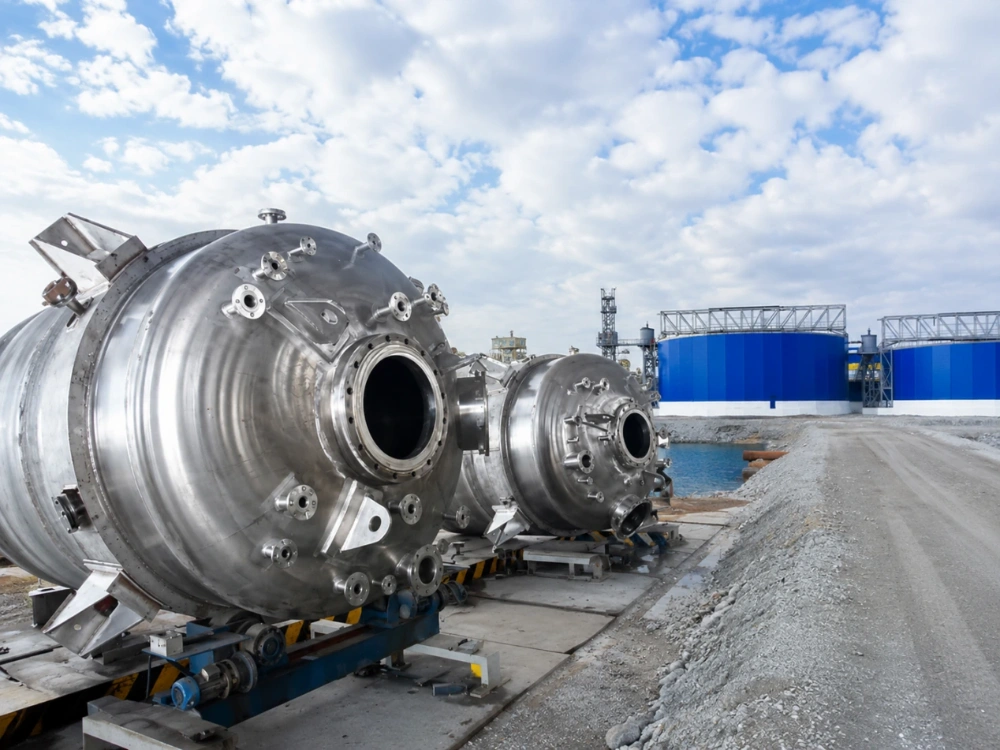
Russia’s confirmation of the Sukhoi Log gold deposit puts another very large undeveloped resource back into the project pipeline. With reported reserves above 2,770 tonnes of gold, an average grade of roughly 2.3 g/t, and a share equal to about 28% of Russia’s national gold reserves, the deposit matters for more than future mine output. Projects of this scale can bring metallurgical testwork, feasibility studies, equipment packages, and construction planning forward long before a final plant is ordered.
For engineering companies and equipment buyers, that early stage deserves attention. A large resource does not automatically tell a project team which leaching route to use or how large a filter should be. Mineralogy, particle size, refractory behavior, slurry density, washing requirements, corrosion conditions, and residue characteristics still decide the equipment.
That is why hydrometallurgy equipment scale-up should start with process data. The reactor, agitator, thickener, and filter cannot be sized as unrelated machines and expected to work smoothly after commissioning.
Why Does Resource Revaluation Move Equipment Decisions Forward?
A newly valued resource usually passes through several engineering gates before industrial construction. Metallurgical testwork defines the likely recovery route. A feasibility study then turns laboratory results into mass balance, utility demand, equipment duty, and capital estimates.
Why Isn’t Reserve Size Enough for Equipment Selection?
Two gold ores with similar grades can behave very differently in a plant. One may respond to conventional leaching. Another may contain refractory sulfides that require oxidation or another pretreatment step. Even after a flowsheet is selected, particle distribution and slurry behavior can change settling and filtration performance.
This matters when equipment is scaled up. A laboratory vessel may keep fine solids suspended without difficulty, while a commercial reactor can develop circulation zones if impeller geometry, tank dimensions, and power input are not matched. The same problem appears downstream. A slurry that settles quickly in a cylinder may require different flocculation and torque margins at industrial scale.
The practical procurement question is therefore not “How many tonnes of gold are in the deposit?” It is “What must this slurry do at every stage of the selected process?”
Where Does Scale-Up Risk Usually Appear?
Risk often appears at equipment interfaces. A leaching section may meet reaction targets but send an unstable solids concentration to the thickener. The thickener may produce acceptable overflow yet discharge an underflow that causes long filtration cycles. A filter may reach the moisture target but require more wash water or compressed air than the utility system can supply.
Those connections should be examined during testwork, not after equipment drawings are frozen.
Which Equipment Becomes Critical Before Full-Scale Design?
The exact equipment train depends on the ore and selected flowsheet. For projects involving pressure or corrosive hydrometallurgical duties, three areas deserve early engineering review: reaction and agitation, thickening, and pressure filtration.
When Does Pressure-Leaching Equipment Need an Early Review?
If testwork points toward a pressure-leaching or oxidation stage, the design discussion changes quickly. Operating pressure and temperature, gas introduction, slurry abrasiveness, corrosion allowance, impeller loading, sealing, inspection access, and pressure-vessel material all become part of one package.
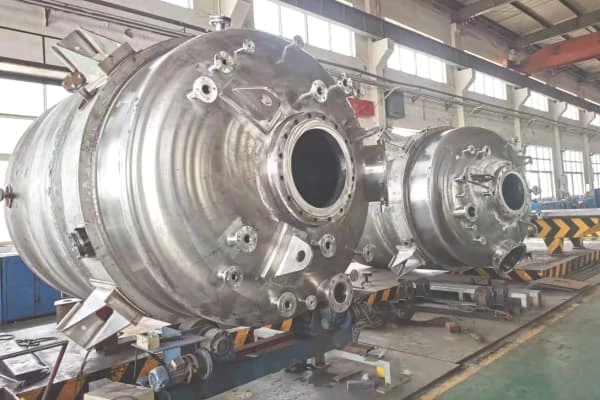
NHD's pressure reactor and vessel options cover pressure reactors and other customized pressure equipment for non-ferrous metallurgy. This should not be read as a claim that one standard vessel is suitable for every gold pressure-leaching duty. Final materials, pressure rating, geometry, nozzle arrangement, and agitator configuration must follow the tested process conditions. NHD’s pressure-vessel range includes pressure reactors and customized equipment for non-ferrous applications.
Why Should Thickening Be Designed Around the Leaching Balance?
A thickener is often treated as a simple settling step. On a large hydrometallurgical project, it is really a buffer between process stages. Its underflow concentration determines how much liquid moves forward, while overflow clarity influences water or solution recovery.
Buyers should establish feed solids, particle-size distribution, settling behavior, target underflow density, overflow quality, flocculant conditions, torque requirement, and normal as well as peak throughput.
NHD already has a relevant Russian hydrometallurgy reference. Its South Urals leaching equipment project in Russia involved a Φ30 m leaching thickener, reactors, and a stirring device for a leaching reactor. The work included site welding and assembly of tank structures plus integrated thickener installation.
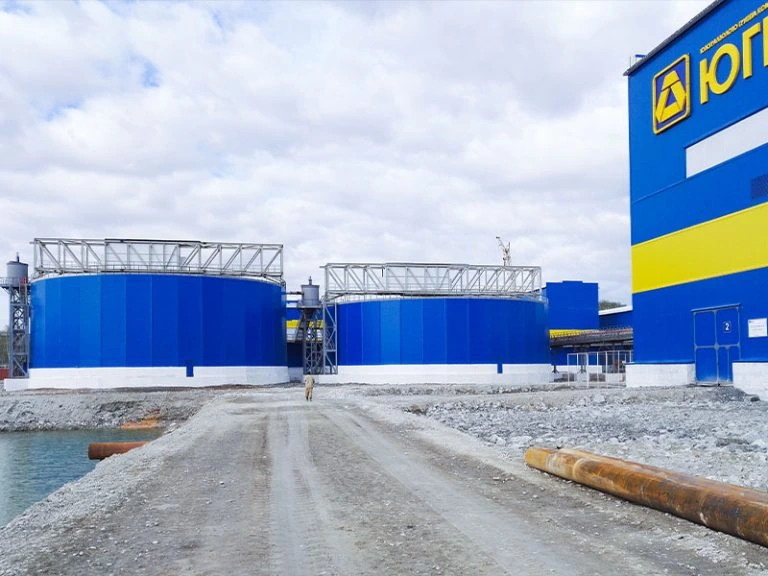
That project is not a performance guarantee for Sukhoi Log or another gold deposit. Its value for a buyer is different: it shows why reactor mixing, large thickening equipment, site assembly, and installation interfaces need to be considered together.
What Should a Filter Press Prove Before the Plant Is Built?
Filtration comes late in the process flow but should not come late in equipment planning. Buyers need actual data for feed pressure, cake formation, filtrate clarity, cake moisture, washing, air purge, discharge behavior, cloth cleaning, and cycle time.
NHD's automated pressure filtration for metallurgical slurries covers HDLY units from 6 to 180 m² with a listed maximum pressure of 1.6 MPa. The equipment is applied in non-ferrous smelting and other industries for washing, filtration, and dewatering.
The important point during feasibility work is not simply whether 180 m² is available. It is whether the test cycle can be scaled to the required dry-solids throughput without producing unacceptable moisture, wash demand, or discharge delays.
What Should Buyers Freeze Before Issuing an Equipment Order?
A useful equipment inquiry should already contain the main process boundaries.
Should Pilot Data Become Part of the Purchase Specification?
Yes. Representative slurry data should follow the RFQ from testwork through final acceptance. The document should define normal and maximum feed conditions rather than one ideal number.
For a leaching system, that means ore or residue composition, solids concentration, density, particle size, temperature, pressure, reagent environment, gas requirements, and target residence time. For thickening, add settling and flocculant data. For filtration, include cake moisture, filtrate quality, wash result, cycle target, and discharge expectations.
When all bidders work from the same basis, equipment comparisons become more meaningful.
What Site Conditions Can Change the Equipment Choice?
Large hydrometallurgical equipment also has to fit the project. Shipping dimensions, module limits, foundation loads, crane access, field welding, maintenance clearance, piping loads, electrical supply, compressed air, water balance, and spare-parts strategy can change a technically sound design.
This becomes particularly important in remote mining regions where correcting a missed interface after delivery can take months rather than days.
Can Integrated Supply Reduce Scale-Up Rework?
It can reduce interface risk when the scope is clearly defined. NHD combines equipment design, manufacturing, installation, and EPC capabilities across agitators, thickeners, filters, pressure equipment, and other process machinery. Its project portfolio includes mineral-processing and non-ferrous metallurgy installations outside China.
For a gold project moving from testwork into feasibility, the useful discussion is not whether one supplier can provide the largest number of machines. It is whether that supplier can keep the tested material balance intact while reactor mixing, slurry transfer, thickening, filtration, utilities, installation, and commissioning are converted into industrial equipment.
Project teams preparing this type of package can send a gold-process equipment brief to NHD with slurry data, process conditions, preliminary flowsheets, expected throughput, site constraints, and acceptance targets before equipment dimensions are fixed.
Conclusão
Large undeveloped gold resources can restart investment interest quickly, but the equipment decision should still follow metallurgy rather than market momentum.
Pressure leaching, when the chosen flowsheet requires it, needs to be engineered together with agitation and corrosion conditions. Thickening must be sized around real settling behavior and downstream solution balance. Filtration must prove cake moisture, washing, filtrate quality, and cycle capacity before a full-scale press is ordered.
For owners, EPC companies, and procurement teams, the safest scale-up path is straightforward: preserve the test basis, define the interfaces, and make suppliers prove how each machine fits the process before fabrication begins.
FAQ
Q1: What data should a gold project prepare before requesting hydrometallurgy equipment quotations?
A1: Prepare ore and slurry composition, particle-size distribution, solids concentration, throughput, process temperature and pressure, corrosion conditions, residence-time targets, settling tests, filtration tests, washing requirements, utility limits, and preliminary site drawings.
Q2: Does every large gold project need a pressure-leaching reactor?
A2: No. The leaching and pretreatment route must follow mineralogical and metallurgical testwork. Pressure equipment should only be specified where the selected process requires it. Conventional leaching, oxidation, and other routes have different equipment packages.
Q3: Can NHD support customized equipment for a gold hydrometallurgy project?
A3: NHD can review pressure equipment, agitator, thickener, filtration, installation, and project-support requirements against the supplied process data. Final configuration depends on the tested slurry, selected flowsheet, production target, materials of construction, utilities, and site conditions.