 English
  French
  Spanish
  Russian
  Arabic
  Portuguese
  Indonesian
  German
  Turkish
  Persian
  Vietnamese
  中文
中文 On March 22, 2026, MINING.COM reported that China had invested more than $120 billion in overseas mining and upstream processing since 2023, while Chinese firms also deployed more than $220 billion into downstream sectors such as batteries, EVs, grids, solar, and wind. That matters to you because the critical minerals race is no longer only about who owns deposits. It is also about who can process slurry, control moisture, recover value, and keep plants running with fewer interruptions. In that race, industrial filtration equipment is not a support item. It is part of the strategy.
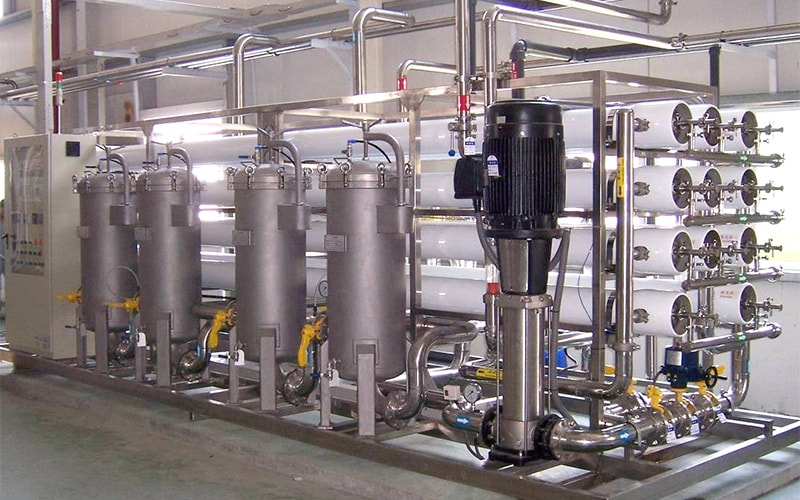
If you are looking past market headlines and focusing on plant reality, NHD is a serious name to know. Founded in 1992, it has grown into an engineering-led group with more than 800 employees, 260+ engineers and technicians, a large manufacturing base, and a product system that covers filters, filter presses, agitators, thickeners, sulfuric-acid equipment, desulfurization equipment, filter cloth, and EPC support. What makes it useful for you is not just scale. It is the way the company works across the whole separation chain, from slurry conditioning to concentration and final dewatering. The project record is broad, with 500+ engineering projects, 1,000+ customers, and deliveries across 52 countries. For critical-mineral and wet-process metallurgy buyers, that kind of range matters because a filter rarely succeeds on its own. It succeeds when the upstream and downstream equipment also fit the chemistry, solids load, and plant target.
Why does China’s $120 billion push change the way you buy industrial filtration equipment?
The report is really a warning about where market power now sits. Capital is flowing into mining, but the leverage stays with the companies that can turn raw feed into battery-grade or industrial-grade output.
Why the real contest is no longer only about mineral access but about who can wash, separate, and dewater slurry at an industrial scale without losing recovery
If China is locking in advantage through mining plus upstream processing, then your project cannot treat separation equipment as a late-stage purchase. Weak filtration increases cake moisture, raises downstream drying cost, hurts washing efficiency, and makes product quality harder to hold. In critical minerals, those problems are expensive because the value of the product is high and the process window is often tight. So when you evaluate industrial filtration equipment, you are really deciding how much process risk your plant will carry once the ore reaches the circuit.
What should you prioritize first when selecting industrial filtration equipment?
Before you compare quotations, you need to be clear about the real pain point in your process. Some plants need the driest possible cake. Others care more about washing, continuous running, compact layout, or lower labor intensity.
Why low cake moisture, optional cake washing, automatic control, and compact installation make a vertical pressure filter the strongest first recommendation for many high-value mineral circuits
If your target is a drier cake with strong automation, the best first recommendation is the Vertical Automatic Pressure Filter. It is designed for washing, filtering, and dewatering and has the strengths buyers usually care about most: continuous operation, low cake moisture, optional washing, a high degree of automation, and a compact structure with lower shop-area demand. It is also positioned for non-ferrous, smelting, titanium dioxide, chemical, and wastewater duties, which makes it a practical fit for solids-heavy mineral circuits rather than a niche machine with narrow use. If your plant needs lower moisture and less manual intervention, this is the equipment route I would put first.
When is continuous vacuum filtration the better choice for your plant?
Not every duty should chase the driest cake at any cost. In some lines, steady throughput and strong washing performance create more value than maximum squeeze pressure.
Why long washing paths, continuous discharge, and easier maintenance can be more important than extreme dryness when your circuit runs at high throughputs
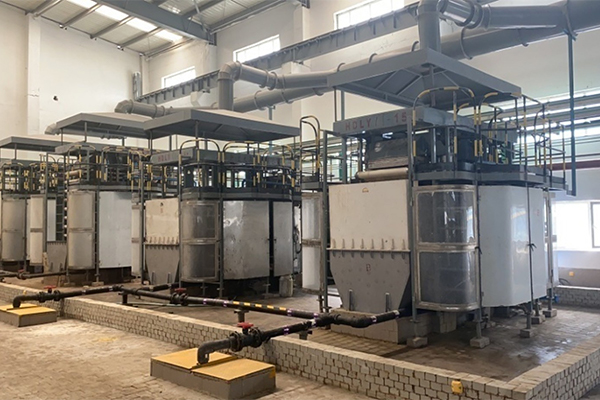
For large-volume duties, a horizontal rubber belt vacuum filter can be the better answer. It is a continuous solid-liquid separation equipment type used in metallurgy, mining, chemicals, environmental protection, and desulfurization. Its practical strengths are also clear: multi-stage washing, optimized filtrate drainage, modular heavy-duty frame design, stable belt support, and relatively easy operation and maintenance. If your circuit needs strong washing, continuous movement, and easier removal of cake, this route is often more economical in daily operation than forcing every duty into a pressure filter logic. For many buyers, the smarter decision is not “which machine is more advanced,” but “which machine best matches the process target.”
Why does upstream conditioning still decide downstream filtration performance?
This is where many procurement plans go wrong. Buyers focus on the filter, but the filter only sees the feed conditions it is given.
Why agitation, flocculant preparation, and CCD thickening shape cake quality long before slurry reaches the filtration stage
Your cake formation, filtrate clarity, and dewatering stability all start upstream. Feed concentration, slurry behavior, flocculant quality, and thickener performance influence how the solids build on the cloth and how much liquid stays trapped. If the conditioning stage is unstable, even good industrial filtration equipment will struggle to deliver stable results.
How can you lower equipment risk before you place an order?
In this field, the cheapest quotation can become the most expensive decision. You need proof that the machine matches the slurry, not just a brochure that looks complete.
Why lab tests, pilot checks, slurry-based simulated start-up, and on-site commissioning protect your budget better than buying only by price or nameplate data
The equipment is highly customized, and customers are normally expected to provide process materials for testing before quotation. The path then moves through lab testing, pilot validation, simulated start-up with slurry before shipment, site commissioning, and later operation-and-maintenance support. That approach is worth taking seriously. In mineral processing, small differences in particle size, viscosity, acidity, solids content, and cloth selection can change filtration behavior fast. If you skip testing, you increase the chance of poor cake release, unstable moisture, premature cloth wear, and corrosion mismatch.
Which route should you choose for your next project?
You do not need one answer for every circuit. You need the right answer for the duty that is actually limiting your plant.
Why you should match industrial filtration equipment to the process target instead of forcing one machine to solve every separation problem in the same way
If your biggest concern is low cake moisture, compact installation, and automation, a vertical pressure filter is the strongest first recommendation. If your line depends on continuous filtration, flexible washing, and stable large-volume discharge, a belt vacuum filter is often the better fit. If your process needs fine filtration under enclosed conditions, an automatic leaf filter becomes a sensible option because it is designed for low-solid, high-viscosity, or difficult-to-filter media with strong automation and low running cost. The right choice depends on what your plant is trying to fix first: dryness, throughput, washing efficiency, enclosure, or polishing precision. That is the decision logic that usually leads to better plant economics.
FAQ
Q: Why does China’s overseas critical minerals investment matter to equipment buyers?
A: Because it shows the competitive edge is moving deeper into processing. If the market leader is investing across mining and upstream processing, your plant needs stronger separation performance, not just secure feedstock.
Q: Which industrial filtration equipment should you consider first for critical-mineral slurry?
A: If low cake moisture, compact footprint, and automation matter most, start with a vertical automatic pressure filter. If continuous operation and strong washing matter more, a horizontal rubber belt vacuum filter is often the better route.
Q: Why should you ask for testing before quotation?
A: Because slurry decides performance. Material testing helps match the equipment, cloth, and operating conditions to the real process, which lowers commissioning risk and improves long-term stability.