 English
  French
  Spanish
  Russian
  Arabic
  Portuguese
  Indonesian
  German
  Turkish
  Persian
  Vietnamese
  中文
中文 
Industrial filtration equipment is vital for maintaining process steadiness, product quality, and working speed in production manufacturing. By removing contaminants from process fluids, effective removal helps stabilize the flow, prevent machine damage, reduce sudden stoppage, and support consistent results. Better filtration setups enhance solid-liquid separation, protect key components, allow for material recovery, and contribute to meeting regulatory rules and sustainable goals. Adjustable, well-suited filtration choices also adapt to production needs while improving the use of energy and long-term operating costs.
Why Should You Prioritize Industrial Filtration Equipment in Your Manufacturing Process?
How Does Industrial Filtration Directly Influence Your Process Stability and Output Quality?
Industrial filtration equipment is a key part in keeping the stability of the process and quality of products across production. By effectively removing contaminants from process fluids, filtration systems prevent inconsistencies that can harm both intermediate and final products. These contaminants can trigger unexpected chemical reactions, poor adhesion, or failure to meet specifications, thus leading to expensive rework or scrapped lots.
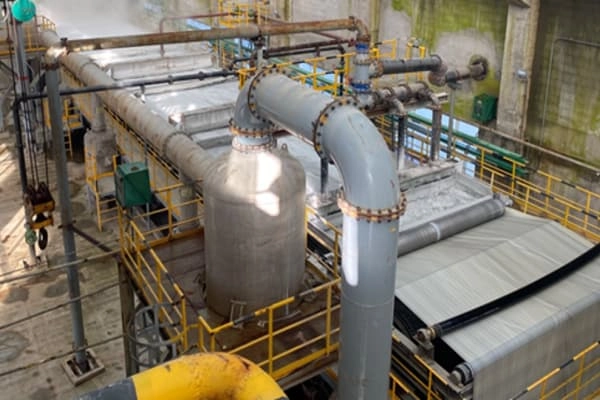
Stable filtration reduces changes in flow and pressure, which is critical for smooth, nonstop work. Blocks from particle piles can lower the pressure, reduce the throughput, and stop working unexpectedly. Strong systems like the horizontal rubber belt vacuum filter serve as equipment that uses circular-moving filter cloth as the medium, applying low pressure and gravity from vacuum equipment to separate solids from liquids quickly and without breaks. This ensures the separation process operates without manual intervention, maintaining consistency across production cycles.
Clean fluid quality through precise filtration links directly to improved product quality. Pure fluids reduce the possibility of later contamination and protect sensitive stages, ensuring the final results reach or exceed regulatory and customer standards.
What Role Does Filtration Play in Preventing Equipment Failure and Maintenance Interruptions?
Industrial systems tend to work under the heavy pressure provided by machines and heat. Unclean fluids sent to pumps, valves, and outlets accelerate damage and increase early breakdown risks as abrasive particles or corrosive agents cause erosion, fouling, or scaling on internal surfaces.
Effective industrial filtration equipment protects these components by extending their lifespan. For instance, improved designs of drain grooves and holes on the belt provide excellent liquid removal and filtering results. Such designs reduce inner resistance and allow smoother fluid movement with less strain.
Pure process fluids further permit planned care times. Workers shift from fixing breaks to using force difference signals for filter change or cleaning, thus reducing sudden downtime and supporting continous output.
Where Are the Most Critical Points for Filtration in Manufacturing Systems?
Why Do Solid-Liquid Separation Stages Demand High-Performance Filtration Solutions?
Solid-liquid separation is among the most filtration-intensive steps in manufacturing, like mining, chemicals, metallurgy, and wastewater handling. Poor division at this stage can lead to slurry piles, reduce the output of the system, and even break the laws for improper effluent discharge.
Equipment such as the horizontal rubber belt vacuum filter produced by NHD is built on the experience of similar products at home and abroad. It adopts the modular heavy-duty frame that is easy to dispatch, transport, and install, and has a good washing effect due to the multi-stage countercurrent style. These traits are useful where cake purity or washing speed directly influence output or regulatory discharge limits.
In fields such as phosphoric acid production or gypsum dewatering in flue gas desulfurization (FGD), these filters deliver steady output without manual disassembly or cleaning, enabling a high degree of automation and workers’ safety.
How Do Closed-Loop Fluid Systems Benefit from Advanced Filtration Design?
Closed-loop fluid systems are widely used in cooling circuits, hydraulic paths, and chemical recovery. Over time, even tiny particles can gather in these systems. Without proper filtering, this buildup underperforms key parts like heat exchangers, thin outlets, and high-precision act dosing pumps.
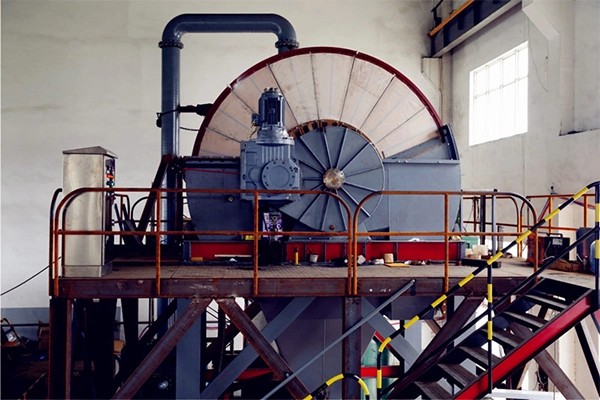
Disc filters are ideal for these applications because they can offer compact footprints and high surface area efficiency suitable for large-volume throughput. The fine filtration area of a single unit can reach a fine filtering area of up to 800㎡, allowing plants to manage high-flow recirculating systems with little room. Filter placement within these systems ensures that contaminants are intercepted before they can deposit inside critical machinery—preserving both performance and energy efficiency.
What Makes Filter Selection So Crucial to Your Operational Goals?
How Can Poor Filter Choice Undermine Process Efficiency and Product Integrity?
Improper type or size choice for industrial filtration equipment can generate serious effects. Too large filters increase energy consumption from unnecessary pressure head requirements, while too-small units often cause pressure falls or quick cycles that disrupt flow balance.
Material compatibility is another main point. Filters from poor materials under heat or chemical attack may bring contaminants into the equipment. In special environments, like zinc smelting or nickel refining, full sealing is important for filtering. For example, during zinc smelting, if the solution is in contact with air for a long time, cadmium and cobalt will redissolve, seriously affecting the product quality.
Aligning filter medium traits—pore size, chemical strength, and pass rate—with fluid details ensures the best results, which match hold flow targets and secure solid hold rates.
Why Should You Consider Scalability and Customization in Your Equipment Choice?
Production systems seldom stay fixed. The growth of production or the change of formulations requires filtration infrastructure that adjusts without complete redesigns, so modularity and custom design are important.
For example, a modular heavy-duty frame that is easy to remove, transport, and assemble enables the plants to expand capacity or integrate new features like automatic cloth washing or multi-stage washing units without stopping current work.
Therefore, the designs that allow for control over cake thickness, washing water, vacuum degree and running cycle provide engineers with the ability to adjust systems for changing needs, thus enhancing long-term ROI.
Can Industrial Filtration Help You Meet Regulatory and Sustainability Targets?
How Do Effective Filters Support Environmental Compliance Without Sacrificing Throughput?
Current production sites face rising demands to reduce waste discharge while keeping productivity. Strong filtration plays a pivotal role as it can capture solids that might pollute the environment. For example, the filter cake washing unit can be loaded with multiple rounds, which can treat soluble matter in slurry in green and cost-saving ways. This is particularly beneficial in industries like phosphate chemical processing, where effluent contains significant soluble contaminants.
No scales inside the flow-guide and heat-keeping vacuum box help lower the needs of maintenance, thus enabling systems to run at top speed without additional resource consumption.
What Is the Link Between Energy Efficiency and Filter System Design?
Energy costs form a large part of running expenses. Low-resistance filters reduce the load on pumps and blowers by reducing friction losses in fluid transfer. For instance, longitudinal support of the rubber belt provides a steady work with a large filter pressure difference that enhances dewatering without excessive vacuum strength.
Automatic cleaning reduces manual labor while avoiding production halts. The vacuum box can be raised and lowered quickly, convenient for daily maintenance and repair, streamlining upkeep processes so that sustainability goals like reduced water use and energy efficiency are consistently met.
Who Can Deliver Reliable Industrial Filtration Solutions Tailored to Your Needs?
Why Should You Trust a Specialist Manufacturer With Proven Industry Expertise?
Industrial filtration equipment needs more than strength. Engineering must be designed for the specific process conditions. That’s why working with an experienced provider like NHD ensures not just compatibility but also operational excellence.
From horizontal rubber belt vacuum filter to disc filter units, NHD blends solid build with ready-for-automatic traits that meet current production needs. Systems include years of improvements like multi-stage sprayers that greatly ease operation and care strength.
FAQs
Q: What factors should I consider when selecting an industrial filtration system?
A: Attention belongs on fluid traits (thickness, solids amount), flow speed needs, heat/force conditions, room limits, and desired automatic level.
Q: How often should industrial filters be maintained or replaced?
A: Frequency varies by use; yet forward care from force difference watching best stops surprise breaks.
Q: Can I integrate new filtration equipment into my existing system without major redesigns?
A: Certainly—modular builds like those from NHD permit easy addition to older paths with little upset or stop time.