
 German
  English
  French
  Spanish
  Russian
  Arabic
  Portuguese
  Indonesian
  Turkish
  Persian
  Vietnamese
  中文
中文 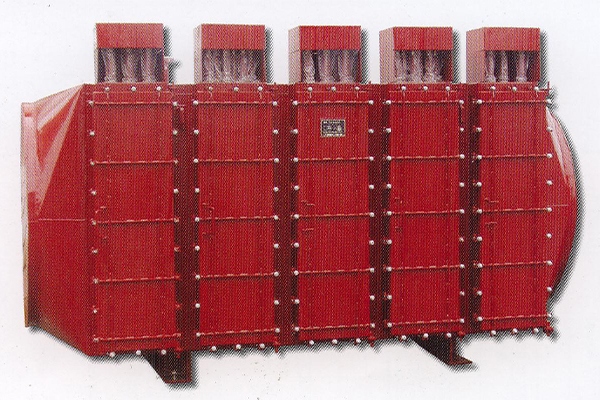
Sulfuric acid plants rarely become unstable because of one large failure. More often, gas temperature drifts, the conversion section receives a changing feed condition, or the absorption tower has to deal with a gas stream outside its normal range. Operators then adjust several valves and controls at once, while energy use and product consistency begin to move in the wrong direction.
A gas heater sits at an important point in that chain. It does not replace the converter, acid distributor, or demister. It prepares the gas condition so those downstream sections can work within a more predictable operating window.
Why Sulfuric Acid Plants Need Gas Heater Equipment
In the contact process, sulfur dioxide-containing gas passes through treatment and conversion stages before sulfur trioxide is absorbed. The reaction and gas-handling sections do not respond well to uncontrolled temperature swings. A colder gas stream may reduce the available reaction condition, while excessive temperature can increase thermal stress on linings, seals, electrical parts, and connected ductwork.
The issue is not simply whether the gas is hot enough. The temperature must also be distributed evenly across the flow. If one part of the gas path runs hotter than another, the converter and later absorption equipment may see a changing load even though the average temperature looks acceptable on the control screen.
For projects using NHD’s EH96 Series Gas Heater, the relevant selection starts with gas type, flow, inlet temperature, required outlet temperature, power, and installation conditions. These details determine whether the heater supports stable operation or becomes another source of pressure loss and maintenance work.
What a Gas Heater Does Before Conversion and Absorption
Brings Gas Temperature into a Usable Range
The first job is temperature adjustment. EH96 is specified for inlet conditions from ambient temperature to 400°C and an outlet temperature of up to 550°C. The required value should come from the process design, not from the heater’s maximum rating. Running close to the limit without checking gas composition, insulation, and downstream materials can create avoidable risk.
Controls Heat in Electrical Groups
EH96 controls temperature by changing the number of energized electrical groups. This gives the operator a practical way to raise or reduce heating input as the gas load changes. Grouped heating also means the gas can remain relatively even if one heating group stops, rather than creating an immediate cold section across the whole outlet.
Transfers Heat Without Creating a Large Fan Burden
The EH96 design places more than 95% of the heating elements in the gas flow, increasing direct heat transfer. A low surface load helps reduce wire breakage, while the product information also identifies fast temperature rise, energy saving, and low pressure loss as design targets. For a plant, this matters because a heater that raises temperature but sharply increases fan demand can move the problem from the electrical system to the gas-handling system.
EH96 Side-Door and Top-Door Structures: What Is the Difference?
Gasheizung Seitentür
The side-door structure is arranged for access from the side of the heater. It can suit a layout where operators have a service platform or maintenance aisle beside the equipment. The EH961 range covers models from EH961-1 to EH961-5, with rated power from 100 to 1200 kW and connecting pipe sizes from roughly 325 to 1520 mm.
The main purchasing question is not only capacity. Side clearance, door opening space, lifting access, high-temperature packing, and the route for removing heating elements should be checked on the plant drawing. A side-door heater may be convenient to maintain, but only when the platform and surrounding ductwork leave enough room to open the door safely.
Top-Tür Gasheizung
The top-door structure is accessed from above and can fit larger installations where the roof platform or lifting arrangement is already available. The EH962 range covers EH962-1 to EH962-6, with rated power from 250 to 2200 kW and connecting pipe sizes from approximately 530 to 2020 mm.
Top access can make sense when side space is limited, but it shifts attention to top clearance, platform loading, crane access, weather protection, and the working position of maintenance staff. The two structures use the same basic electric heating principle. Their practical difference is installation, inspection, and replacement access.
Wie ein Gas Heater Works with Other Sulfuric Acid Equipment
Gas treatment and absorption equipment should be viewed as a connected line.
Gas treatment
↓
Gas Heater: temperature adjustment
↓
Conversion / Absorption
↓
Acid Distributor: even acid distribution
↓
Demister: acid mist removal
Gas treatment comes first. EH96 is listed for air, dry SO2 gas, and fuel flue gas, so the actual gas composition, dust level, flow rate, and inlet temperature need to be confirmed before selection. The fan should be started before the electric heater. Energizing the furnace without airflow can make the temperature rise too quickly and damage the body.
After temperature adjustment, the conversion and absorption sections depend on stable gas contact. An Säureverteiler spreads circulating acid over the tower area. Uneven acid distribution can leave dry zones or create local entrainment, even when gas temperature is under control.
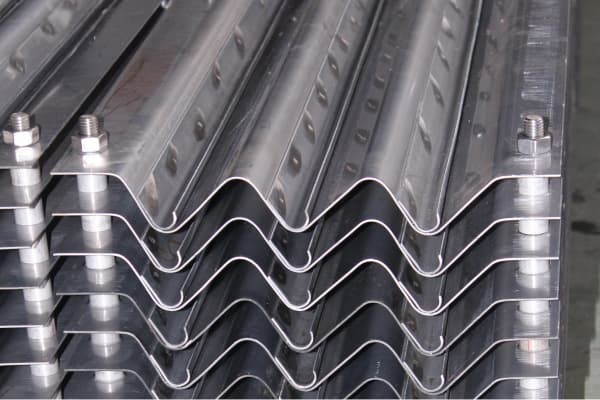
Die sulfuric acid equipment category also includes demister and mist-elimination equipment. A demister removes droplets carried with the gas after absorption. Its selection should follow droplet size, gas velocity, dust loading, allowable pressure loss, and maintenance access. Temperature stability helps this section, but it cannot correct a badly selected or blocked demister.
What Buyers Should Check to Improve Plant Stability
Before ordering, buyers should send the gas type, gas flow, inlet temperature range, required outlet temperature, pressure, power supply, connecting pipe diameter, operating altitude, and gas cleanliness. A single design point is not enough if the plant will run at turndown or seasonal feed changes. The supplier should understand the normal range as well as the maximum condition.
Structure and maintenance data should be checked at the same time. Confirm whether the site suits a side-door or top-door arrangement, how the heating elements will be lifted out, whether the door can be opened without removing nearby ductwork, and whether high-temperature packing and insulation can be replaced locally.
Electrical control and safety deserve a direct discussion. Confirm voltage, connection type, number of electrical groups, temperature sensors, fan interlock, alarm logic, and restart procedure. For EH96, the listed voltage is 380 V, the connection can be a triangle or a star, and the rated power range is 90–4800 kW. The actual model still needs to match the process load and site electrical capacity.
Supplier support also matters when the heater is part of a wider sulfuric acid line. NHD’s EPC+M+O service covers design, manufacturing, installation, commissioning, and operation support. Buyers can contact NHD with process data, drawings, and maintenance limits before the final configuration is fixed. That step helps reduce wrong dimensions, delayed spare parts, and a mismatch between the heater and the downstream tower equipment.
FAQ (häufig gestellte Fragen)
Q1: What gases can the EH96 Series Gas Heater handle?
A1: The listed application gases are air, dry SO2 gas, and fuel flue gas. Gas composition, flow, dust, inlet temperature, and required outlet temperature should still be confirmed for each project.
Q2: How should buyers choose between the side-door and top-door structures?
A2: Compare maintenance access, platform layout, lifting route, side clearance, top clearance, weather protection, and connected ductwork. The choice is mainly a site and maintenance decision, not a different heating principle.
Q3: What is the maximum outlet temperature of EH96?
A3: The listed outlet temperature is up to 550°C. The selected operating temperature should be based on the process requirement and downstream material limits, not only on the maximum rating.
Q4: Can the gas heater be supplied with project support?
A4: Project support can cover equipment selection, customized dimensions, installation guidance, commissioning, operating advice, and spare parts planning. Buyers should confirm the service scope before ordering.