 French
  English
  Spanish
  Russian
  Arabic
  Portuguese
  Indonesian
  German
  Turkish
  Persian
  Vietnamese
  中文
中文 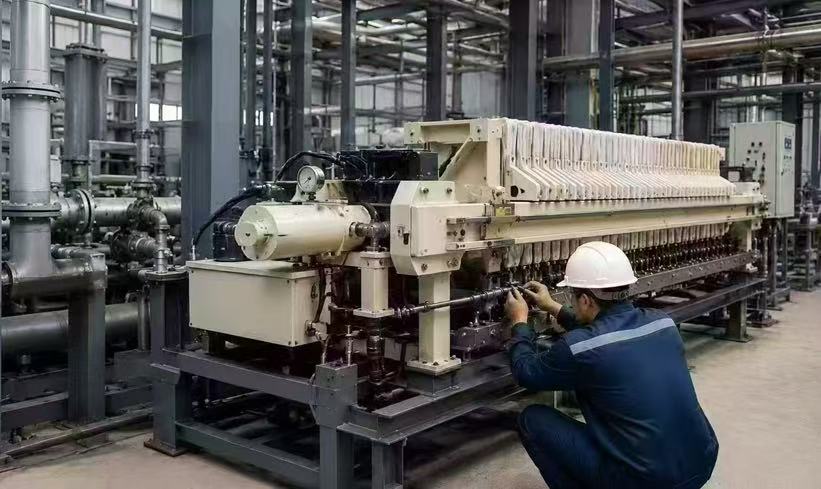
A filter press may arrive as a complete machine, but it is not production-ready when the frame reaches the foundation. Alignment, pipe loads, electrical direction, plate movement, and the first filtration cycle still need controlled checks.
Installation and commissioning form one sequence. The machine must be assembled around the real slurry process, not simply connected to the nearest utilities.
Plan the Site Before the Filter Press Arrives
Confirm Foundation, Lifting Access, and Maintenance Clearance
Start with the approved general arrangement drawing. Check foundation elevation, anchor-bolt positions, floor strength, drainage, lifting access, and plate-removal space. Incomplete grout or later settlement can distort a frame that appeared level during installation.
Operators need a safe route to inspect cloths, clean filtrate outlets, reach hydraulic components, and remove a damaged plate. Verify the crane, monorail, or forklift path before surrounding pipework blocks it.
Freeze the Utility and Process Interfaces
The installation package should identify every feed, filtrate, wash-water, air-purge, drain, hydraulic, power, and control connection. Confirm flange standards, pipe sizes, design pressure, voltage, instrument signals, and responsibility for each tie-in.
Utility demand changes with press size. Available HDCWY data covers areas from 20 to 1,000 m², chamber sizes from 1,000 × 1,000 to 2,000 × 2,000 mm, and hydraulic-station motors from 7.5 to 18.5 kW. The contracted model drawing must govern the site work.
Install and Align the Mechanical Filter Press
Position the Frame and Check Level, Alignment, and Anchors
Set the frame on shims or leveling pads, then check longitudinal level, cross level, diagonals, and the alignment of the head, side beams, and tail. Tighten anchors in stages, then grout the base evenly.
Do not use connected piping to pull a nozzle into position. Pipe strain can disturb sealing faces during heat, vibration, or feed pressure. NHD integrates design, manufacturing, installation, and project work when civil, mechanical, and process interfaces must be checked together.
Fit the Filter Plates, Cloths, Guards, and Drive Components
Confirm plate sequence, orientation, cloth type, cloth alignment, and sealing surfaces before closing the stack. A reversed plate, folded cloth edge, or trapped grit can create an uneven chamber, leakage, or a wet cake section.
Check hydraulic oil cleanliness, cylinder connections, plate shifting, guards, pull cords, and access doors. The série de filtres de presse automatiques includes different arrangements, so moving-part checks must follow the supplied layout.
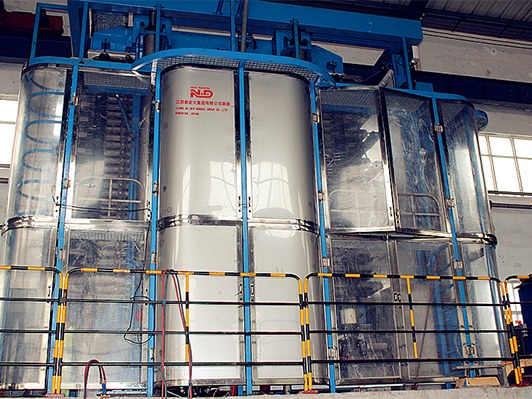
Large press equipment needs practical access around platforms, doors, cloth paths, and service points. On units such as the Filtre de pression automatique vertical HDLY, access checks form part of installation and operating safety.
Connect Piping, Hydraulics, and Electrical Controls
Route Feed, Filtrate, Washing, Air-Purge, and Drain Lines
Support external piping independently and provide the specified slopes, drains, vents, and dismantling joints. Feed lines should avoid solids pockets, while visible filtrate branches help identify a leaking chamber.
Clean-water and air-purge lines need non-return protection, isolation, and the correct discharge route. Flush new piping before commissioning because welding slag can block valves or filtrate passages.
Check Motor Rotation, Hydraulic Direction, Sensors, and Interlocks
Before energizing, compare wiring with the approved schematic. Test grounding, motor insulation, phase sequence, pressure switches, position sensors, door switches, emergency stops, alarms, and plant-control signals. Jog each motor to confirm rotation.
Set hydraulic pressure from the machine documentation. More closing pressure cannot repair damaged seals, dirty plate faces, or frame misalignment. Confirm that feeding and plate movement are blocked in unsafe states.
Commission the Press in Three Controlled Stages
Complete a Dry Run Before Introducing Liquid
Run the sequence without slurry. Close and open the plate pack, operate the plate shifter, and check limit positions at reduced speed or pressure where possible. Watch for binding, hose movement, and guard interference.
Dry commissioning also confirms valve commands and permissives. EPC and project coordination matter because pumps, air, conveyors, tanks, and the press may come from different supply packages.
Run a Water Test for Sealing and Pipeline Operation
Introduce clean water at low pressure. Inspect feed connections, plate seals, filtrate outlets, wash lines, drains, and hydraulic joints. Confirm that residual liquid leaves without pooling above conveyors or walkways.
Raise pressure in controlled steps and record each leak location. Water cannot reproduce cake formation, but it exposes reversed valves, blocked outlets, loose fittings, and interlock problems with less cleanup.
Introduce Slurry Gradually and Adjust the Filtration Cycle
Use conservative feed pressure for the first material run. A typical cycle closes the plates, feeds slurry, flushes the line, applies air for further dewatering, opens the plates for discharge, and cleans the plates and cloths.
Early filtrate may be less clear until a cake layer forms. If permitted, return it to the slurry tank. Adjust only one variable at a time so the team can identify which change affected performance.
Judge Commissioning by Process Results
Check Filtrate Clarity, Cake Moisture, Cycle Time, and Discharge
A moving machine is not yet accepted. Record filtrate clarity, cake thickness, moisture, cycle time, wash demand, discharge, plate sealing, cloth condition, and liquid carried into the discharge area. Compare results with the contract and selection test.
NHD has used 72-hour operation tests on filtration installations. Agree the duration for the mechanical filter press instead of copying another project. An extended run can reveal heat rise, repeated leakage, valve delays, and performance drift.
Correct Uneven Cake, Plate Leakage, and Pressure Instability
Uneven cake can indicate blocked feed passages, poor distribution, folded cloth, plate-order errors, or short feeding. Leakage may come from dirty faces, damaged cloth edges, worn seals, misalignment, or excessive feed pressure.
Do not hide faults by raising pressure or extending every cycle. Correct the cause, then repeat the same acceptance run so the final recipe reflects actual performance.
Complete Handover and Reduce Start-Up Rework
Record Baseline Settings, Acceptance Data, and Spare Parts
The handover pack should include drawings, piping and electrical diagrams, hydraulic settings, valve sequence, alarms, baseline cycle values, lubrication points, inspection intervals, and acceptance records. Record the installed plate, cloth, seal, and wear-part specifications.
Keep cloths, seals, hydraulic filters, sensor targets, and plate-movement parts near the machine. Label isolation points and flow directions before the commissioning team leaves.
Arrange Operator Training and On-Site Technical Support
Training should cover normal cycles, pressure release, plate inspection, cloth cleaning, leak response, emergency stops, and maintenance limits. Operators must know which settings may be changed.
NHD can combine laboratory testing, pilot verification, simulated slurry start-up before shipment, installation support, and on-site commissioning. Send the slurry properties, process target, press model, utilities, site drawings, and acceptance requirements before mobilization. To define the service boundary, contact New Hongda with the project package.
FAQ (questions fréquentes)
Q1: What should be checked before installing a mechanical filter press?
A1: Confirm the foundation, anchors, lifting route, maintenance clearance, drainage, feed and filtrate piping, wash and air connections, electrical supply, control signals, and the exact contracted model drawings. Interface errors found before delivery are much cheaper to correct than site rework.
Q2: Why should commissioning begin with a dry run and water test?
A2: A dry run checks movement, positions, guards, and interlocks without process pressure. A water test then exposes leakage, valve errors, blocked outlets, and drainage problems before slurry creates difficult cleanup or damages a cloth.
Q3: What information should be prepared for NHD commissioning support?
A3: Prepare the slurry composition, solids concentration, temperature, particle information, process targets, press model, utilities, site drawings, control philosophy, current operating issues, and agreed acceptance criteria. Material samples are useful when filtration settings or equipment selection still need verification.