
img.From Exploration to Processing: Nigeria’s Critical Minerals Opportunity.webp
Nigeria is putting more public money behind mineral exploration, but the bigger opportunity starts after a deposit is found. The government plans to support eligible exploration projects with grants covering as much as 70% of project costs, while work across 44 mineral resources is expected to accelerate. Lithium, nickel, cobalt and rare earths are among the resources attracting particular attention.
For investors and engineering teams, this changes the discussion around nigeria mineral processing. A drill program may prove that a resource exists. It does not prove that the ore can be processed economically, nor does it tell a buyer what kind of leaching tank, agitator or filter press should be ordered.
The step from exploration to local value addition is where many projects become more complicated. Critical minerals processing has to turn geological data into a workable process route, then prove that route at a useful scale. Mineral processing equipment therefore needs to enter the discussion before a full processing plant is designed, but after enough representative material is available for meaningful testing.
Why Does Local Processing Need More Than a Good Resource Estimate?
A strong assay result answers an important question, but only one question. It tells a developer something about the amount and grade of the target mineral. It says much less about how the material behaves after crushing, grinding, leaching, washing or filtration.
Why Can Similar Mineral Deposits Behave Differently?
Two lithium ores with similar headline grades may have different gangue minerals, liberation characteristics and impurity levels. Nickel and cobalt ores can vary sharply in acid consumption and solid residue behavior. Rare earth projects bring their own separation and impurity challenges.
Those differences matter because critical minerals processing is not simply a matter of choosing a standard flowsheet for each commodity.
A project team needs to know how quickly target metals enter solution, what impurities follow them, how much reagent is consumed, what remains in the residue and how that residue behaves when it reaches solid-liquid separation.
This is where nigeria mineral processing studies should begin to connect geology with process engineering. Without that connection, equipment suppliers are forced to size around assumptions.
When Should Equipment Engineering Start?
Not during the first drill campaign. That would be too early. Waiting until the processing plant is already laid out can be too late.
A better point is after representative samples have been collected and bench-scale metallurgical work has narrowed the likely process route. At that stage, suppliers can help translate process conditions into equipment duties.
For mineral processing equipment, that may mean testing slurry density, particle distribution, settling behavior or filtration. For hydrometallurgy equipment, it can also mean reviewing reaction time, mixing intensity, temperature, pressure, corrosion conditions and material compatibility.
Why Is Pilot Plant Testing Important Before Local Processing Investment?
Laboratory testing is useful for screening a process. Pilot plant testing answers a different question: can the process continue to work when material has to move through equipment repeatedly?
A beaker does not have a feed pump. A small reactor does not reproduce every circulation zone of an industrial tank. A laboratory filter may produce a good cake once, while a production filter has to repeat feeding, washing, air purge, discharge and cloth cleaning all day.
What Should Pilot Plant Testing Actually Prove?
A useful pilot campaign should record an operating range rather than one ideal result.
For leaching, that includes solids concentration, slurry density, particle size, viscosity, reagent demand, residence time, temperature and the condition needed to keep solids properly suspended. If gas is part of the process, gas distribution becomes another design input.
For filtration, the team needs feed time, pressure development, filtrate clarity, cake thickness, moisture, washing volume, air demand, discharge condition and cycle time.
NHD also uses a 1.6 m² testing machine for customer-material trials and equipment selection. Representative slurry can be tested before quotation so that the proposed filtration configuration is linked to actual material behavior rather than an unrelated reference duty. This is particularly useful when pilot plant testing involves unfamiliar ores or a new downstream product.
The value is practical. Once the project reaches feasibility, those results can become equipment specifications instead of remaining laboratory notes.
How Should Leaching and Mixing Be Prepared for Scale-Up?
Leaching is chemical, but the reactor still has to create the physical conditions that allow the chemistry to happen.
A process may require solid particles to remain suspended, reagents to distribute quickly and heat or gas to move through the slurry without creating excessive shear. A larger tank changes those conditions.
Why Can’t Agitator Power Be Scaled by Tank Volume Alone?
A larger tank creates longer circulation paths. Shaft loads increase. Impeller diameter changes relative to the vessel, and solids that remained suspended in a pilot tank may begin to settle in parts of the full-scale vessel.
That is why hydrometallurgy equipment selection needs more than a motor rating.
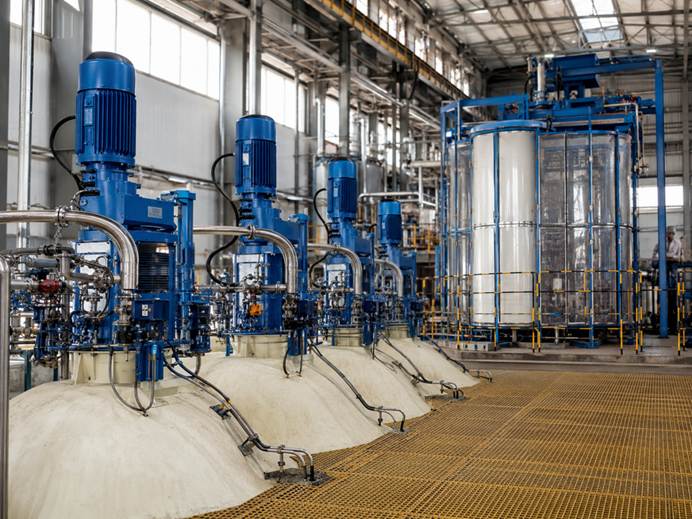
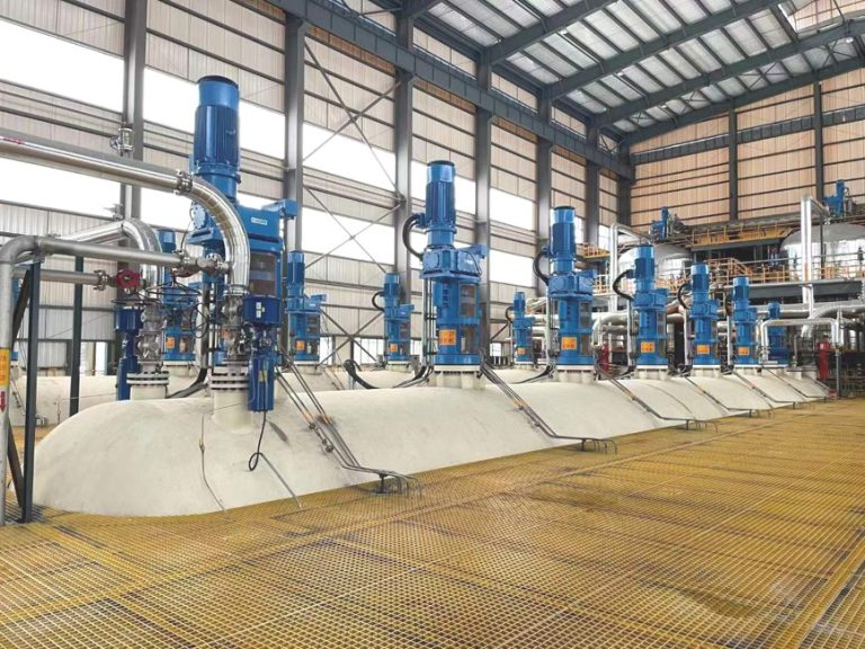
NHD’s agitator engineering for non-ferrous processing can combine laboratory work, pilot tests and scale-up experiments with CFD, CFM, LDA and finite-element analysis. Selection inputs can include tank geometry, throughput, slurry concentration, density, viscosity, particle-size distribution, temperature, pressure and operating mode.
For a Nigerian lithium, nickel, cobalt or rare earth project, this allows the agitator to be reviewed around actual slurry behavior instead of choosing an impeller from tank diameter alone.
When Do Reactor Materials Become a Major Procurement Issue?
Process chemistry determines this.
Some mineral routes operate at atmospheric pressure and moderate temperature. Others may involve stronger acids, elevated temperature or pressure. Corrosion conditions can therefore change the choice of reactor body, internals, agitator materials, seals and piping.
NHD’s pressure vessel and reactor equipment includes pressure vessels and reactor-related equipment for non-ferrous metallurgy and other chemical duties. Its manufacturing portfolio includes stainless-steel pressure vessels, titanium reactors, titanium and zirconium heat exchangers, and duplex-steel heat exchangers.
That range does not mean a pressure reactor should automatically be specified for every critical minerals processing project. The process route must justify it first. What matters is that material and vessel engineering can be reviewed once testwork defines the chemical duty.
Why Can Filtration Become the Hidden Scale-Up Problem?
A successful leach does not finish the process. The plant still has to separate the valuable solution from solid residue, wash the cake where necessary and move the solids out of the circuit.
This is where some hydrometallurgy equipment packages run into trouble. The chemistry may meet extraction targets while filtration takes too long, the cake stays too wet or fine solids pass into the filtrate.
What Should a Filter Press Be Sized Around?
Filtration area matters, but it is only part of the answer.
Buyers need to connect area with dry-solids throughput, cycle time, pressure, cake moisture and washing requirements. Cloth behavior and cake discharge should also be tested. A filter that produces a dry cake but requires an impractically long cycle can still restrict plant capacity.
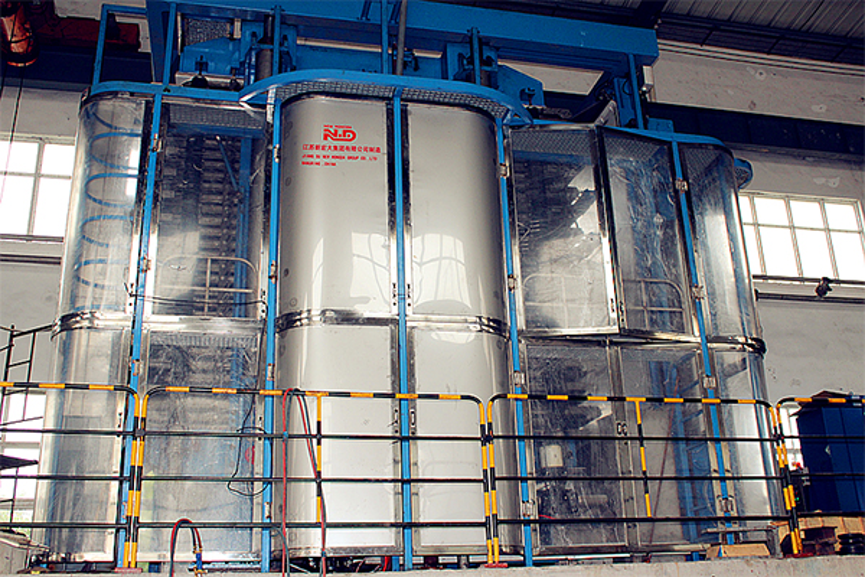
NHD’s vertical automatic pressure filter covers filtration areas from 6 to 180 m², with a listed maximum pressure of 1.6 MPa. The equipment is intended for washing, filtration and dewatering duties in non-ferrous smelting and other industries.
Its automatic operation also includes control, self-diagnosis and alarm functions. For a processing plant that may eventually operate continuously, automation becomes more important once pilot plant testing has established the correct cycle.
Why Is the Pilot Cycle More Useful Than a Catalogue Capacity?
Because slurry changes the answer.
NHD filtration experience shows why a project should test representative material before freezing equipment. A pilot cycle can reveal feed resistance, cake formation, filtrate quality, washing behavior, air-purge response and discharge problems that are difficult to predict from solids percentage alone.
For nigeria mineral processing projects that are moving into new commodities or new local-processing routes, this is especially relevant. A supplier reference from another ore can help establish a starting point, but it should not replace material testing.
How Can Nigeria Avoid the Gap Between Exploration and a Processing Plant?
The biggest risk is not always a bad piece of mineral processing equipment. It can be a project where geology, metallurgy and mechanical design were developed separately.
Which Data Should Follow the Project Into Feasibility?
Every important result should remain tied to the test conditions that produced it.
An extraction percentage should retain feed mineralogy, particle size, reagent conditions and residence time. A cake moisture result should retain feed solids, pressure, cloth specification and cycle duration. Agitation results should retain tank geometry, impeller configuration and power.
That gives critical minerals processing teams a much stronger basis for RFQs and acceptance criteria.
It also makes vendor proposals easier to compare. One supplier should not be quoting dry-solids throughput while another uses wet slurry volume without the buyer noticing the difference.
Why Does an Integrated Equipment Supplier Help at This Stage?
The value is mainly at the interfaces.
NHD integrates R&D, equipment design, manufacturing, installation and EPC-related capabilities across agitators, pressure equipment, filter presses, thickeners and other separation machinery. The company has worked in non-ferrous metallurgy and other process industries, while its filtration development can also connect laboratory testing, pilot verification, simulated slurry operation, installation support and commissioning.
That does not remove the need for specialist metallurgical engineering. It does reduce the number of equipment interfaces that have to be solved independently once the process basis is ready.
Project developers can discuss a pilot-to-plant mineral processing scope with NHD using representative material information, preliminary process conditions, production targets, utility limits and the planned development stage.
What Should Buyers Prepare Before Requesting Equipment Proposals?
A useful RFQ should tell the supplier what is known, what has been tested and what is still uncertain.
Which Inputs Lead to a Better Technical Offer?
For mineral processing equipment, prepare mineralogy, particle-size distribution, slurry concentration, density, viscosity, throughput, settling or filtration tests and operating hours.
For hydrometallurgy equipment, add process chemistry, reagent concentrations, temperature, pressure if relevant, residence time, corrosion conditions, gas requirements and material constraints.
The project should also define utility limits, local standards, transport restrictions, installation conditions and the expected scale-up path.
A supplier can then identify where existing data is enough and where pilot plant testing is still required. That is far more useful than receiving a low quotation built around assumptions that may later change.
Conclusion
Nigeria’s exploration support can help more mineral projects reach a point where investors have credible geological data. Local value addition requires another step: proving how those minerals can be processed repeatedly, economically and at a larger scale.
That is why nigeria mineral processing projects should connect exploration, critical minerals processing and equipment engineering early. Pilot plant testing can define the real operating window. Agitator design can be based on slurry behavior. Filtration can be sized around a proven cycle rather than nominal area.
For buyers, the objective is not to select mineral processing equipment as early as possible. It is to bring the right equipment questions into the project early enough that the answers can still influence the process design.
FAQs
Q1: When should a Nigerian mineral project begin pilot plant testing?
A1: Pilot plant testing is most useful after representative material and bench-scale metallurgical results are available but before the full processing plant and utilities are frozen. The test should reproduce the main mixing, reaction, filtration, washing and discharge conditions expected in operation.
Q2: What information is needed before selecting leaching and filtration equipment?
A2: Buyers should prepare mineralogy, particle size, solids concentration, density, viscosity, throughput, process chemistry, temperature, pressure where relevant, residence time, filtration targets, washing requirements, utility limits and site conditions.
Q3: Can NHD support a project from pilot testing to larger equipment selection?
A3: NHD can combine customer-material filtration testing with equipment selection and can review agitator scale-up, pressure equipment, automatic filtration, manufacturing, installation and commissioning requirements. The final scope depends on the tested process and the planned plant capacity.