
img.How Can Zambia Scale Copper Processing Under Water and Power Limits?.webp
Zambia can scale copper output more reliably if new mines and concentrators treat water recovery, slurry concentration, and equipment efficiency as design constraints from the feasibility stage. The country is targeting 3 million tonnes of annual copper production by 2031, nearly three times current output, while miners are also warning that future expansion will need substantially more electricity.
That matters because zambia copper processing is expanding through a mix of brownfield projects, new mines, reopened operations, and added concentrator capacity. Every extra tonne of ore has to be crushed, ground, floated, thickened, pumped, and eventually placed or processed downstream. If utilities cannot expand at the same pace, moving unnecessary water through the circuit becomes a cost that plants can no longer ignore. For project owners and EPC teams, the practical question is broader than “Which copper processing equipment has the highest capacity?” The better question is which process arrangement can keep production stable while reducing avoidable water circulation, tailings volume, and pumping demand.
Why Does a 3-Million-Tonne Target Change Plant Design?
A national production target changes the scale of the project pipeline. Existing mines need debottlenecking. New mines need concentrators and tailings systems. Smelting growth depends on a steady concentrate supply. Each step adds pressure to power, water handling, roads, and other infrastructure.
Zambia’s dependence on hydropower makes that link especially important. Drought-related power shortages have already affected mining, while industry estimates indicate roughly 2,000 MW of additional power capacity may be needed to support the planned expansion.
Why Does More Ore Mean More Slurry?
Copper output does not rise in isolation. To produce more concentrate, a plant normally has to process more ore, and that means larger grinding and flotation flows. The resulting slurry carries solids plus a large amount of process water. If the dewatering section does not keep pace, the plant ends up pumping and storing more water than necessary.
This is why zambia copper processing projects should define slurry tonnage, water balance, return-water quality, and peak feed conditions before final equipment sizing. A higher mill throughput can simply move the bottleneck downstream if the thickener, underflow pumps, or tailings system was designed around an older production rate.
Where Do Power and Water Constraints Meet?
They meet in pumping. Water that leaves the process with tailings has to be replaced. Water that remains in a dilute stream has to be moved farther. Unstable underflow density can force operators to run pumps and downstream equipment across a wider operating range.
Mine water recovery therefore has an energy effect as well as a water effect. Recovering more process water close to the concentrator can reduce the volume sent toward tailings storage and lower the amount of replacement water returned to the circuit. Industry case studies also show why modern thickening is increasingly discussed as a water-stewardship issue rather than only a solids-settling step.
Why Can Tailings Thickening Become a Capacity Bottleneck?
Tailings thickening sits at the point where plant throughput, water balance, and storage strategy meet. If the thickener cannot settle incoming solids fast enough, operators may have to lower feed, change dilution, adjust flocculant dosage, or accept a thinner underflow.
What Should Buyers Measure Beyond Thickener Diameter?
A large tank is not automatically a high-performing mining thickener. Buyers need settling tests, particle-size distribution, feed solids, dry-solids throughput, target underflow concentration, overflow clarity, flocculant response, rake torque, and pumping limits.
The relationship between those figures matters. Chasing the highest possible underflow solids can create slurry that becomes difficult to pump. Chasing very clear overflow with excessive flocculant may raise operating cost. A good design establishes an operating window rather than one impressive number.
For tailings thickening, the project team should also define what happens when ore mineralogy changes, feed density drops, or one upstream line surges. Those are normal production events, not exceptional cases.
How Can a Mining Thickener Support More Efficient Water Use?
A mining thickener separates solids from liquid by gravity and compression. In a copper concentrator, the useful output is not only denser tailings. It is also recoverable overflow that can return to the process.
Where Does NHD’s Deep-Cone Design Fit?
img.deep cone thickener.webp
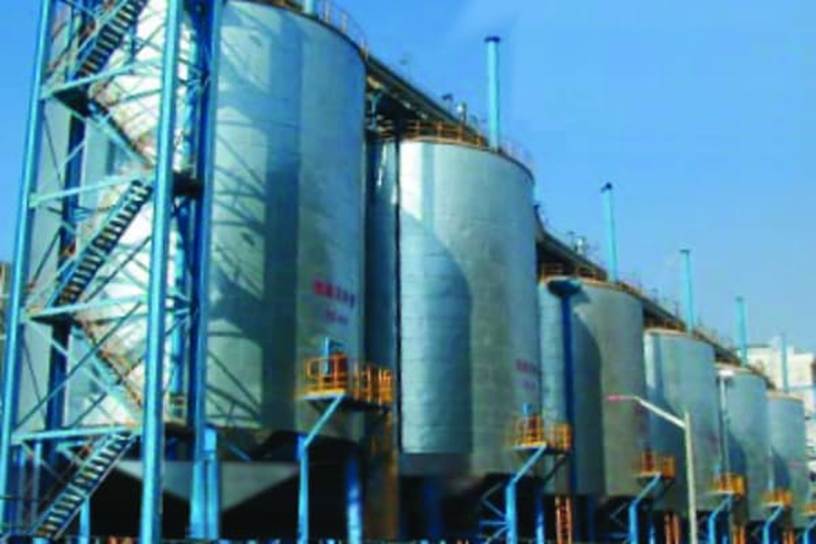
For a supplier example, NHD’s deep-cone thickener for mineral processing is designed for mineral processing, non-ferrous metallurgy, alumina, and other solid-liquid separation duties.
The NHD-series deep cone thickener has a stated design capacity up to 15 times that of a common thickener, while its underflow compressive ability is nearly 10 times that of common equipment. Those figures should not be treated as guaranteed Zambia project results. Actual performance still depends on ore characteristics, fines content, feed concentration, flocculation, and required discharge behavior.
The equipment also combines torque detection with DCS-based monitoring and ultrasonic measurement of slurry level and solids content. For a large plant, those controls matter because tailings thickening is rarely steady all day. Operators need to see the process moving toward a torque or density limit before the drive trips or the underflow becomes difficult to manage.
How Should Copper Projects Link Thickening to the Rest of the Plant?
The thickener should not be sized as an isolated tank. Its underflow has to match the pump system and tailings route, while its overflow has to match the plant’s return-water quality needs.
What Should Be Checked at the Interfaces?
Start with the real operating envelope. Thickener feed should be defined at normal and maximum dry-solids rates. The underflow pump should be checked against the rheology expected at the target density. Return-water tanks and pipelines need enough capacity for actual overflow, not only average flow.
The control philosophy matters too. If upstream production increases suddenly, the thickener must either absorb the surge or communicate a limit back to the plant. Otherwise, the operator is forced to solve a process problem manually.
This is where copper processing equipment procurement becomes an integration task. Thickener drive torque, flocculant preparation, pumps, instruments, piping, and water-return logic all affect whether the mine can sustain higher throughput.
Can Better Thickening Reduce Unit Energy Consumption?
It can reduce avoidable energy use, but the result has to be judged across the circuit.
Where Do the Savings Actually Come From?
A denser, controlled underflow can reduce the volume of water transported with tailings. Better mine water recovery can reduce fresh-water make-up and some of the pumping associated with moving replacement water. Stable thickener operation can also prevent stop-start conditions that force pumps and upstream units away from their preferred operating range.
The goal is not to claim that one mining thickener will solve Zambia’s national power constraint. It will not. The value is narrower and more practical: reduce unnecessary hydraulic load inside each plant so more of the available power supports productive processing.
NHD can also connect equipment design with integrated engineering and commissioning support covering equipment engineering, installation, piping interfaces, commissioning, and operational support. That becomes useful when a project is trying to increase capacity without creating a new bottleneck between the thickener and the rest of the water circuit.
What Should Buyers Put in a Zambia Copper RFQ?
A serious RFQ should make the supplier solve the process duty, not simply quote a tank diameter.
Which Data Prevents Expensive Rework?
Provide ore and tailings mineralogy, particle-size distribution, normal and peak solids throughput, feed concentration, settling-test results, flocculant trials, overflow clarity target, required underflow range, pumping distance, elevation, available power, water-return demand, site layout, and automation requirements.
The supplier should explain the design basis for settling area, compression zone, rake torque, dilution, flocculant addition, underflow withdrawal, overflow collection, control logic, and maintenance access. For projects where power and water are both constrained, those explanations are more useful than a single headline capacity number.
Before freezing equipment, owners and EPC teams can review a copper thickening duty with NHD using representative slurry data, water-balance targets, throughput requirements, and site constraints.
Conclusion
Zambia’s 3-million-tonne copper ambition will be won or lost through project execution. More mines and concentrators can raise installed capacity, but sustained output depends on whether utilities and downstream slurry systems can keep up.
For zambia copper processing, tailings thickening deserves early attention because it connects production rate, mine water recovery, tailings volume, and pumping demand. A mining thickener should be selected from settling behavior and plant interfaces, not from diameter alone. The best copper processing equipment package is the one that supports the full material and water balance under real operating variation.
FAQs
Q1: What data should a Zambia copper project provide before selecting a thickener?
A1: Provide tailings mineralogy, particle size, feed solids, normal and peak dry-solids throughput, settling and flocculant tests, target underflow range, overflow clarity, pumping conditions, water-recovery target, site layout, and available power.
Q2: Can a deep-cone thickener reduce water and energy pressure at a copper mine?
A2: It can support both goals by producing a denser underflow and recovering overflow for reuse, which can reduce unnecessary water movement. The actual result depends on slurry behavior, pumpability, flocculant performance, and the complete water circuit.
Q3: Can NHD customize thickener equipment for a Zambia expansion project?
A3: Yes. NHD can review customized thickener size, drive torque, monitoring, flocculant preparation, underflow arrangement, piping interfaces, installation, and commissioning against the project’s slurry tests, throughput target, water balance, and site conditions.