


Pressure leaf filter troubleshooting starts by separating cloudiness during cake formation from solids breakthrough after clear filtration has begun. In our NHD Automatic Leaf Filter, the cake-forming surface, filtrate collection path and single-element isolation arrangement provide the equipment boundaries for investigating that difference.
For chemical and hydrometallurgical operating teams, start-up cloudiness is acceptable only within the established cake-building stage and must clear before filtrate is accepted. Persistent or recurring cloudiness requires evidence of the cause before cleaning, repair or replacement is selected.
Separate Cake-Building Cloudiness from Abnormal Breakthrough
Start-Up Cloudiness Must Clear Before Filtrate Is Accepted
Look at the sample time first. Was first slurry just entering the filter, or had clear, acceptable filtrate already been produced? That one detail separates cake-building haze from a later solids breakthrough.
At start-up, solids land on the cloth and the cake is still forming. Liquid passes into the collection system. Compare the sample with the known behaviour of this slurry and installed medium at the normal sampling point, using the site’s agreed quality test.
There is no universal clearing allowance. The start-up sample still has to meet the acceptance requirement. If it stays cloudy beyond the established cycle behaviour, log the deviation and investigate it.
Cloudiness After Stable Filtration Requires a Different Investigation
Cloudiness that returns after clear filtrate has begun is a new event. Check the sample time against the cycle, feed and recent work on elements or connections. Do not explain it away as ordinary cake formation.
Keep the sampling point beside the result. A downstream-vessel sample and a filter-outlet sample describe different parts of the route. Mixing them can make a short event look persistent. Follow the off-spec procedure while checking the cause.
What Can Cause Persistent or Sudden Cloudiness?
Damage to the Filter Medium Can Allow Solids to Enter the Filtrate
A damaged medium can pass solids to the filtrate side. Recent element work makes inspection worthwhile, but cloudiness alone is not proof of a tear.
Use the approved shutdown and access procedure. Note the element, defect location and relation to the clarity loss. For vertical leaf filter cloth problems, separate deposits that can be removed from physical damage before deciding what to do.
Use our filter cloth range as a starting point only. Confirm the installed element construction and filtration duty first; a catalogue entry cannot prove fit or suitability.
A Connection Fault Can Let Slurry Bypass an Intact Medium
An intact cloth does not rule out bypass. A faulty seal or connection can send slurry into the collection system around the filtering surface. Use the installed drawing and the approved inspection method to check that route.
Define pressure leaf filter filtrate leakage in the fault report. The concern is slurry entering the internal filtrate path, not liquid escaping outside the vessel. Check the element-to-collection connection as well as the cloth.
If the event followed reassembly, inspect the disturbed parts and joints. Timing is evidence to check, not a diagnosis. Do not open or adjust pressurised components outside the approved procedure.
A Feed Change Can Expose a Retention Mismatch Without Proving Damage
A changed slurry can expose a retention mismatch even with an intact medium. Compare acceptable and cloudy runs using the available slurry and solids-characterisation results. Record what changed before blaming the filter.
Ask whether a component is defective, and separately whether the present medium and cake can retain the incoming solids. If no defect is found, review suitability before ordering the same medium again.
How to Locate the Affected Element or Filtrate Branch
The Collecting Manifold and High-Level Tank Define the Filtrate Route
The NHD documentation traces filtrate moving from cloth to collecting tube, manifold and high-level tank, then by overflow to the liquid vessel. Trace that route on the installed unit. The sample position sets the boundary of what the result can show.
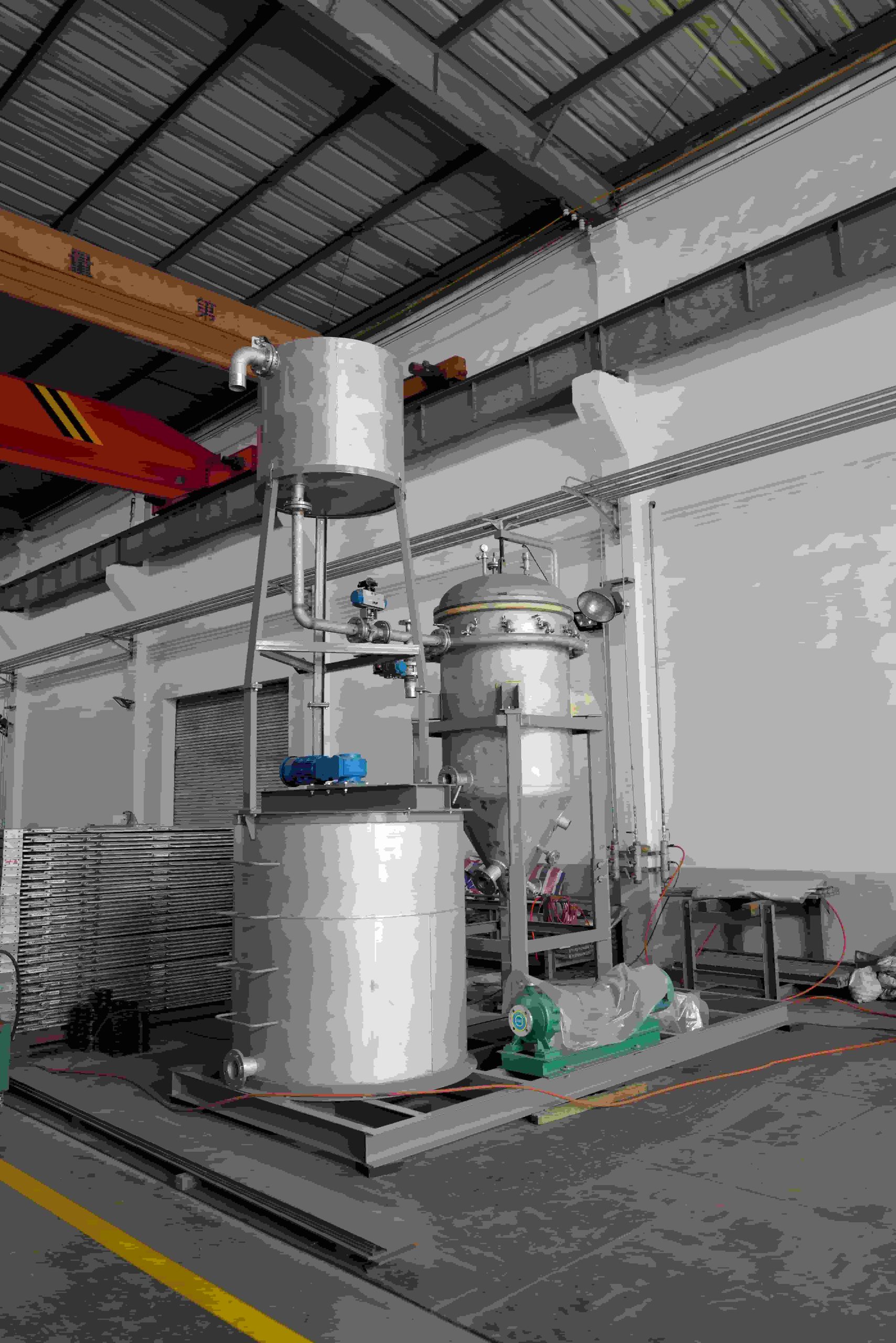
A common point combines several elements. It cannot identify one failed element by itself. Use approved sampling provisions and mark the contributing branches; do not create a new point by disconnecting operating pipework.
For an isolation comparison, keep the route and sample point unchanged. Record which branch was removed. Otherwise the collection setup may explain the difference instead of the fault.
Relate the PLC-Controlled Cycle to Each Filtrate Observation
The NHD manual specifies a PLC and touch screen. In the described sequence, filtration ends at time or pressure, the vessel is depressurised, and liquid from the high-level tank discharges the cake. Keep those later-stage samples separate from stable-filtration samples.
Read the quality result with the stage record and control documentation. State whether the sample came from cake building, pressure release or reverse flow. PLC control gives sequence, not automatic turbidity diagnosis.
Single-Element Isolation Helps Locate the Affected Branch
Where the installed design and approved procedure allow it, compare filtrate before and after isolating one element. Hold the sample point, cycle stage and test basis constant.
Clearer filtrate points to the isolated branch, including its medium and connections. It does not distinguish them. No improvement means the branch is not established as the sole source; check the other branches and common duty conditions.
Keep feed, stage and sample point with both results. Confirm the permitted duty with the element isolated. A located branch does not authorise opening a pressurised vessel or prove the remaining elements can carry the old duty.
Match Cleaning or Component Work to the Confirmed Cause
Cleaning Must Address Deposits Rather Than an Unchecked Leak
Clean only when inspection confirms a removable deposit and the method suits the installed medium and equipment. Cleaning cannot repair a tear or joint fault. An unchecked solids route makes another wash a guess.
After cleaning, check filtrate quality as well as flow. Better flow may mean a restriction is gone; it does not prove solids retention. Cloudiness that remains keeps the quality problem open.
Component Work Must Address the Confirmed Fault or Duty Mismatch
Let the finding set the scope. Work on the medium for a confirmed cloth defect and on the connection for a confirmed joint fault. One suspect branch is not a reason to replace every element.
For a duty mismatch, review suitability before ordering an identical replacement. Provide the slurry information and poor-run conditions. If the finding is incomplete, name the unresolved question instead of choosing a part to close the file.
Verify Filtrate Clarity Before Returning to Normal Service
A Brief Clear Sample Does Not Establish Stable Recovery
Repeat the agreed test after the work at the same point and under comparable feed and cycle-stage conditions. Keep cake-building results separate. One early clear sample cannot demonstrate recovery.
Record changed feed, isolated elements and any other change in test basis. Otherwise a duty change may be credited to the repair. Return to service only when the site’s acceptance requirement is met in the permitted configuration.
Persistent Cloudiness Requires a Defined Equipment or Duty Review
For an unresolved case, gather the filter and medium details, cloudy-sample times and locations, feed changes, isolation observations and inspection findings. Add before-and-after results on the same test basis where possible.
That record gives the engineering discussion a usable starting point. Relate it to the collection route, cycle and element arrangement, then state the remaining component or suitability question. Cleaning or replacement without those findings does not establish the cause.
Conclusion
Initial cloudiness belongs to normal cake building only when it matches the established cycle and the filtrate reaches the agreed quality requirement. If cloudiness persists or returns during stable filtration, identify how solids are entering the filtrate before selecting cleaning or component work. NHD can review the findings against the installed automatic leaf filter configuration.
Filtration-stage records, quality results and element or connection details can be shared for that assessment at sales@chinanhd.com. The same equipment discussion is available through WhatsApp at +86 136 6732 4277.
FAQs
Q1: Is cloudy filtrate normal when a leaf filter starts?
A1: It can belong to the initial cake-building stage, but only when the behaviour matches the established start-up cycle and clarity reaches the agreed requirement. Initial cloudiness is not permission to send off-spec liquid downstream. A cycle that does not clear as expected needs investigation.
Q2: Does cloudy filtrate mean the filter cloth needs replacing?
A2: Not necessarily. Cloudiness may result from incomplete cake formation, damage to the filter medium, a faulty seal or connection, or changes in the feed. Replace the medium only when inspection confirms damage or a suitability review identifies a mismatch with the filtration duty. Cleaning is appropriate for confirmed removable deposits
Q3: Can single-element isolation identify exactly what has failed?
A3: Where the installed design and approved procedure permit its use, isolation can help narrow the affected branch. It does not by itself distinguish cloth damage from a connection fault or authorise online repair. The component finding and stable filtrate-quality result are still needed.