

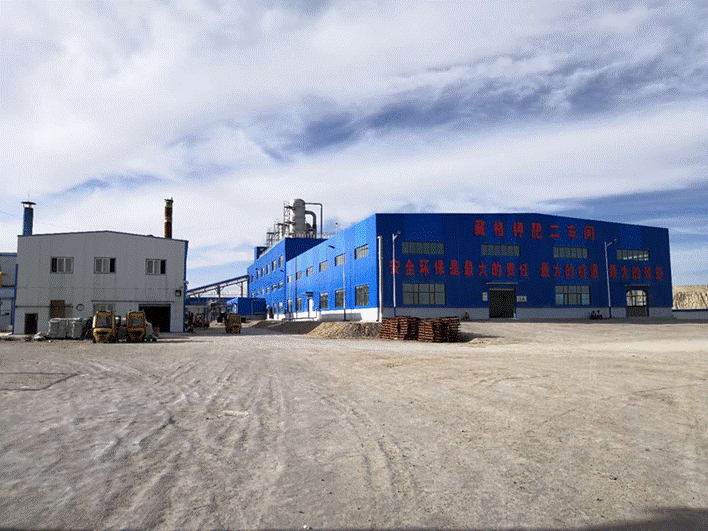
BHP’s June 2026 update raised the Jansen Stage 2 investment estimate to US$6.9 billion and kept first production in late FY2031, while Stage 2 was 16% complete and engineering was 83% complete at the end of May 2026. The number matters for more than cost control. It shows a large project moving through detailed engineering, procurement, and construction while its operating basis is still being translated into equipment duties.
A potash plant can have a nominal capacity target and still lose useful production when slurry behavior, crystallization load, separation duty, recycle water, controls, or maintenance access changes. That is the practical test for potash processing equipment: can the full circuit hold its target across the conditions the plant will actually see?
More Capacity Changes the Process Balance
Higher throughput is not simply a larger number applied to the same flowsheet. It changes residence time, solids inventory, recycle load, utility demand, and the margin available for upsets. A pump can move outside its efficient range when upstream concentration shifts. A tank can lose effective volume when solids settle. A separation step can become the constraint when cake formation, washing, or discharge takes longer than expected.
Slurry movement can reduce effective capacity
Solids concentration, particle size, density, temperature, viscosity, and residence time all affect how material moves through tanks and pipes. Weak circulation can create settled zones and unstable feed to the next unit. Excessively aggressive mixing can increase power demand and wear without improving the process result. Thickener equipment belongs in this discussion because underflow concentration changes pumping, downstream separation, and the volume of water returned to the circuit.
The NHD thickener design includes torque monitoring, automatic rake lifting, DCS integration, and slurry-level and solids-content monitoring. Those features are not a Jansen specification. They show the type of operating information that becomes important when concentrated solids are difficult to move and feed conditions are changing.
Crystallization can move the constraint downstream
The potash crystallization process links liquor composition, temperature, energy input, recycle, washing, crystal size distribution, and product separation. A change intended to improve crystal formation can increase fines, mother liquor carryover, or wash demand. The benefit in one unit may create a new load in another.
This is why potash project development has to keep concentration, crystallization, separation, and water recovery visible at the same time. Because the potash crystallization process sits between concentration and separation, a change in crystal behavior should be reviewed with both. A credible water-recovery target depends on clarification, washing, and recycle control that can hold the target during normal operation and realistic upset conditions.
Where Scale-Up Risk Crosses Equipment Boundaries
Large projects are divided into packages for engineering, procurement, and construction. The process does not follow those commercial boundaries. Feed elevation, discharge pressure, piping losses, tank geometry, instrumentation, control logic, utility availability, maintenance access, and materials of construction can make two individually acceptable packages work poorly together.
Control and maintenance must match the same operating envelope
Potash plant capacity also depends on how quickly the plant returns to stable operation after a change in feed, throughput, or recycle. Control signals have to represent the physical constraint, not only the equipment status. Maintenance access has to remain workable when wear parts, instruments, or isolation points need attention. A plant that cannot be cleaned, inspected, or returned to balance without long interruptions has less usable capacity than its design number suggests.
A shared design basis makes supplier offers comparable
Potash equipment selection becomes clearer when every supplier sees the same material range, normal and design throughput, process result, utility limits, control assumptions, and interface conditions. Without that shared basis, one offer may exclude a more difficult operating case, a different material specification, or the instrumentation required to control the duty. The commercial comparison then reflects different scopes rather than a real difference in plant capability. NHD equipment engineering can be assessed against those duties, but the project still has to define them first.
What NHD’s Potash Reference Can and Cannot Prove
A reference project is useful when it exposes engineering relationships that deserve attention. It becomes misleading when a team copies an equipment list or assumes that the same configuration will fit a different ore, water balance, product target, and site standard.
Hot-melting and crystallization experience offers relevant questions
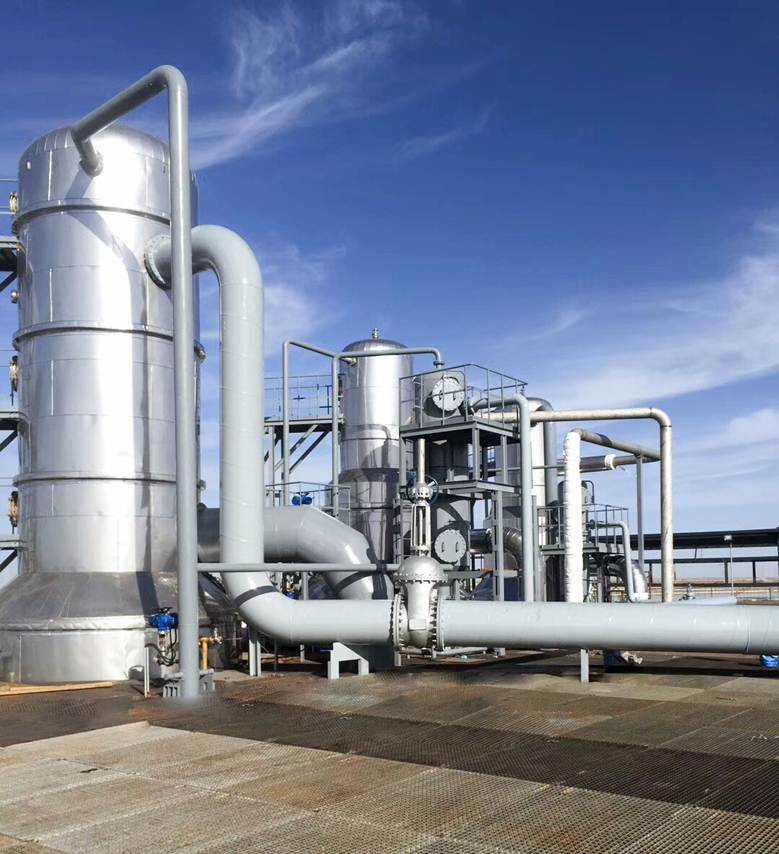
The Golmud Zangge potash reference documents a 200 kt/a hot-melting and crystallization system. The project case identifies high energy use in traditional potash production, unstable crystal quality, and environmental-compliance requirements. Its documented solution combines an energy-efficient hot-melting and crystallization system, intelligent control for crystal stability, and an environmental design matched to project requirements.
Those issues are relevant to a scale-up discussion because crystal quality, energy demand, and compliance cannot be separated from the surrounding concentration, separation, and control duties. The reference does not establish the Jansen flowsheet, equipment scope, or supplier selection.
A reference cannot replace project-specific engineering
A new potash project has its own feed chemistry, production target, water balance, utility limits, site conditions, and operating philosophy. The useful question is how a proposed equipment duty responds to that basis and where further process confirmation is required. This is also where potassic fertilizer engineering can be evaluated as a comparison point rather than a copied design.
What Should Suppliers Compare Before Capacity Is Locked?
Potash equipment selection begins with the representative material range, the required process result, the utilities and controls needed to hold that result, the material and maintenance conditions, and the interface conditions handed to adjacent equipment. It also asks what changes if throughput, solids concentration, recycle, or temperature moves outside the nominal case. This keeps potash processing equipment selection focused on the operating window instead of a single nameplate figure. It also gives the project team a clearer basis for deciding which assumptions must be tested before procurement freezes the design.
Conclusion
Potash plant capacity is not created by one equipment package. It is held when slurry movement, concentration, crystallization, separation, water recovery, control, and maintenance remain connected across the operating range. Jansen Stage 2 illustrates why that relationship deserves attention during detailed engineering, not after start-up. A practical next step is to compare the expected material range, process targets, utility and control constraints, and equipment interfaces on one basis. That is how potash project development can turn a capacity target into a design that remains operable, and how potassic fertilizer engineering can be reviewed against the actual duty rather than a generic equipment list.
FAQs
Q1: Does a higher nameplate capacity guarantee more potash production?
A1: No. Usable production also depends on slurry movement, crystallization behavior, separation capacity, recycle balance, controls, and maintenance. Those duties have to remain stable across the expected operating range.
Q2: Why does crystallization affect downstream separation and water recovery?
A2: Crystal size distribution, mother liquor, fines, and wash demand can change the load on separation and recycle equipment. A change that improves one part of the crystallization process may move the constraint downstream.
Q3: How should a project team compare potash equipment suppliers?
A3: Give each supplier the same feed range, process target, utility limits, control requirements, and interface conditions. Then compare how each proposal responds to those duties and where additional testwork is still needed.