

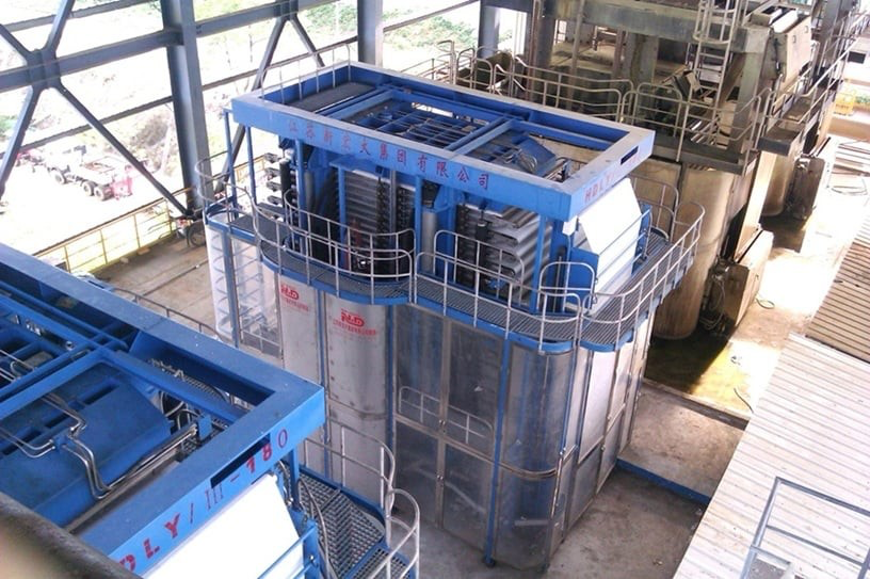
A nickel-cobalt flowsheet can show one filtration step. The duty behind it changes with the campaign. MHP arrives as a fine hydroxide precipitate. Black mass leaves a leach step. Graphite and binder travel with it. A filter press for nickel-cobalt hydrometallurgy has to hold both feeds. One cloth rarely covers them.
The cake sets the specification. Start at the stage after the press and walk backwards. Slurry first. Then cloth, cycle and pressure. That order decides what a supplier has to prove before anyone signs.
Read the Duty Before the Machine
MHP and Black Mass Ask Different Things
MHP gets washed and dried before it leaves the plant. The plant ships it in bags. The receiving plant weighs every bag. Consistent cake matters there. Hydroxide particles are soft. A cloth with clean release lets them build a cake fast.
Black mass comes off a leach step. Graphite and binder stay in the residue. Those particles are soft too. They resist cake formation. A cycle that ran comfortably on MHP can take longer here. The operator notices it first.
Three things follow the feed. The cloth, the cycle and the washing stage. Tie all three to the duty. A machine model cannot decide them for you.
The Stage After the Press Sets the Moisture Target
Ask the plant what it does with the cake next. A smelter charge wants a dry feed. A bagging line wants a cake that keeps its shape. Tailings go to a pad, and the pad raises one question. Does the cake bleed?
That answer is the moisture target. Write it into the specification. Then ask the supplier to prove it on your feed.
The driest cake a machine can make pulls pressure and cycle time into the order. The plant pays for both. It keeps paying on every cycle for years.
Slurry Data That Moves the Choice
Solids concentration, particle size and temperature do most of the work here. pH decides which wetted materials survive. Reagent carry-over belongs in the same conversation.
Collect those numbers stage by stage. One composite sample hides the swing. Most nickel-cobalt circuits change feed between campaigns. A press sized on the best campaign runs short on the worst one.
Size Pressure and Cycle Against the Duty
Pressure Has a Ceiling the Duty Sets
The HDLY vertical automatic pressure filter runs to 1.6 MPa. It can hold filter cake moisture at or below 10 percent on a suitable duty. Nobody needs that ceiling on every slurry. The cloth sets the real limit. Plate seals set it as well. Soft solids can cap it lower still.
Test the top of the range before it reaches the specification. Two slurries can share a particle size. They behave differently under the last few bars.
The Cycle Sets Throughput
Six working stages run inside the automatic cycle. Filtering comes first. A squeeze follows. Cake washing runs where the duty calls for it. Then a second squeeze, air drying and discharge.
Every stage takes its own time. The final minutes of drying resist shortening. Count the cycles a shift actually finishes. Divide the daily tonnage by that number. The result is your machine count. A catalogue suggests a different figure.
A vertical automatic press returns more capacity per square metre than a plate-and-frame press of the same area. Nobody opens plates by hand. Nobody scrapes them either. The cloth sits horizontal. Cake thickness up to 45 mm keeps discharge even. That matters when the next stage weighs each batch.
Washing Belongs Inside the Specification
A low-alkali or low-chloride cake needs its wash stage inside the press. Liquor crosses the cake and leaves again. The cloth decides how much liquor stays behind.

Fit the wash stage at the design stage. A stage added later has to fit a cycle. That cycle was never sized for it. The plant usually pays in cycle time.
Cloth, Washing and the Recovery Loop
Cloth Is a Wear Part
Release, life and cleaning all come from the cloth. The design washes both cloth surfaces in turn. A horizontal cloth keeps the cake level across the plate.
Buy by duty. The filter cloth series for automatic press filters starts at weaving and runs through heat setting, calendering and inspection. The same maker supplies cloth for rotary table vacuum filters, belt filters and disc filters. Release behaviour then stays comparable across units on one site.
Cloth Life Is a Cost Line
A cloth that blinds early stretches the cycle. It stretches the cycle long before it fails. The plant keeps the same tonnage target. Reaching it costs extra hours.
Compare the replacement interval against tonnes filtered. Then ask what ended the cloth. Abrasion, chemical attack or blinding all point somewhere different. That answer moves a specification faster than a machine swap. It usually costs less too.
What a Supplier Should Evidence
Pilot Testing Before the Order
A litre of slurry in a bench funnel says nothing about a 180 m2 press. Ask for a pilot run on the representative feed. Use the cycle the plant intends to run in production.
Ask for three numbers at the end. Cake moisture, filtrate clarity and cycle time. The vertical automatic pressure filter for smelting and chemical duties should be specified through those numbers. Duty, cloth and cycle get settled together. A catalogue page settles none of them.
References Need a Duty Match
NHD built CCD thickeners for the nickel and cobalt smelting project in Indonesia. The tanks run 32, 36 and 42 metres in diameter, in duplex stainless steel. The same company supplied and commissioned process equipment for the lateritic nickel project in Papua New Guinea.
Both references show work in this plant class. Neither one proves a press duty in a new circuit. Read every reference the same way. What feed did it run? What cake came out? Did the equipment hold its cycle once production climbed?
Send the Duty Data With the Enquiry
Five inputs turn an enquiry into a specification review. Feed analysis, target cake moisture, daily tonnes, liquor chemistry and washing target. Add the maintenance window the circuit allows. That window limits how many presses a line can take offline.
The reply should come back as a machine, a cloth and a cycle. Nothing less settles the duty.
Already running a line? Add the current press performance. Add the cloth life being achieved. Add the point where the line slows down. Send the feed data, the cake target and the tonnage to sales@chinanhd.com. WhatsApp reaches the same team on +86 136 6732 4277. NHD reads the numbers against its pressure filter range and its own filter cloth production, then proposes a configuration.
Conclusion
The measurement order settles the specification. Set the moisture target from the stage after the press. Walk back through the slurry, the cycle and the cloth. Treat pressure and washing as duty decisions. Then ask for pilot results on the representative feed. The comparison moves from price to performance. The plant keeps its tonnage target.
FAQs
Q1: Why does MHP filtration behave differently from black mass filtration?
A1: MHP is a fine hydroxide precipitate. It gets washed and dried before shipment, so the cake must stay consistent for transport. Black mass is leach residue holding graphite and binder. Its soft particles resist cake formation at the same pressure.
Q2: What cake moisture should a nickel-cobalt press be specified for?
A2: The next stage sets the number. Shipping and smelting want different values. The HDLY press can hold cake moisture at or below 10 percent at up to 1.6 MPa on a suitable duty. Asking for the driest possible cake costs cycle time.
Q3: What should be tested before ordering a filter press?
A3: Run a pilot test on the representative feed. Use the production cycle. Write down cake moisture, filtrate clarity and cycle time. Put a cloth trial in the same round. Release and blinding both move the cycle.