
 Indonesian
  English
  French
  Spanish
  Russian
  Arabic
  Portuguese
  German
  Turkish
  Persian
  Vietnamese
  中文
中文 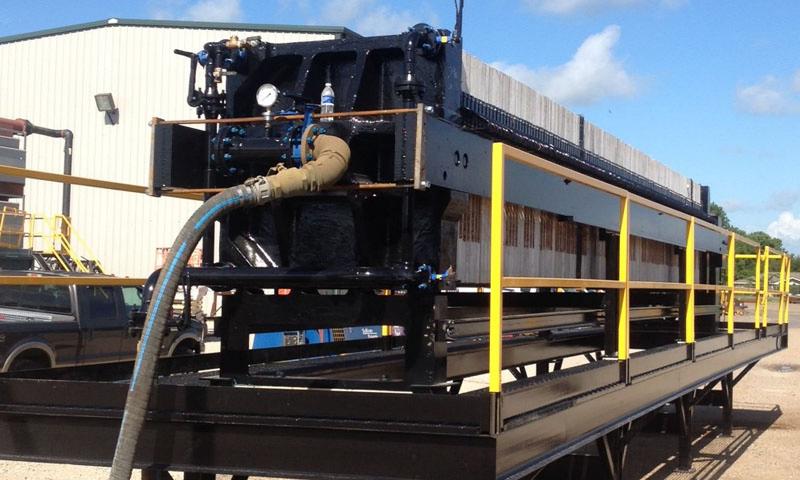
Iron phosphate washing looks simple from far away. Precipitate comes out, wash water goes in, and impurities should leave. High-solid slurry, fine particles, dense filter cake, uneven washing water paths, and unstable cake moisture can all affect final precursor quality. A filter press in this line is not just dewatering equipment. It is part of the washing and impurity-control process.
Why Iron Phosphate Washing Matters in LFP Precursor Production
Iron phosphate precipitate normally needs repeated washing before it moves to the next step. The purpose is not only to remove water. The real target is to replace mother liquor inside the cake and reduce soluble impurities.
If residual sulfate, sodium, chloride, or unwanted metal ions remain too high, downstream calcination and material consistency may be affected. A plant may still reach output, but batch quality can swing. That is not what battery material buyers want.
Moisture also matters. A wetter cake means more drying load. More heat, more time, more energy. If cake moisture changes batch by batch, the dryer setting also becomes harder to keep stable. So buyers should treat iron phosphate washing as quality control, not simple rinsing.
What Makes Iron Phosphate Slurry Difficult to Filter
High-Solid Slurry Increases Filtration Load
Iron phosphate slurry can carry a high solids content after precipitation and concentration. Once solids increase, filtration resistance also rises. The filter press needs enough area, pressure, cloth match, and cycle control to keep filtration moving.
If the equipment is undersized, the plant may extend cycle time or lower feeding speed. Both reduce real capacity.
Fine Particles Affect Cake Permeability
Fine particles can form a compact cake. That cake may hold mother liquor inside small pores. Wash water then finds the easier route instead of passing evenly through every part of the cake.
This is where washing looks finished on the surface, but impurity residue may still be too high inside the cake. For battery materials, that is a real issue.
Washing Uniformity Controls Impurity Residue
The key question is not “can the filter press wash the cake?” The better question is “Can the washing water pass through the cake evenly enough to lower impurity residue at the required water use and cycle time?” Buyers should ask for pilot test data. Useful numbers include filtrate conductivity, residual ion content before and after washing, washing water consumption per ton of dry solids, cake moisture after pressing or drying, and total cycle time.
How Filter Press Equipment Supports Cake Washing Efficiency
A suitable filter press can form a stable cake, hold it in place, send wash water through it, and then press or dry the cake before discharge. That chain is important for iron phosphate precursor projects.
Super Pressure Horizontal Plate Filter Press for Iron Phosphate Washing
For iron phosphate washing projects, a super-pressure horizontal plate filter press is worth reviewing when the process needs cake washing, pressing, drying, and automatic discharge in one line.
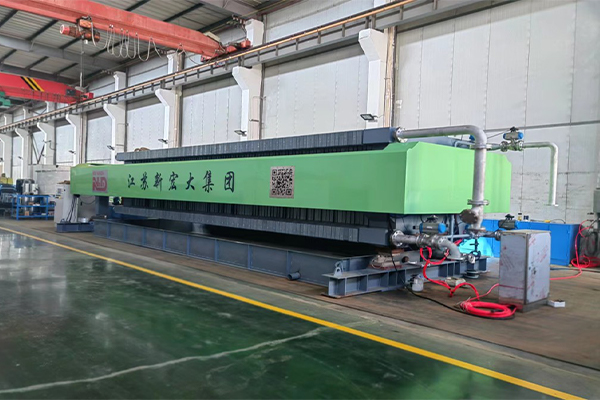
dari NHD Press Filter Plat Horisontal Tekanan Super is one example. The HDCWY series is an improved version of the conventional chamber diaphragm filter press. It uses air back-blow pressing and drying instead of traditional diaphragm pressing, with PLC automatic control, double-sided filtration, dark flow filtrate discharge, and sequential plate separation for cake removal.
For washing efficiency, two design points are relevant. One is filtrate channel purging, which helps reduce residual filtrate dripping and supports higher filtrate recovery. The other is filter cloth technology for preventing external seepage and internal leakage. This matters because wash water or compressed air short-circuiting can reduce the washing effect.
The published data gives buyers something to compare. The HDCWY series covers a 20–1000 m² filtration area. Under the same filtration conditions, the product page states that cake moisture can be reduced by 30–50% compared with conventional chamber filter presses and by 15–20% compared with chamber diaphragm filter presses. It also states that production capacity under the same filtration area can reach 1.5–2 times that of conventional presses.
For an iron phosphate line, these figures should not be copied as guaranteed results. Final results still depend on slurry properties and testing. But the data gives buyers a practical direction: compare washing efficiency, cake moisture, residue level, and cycle time together.
Vertical Automatic Pressure Filter as Another Automatic Washing Option
Some projects may need a compact vertical automatic pressure filter instead. This type of equipment is often reviewed when the plant wants automatic washing, filtering, and dewatering in limited space.
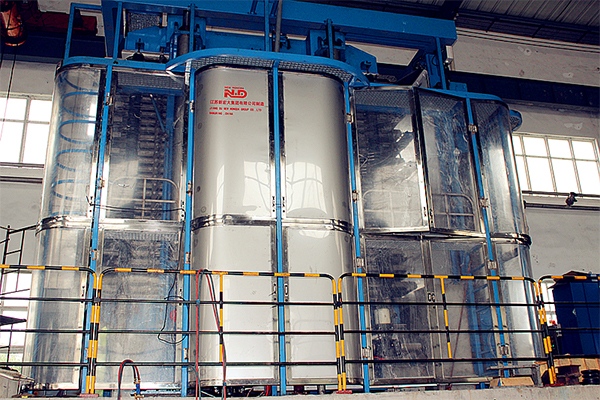
dari NHD Filter Tekanan Otomatis Vertikal is designed for washing, filtering, and dewatering. Its product page lists applications in non-ferrous, smelting, titanium dioxide, chemical, coal separation, food, paper, dye, and wastewater treatment industries. The filter area range is 6–180 m², with max pressure listed at 1.6 MPa.
For iron phosphate washing, it can be discussed as an option when the process needs automatic operation, low-moisture cake, added washing steps, self-diagnosis, alarm functions, and a compact structure.
How Buyers Should Select Filter Press Equipment for LFP Precursor Projects
A good RFQ should not only say, “Iron phosphate slurry, need filter press.” Buyers should prepare slurry solid content, particle size distribution, pH, temperature, washing target, impurity residue limit, filtration capacity, cake moisture target, washing water plan, cycle time requirement, and site layout. If the plant already has trouble, provide current data too: slow filtration, high conductivity after washing, wet cake, cloth blinding, leakage, or unstable discharge.
A lab or pilot test is useful before bulk procurement, especially if the slurry is fine, sticky, or sensitive to washing water use.
Common Procurement Mistakes in Iron Phosphate Washing Projects
One common mistake is focusing only on dewatering. Cake moisture matters, but washing efficiency may matter more for precursor quality. A dry cake with high impurity residue is still a problem.
Another mistake is ignoring wash water short-circuiting. If wash water does not pass through the cake evenly, adding more water may not solve the problem. It only increases wastewater and drying load.
Some buyers also skip the filter cloth discussion. Cloth permeability, sealing, leakage prevention, and cleaning recovery can all affect washing and residue control. Spare cloth planning should be discussed before operation, not after the first shutdown.
Another mistake is buying only by filtration area. Bigger area helps capacity, but it does not automatically solve washing uniformity, cake structure, leakage, or automation stability.
Kesimpulan
Iron phosphate washing efficiency directly affects LFP precursor quality. For B2B buyers, filter press equipment should be evaluated by washing efficiency, impurity residue rate, cake moisture, wash water use, cycle stability, filter cloth design, automation, and supplier process support.
NHD’s Super Pressure Horizontal Plate Filter Press can be reviewed when cake washing, air drying, leakage control, and lower-moisture discharge are key concerns. The Vertical Automatic Pressure Filter can be compared when the project needs compact automatic washing, filtering, and dewatering. In both cases, the safer route is the same: test the slurry, define the impurity target, and choose equipment by real washing data.
FAQ (Pertanyaan umum)
Q1: What data should buyers provide before selecting a filter press for iron phosphate washing?
A1: Buyers should provide slurry solid content, particle size, pH, temperature, washing target, impurity residue limit, cake moisture target, filtration capacity, washing water plan, site layout, and automation requirement.
Q2: Is MOQ required for filter press equipment?
A2: For large industrial filter press equipment, MOQ is usually one complete set. The final quantity depends on processing capacity, filtration area, production schedule, spare parts demand, and whether the buyer needs one unit or a complete washing and filtration section.
Q3: Can filter press equipment be customized for LFP precursor production?
A3: Yes. Configuration can be reviewed based on filtration area, chamber size, cake washing steps, filter cloth, air drying, material contact parts, discharge method, automation level, and plant layout.
Q4: Dapatkah NHD mendukung instalasi, pemeliharaan, dan layanan purna jual?
A4: Yes. NHD can support equipment selection, customized configuration, installation guidance, maintenance advice, spare parts planning, and layanan purna jual. For overseas projects, buyers should confirm site data, service scope, and commissioning needs before ordering.