

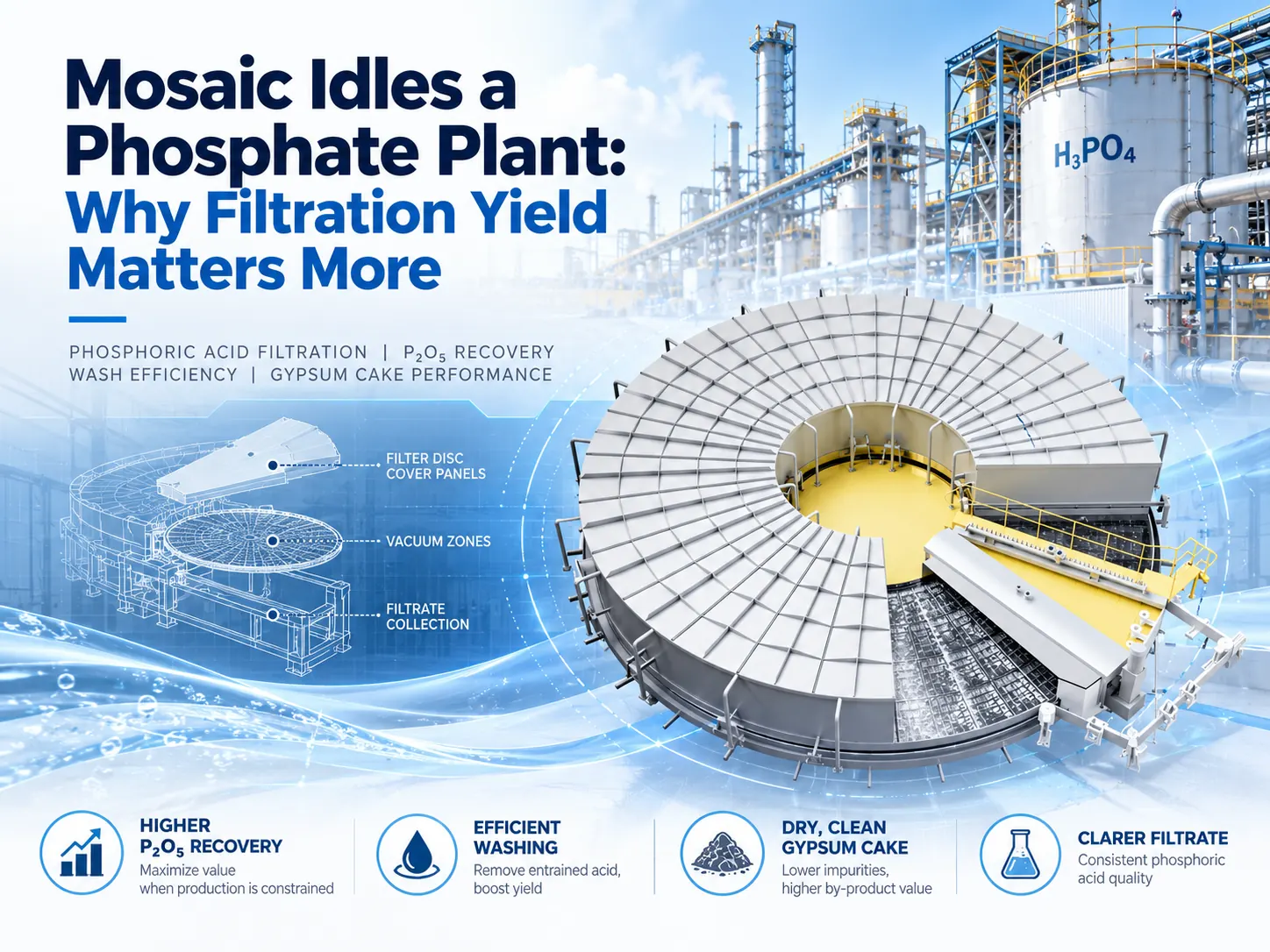
Mosaic is scheduled to begin idling its South Fort Meade phosphate plant in Florida on 8 December for more than six months. Bay News 9 reported on 20 October that the notice covers 199 jobs. Mosaic’s public letter attributes the temporary shutdown to the availability and affordability of sulfur. The Economist reported that disruption through the Strait of Hormuz had trapped nearly a quarter of global sulfur production and about half of seaborne exports in the Gulf. Mosaic had also trimmed phosphate output for months before announcing the idle.
Sulfuric acid begins with sulfur. Sulfur is burned to make the acid, and the acid digests phosphate rock. Once acid supply limits the plant, tonnage depends less on grinding capacity and more on how much P2O5 the plant can retain. The filter is one controllable point in that chain. Soluble P2O5 leaves with either the filtrate or the gypsum cake, and the filter also affects the volume and concentration of filtrate returned to the acid circuit. Final acid strength still depends on evaporation and the plant-wide water balance. For NHD, phosphoric acid filtration is therefore a process question before it is an equipment question.
When Acid Is Capped, Recovery Is the Only Capacity Left
Where Filtration-Sensitive P2O5 Losses Occur
Losses have several sources. Rock that never reacts, and insoluble losses during digestion, form the first, and no filter has any say over them. The second loss is soluble P2O5 dissolved in the liquor the gypsum still holds when it discharges. The third sits in the cake’s pores after washing has passed, soluble P2O5 that rides out on the same truck. Losses two and three belong to filtration. Both swell at precisely the moment a plant can afford them least, since every tonne of P2O5 leaving inside gypsum has already used up the site’s scarcest input, the same acid that dissolved it.
How Wash Water Creates a Dilution Trade-Off
Washing pushes back, and its currency is water. Each additional unit of wash water claws back less P2O5 than the one ahead of it, and every unit comes back in the filtrate. Wash filtrate of the weak kind returns to digestion and thins the acid being produced there; drive the wash ratio high enough and the plant burns evaporation capacity boiling off water of its own adding. So the running point of a phosphoric acid filter is a bargain struck with figures on either side: P2O5 won per unit of wash water, against a cake moisture the stacker can live with and an acid strength the evaporators can finish. Any plant re-examining the economics of phosphoric acid production under an acid ceiling finishes by re-examining that bargain, planned or not.
Where the Yield Leaks: Cake, Cloth and Scale
Uneven Cake and Cracks Reduce Effective Washing
Which side of the bargain a working filter lands on comes down to three physical faults. Uneven cake is the first. Feed slurry spread unevenly lays down cake that varies in thickness and in resistance, and wash liquor naturally prefers the thin route, abandoning the thick zones with their P2O5 still in them. Cracking is the second. Cake that shrinks as it dries may split open, allowing wash water to pass down the cracks while the unbroken cake retains its soluble load.
Cloth Blinding and Scale Reduce Filtration Rate
Scale is the third. As filtrate cools and concentrates, calcium sulfate grows inside cloth pores, filtrate passages and distribution channels; area surrendered to scale is filtration rate surrendered week after week, and a filter derated by scale derates the whole line behind digestion with it. Not one of these faults presents itself as a yield problem. Uneven cake arrives dressed as a wash-water bill. Cracking arrives as a gypsum assay nobody bothers to trend. Scale arrives as a cleaning shift. The instruction all three whisper to the operator is the wrong one, wash harder, and washing harder does buy back some P2O5, at a dilution price the plant then pays twice over. The mechanical correction costs less: keep the cake level, keep the cloth open, and keep scale out of the passages the filtrate has to travel.
How the Rotary Table Filter Is Built Against Those Leaks
Uniform Distribution and Pan Flatness Reduce Cake Variation
Phosphoric acid is a core application for our rotary table vacuum filter; more than 300 units are installed worldwide, the largest operating area is 320 m², and the model table extends to 380 m² nominal area. The design addresses several of those loss mechanisms. Slurry is spread uniformly over the pan by a plate-type distributor, and the segmented filter discs are held to a strict flatness, so cake builds with more consistent thickness and resistance and wash liquor finds fewer thin escape routes. Together, these features address uneven cake and the channeling that follows.
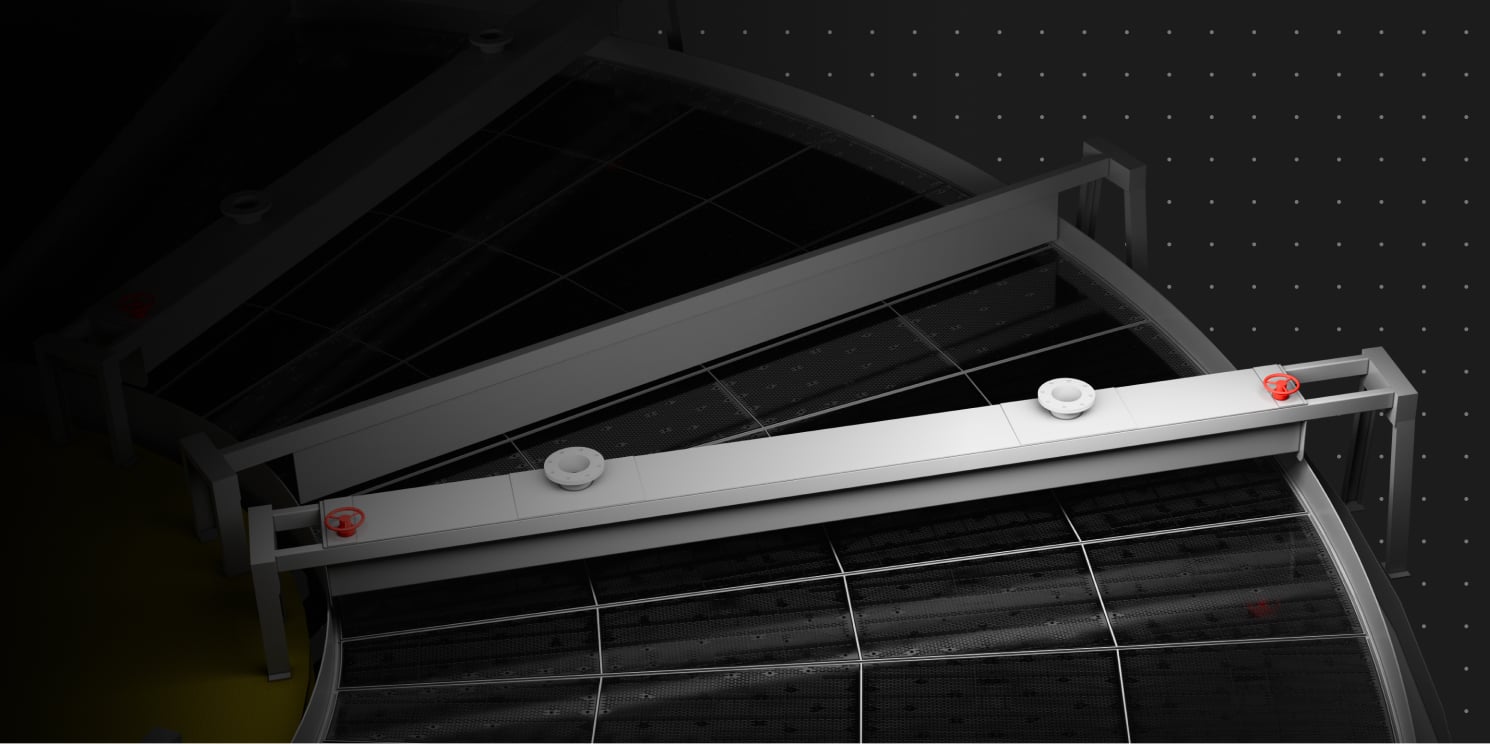
Cloth Cleaning, Drainage and Mechanical Support Protect Availability
The machine also limits scale and restores cloth permeability. The cloth is held by an arc-shaped clamping bar that gathers less buildup at the bar and makes a scaled cloth quicker to swap out. Set low in the machine, the distribution valve keeps scaling and clogging, and with them cleaning frequency, down in the filtrate path. Beneath the pan, a grid-supported frame carries the rotating load while its shape discourages pan scaling.
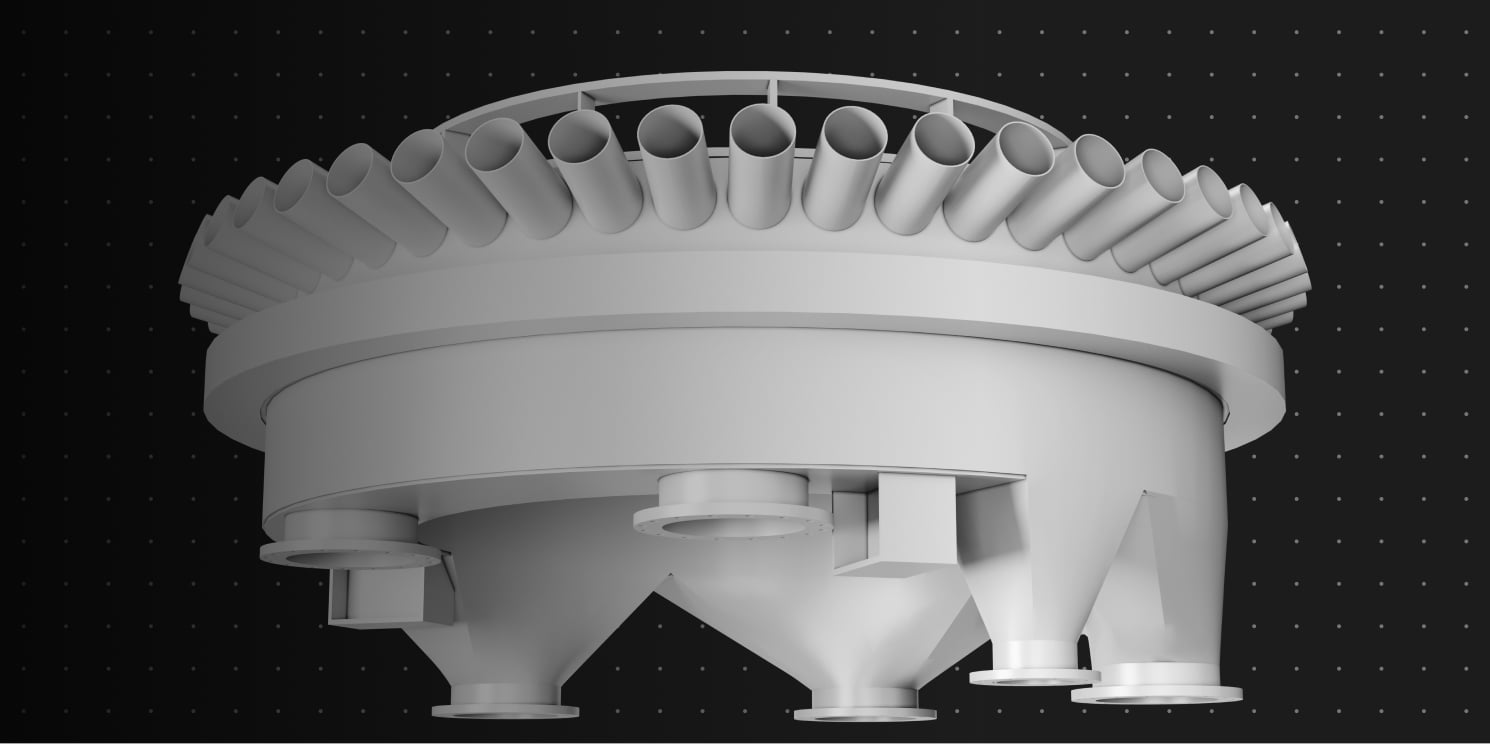
The cloth is looked after inside the cycle instead of between campaigns: water-saving nozzles blast it with strong flushing at low consumption, in concert with anti-clogging elements, handing back its permeability on every revolution rather than letting gypsum take it until the next shutdown. Each litre those nozzles save is a litre that never has to be carried in the plant’s water balance either.
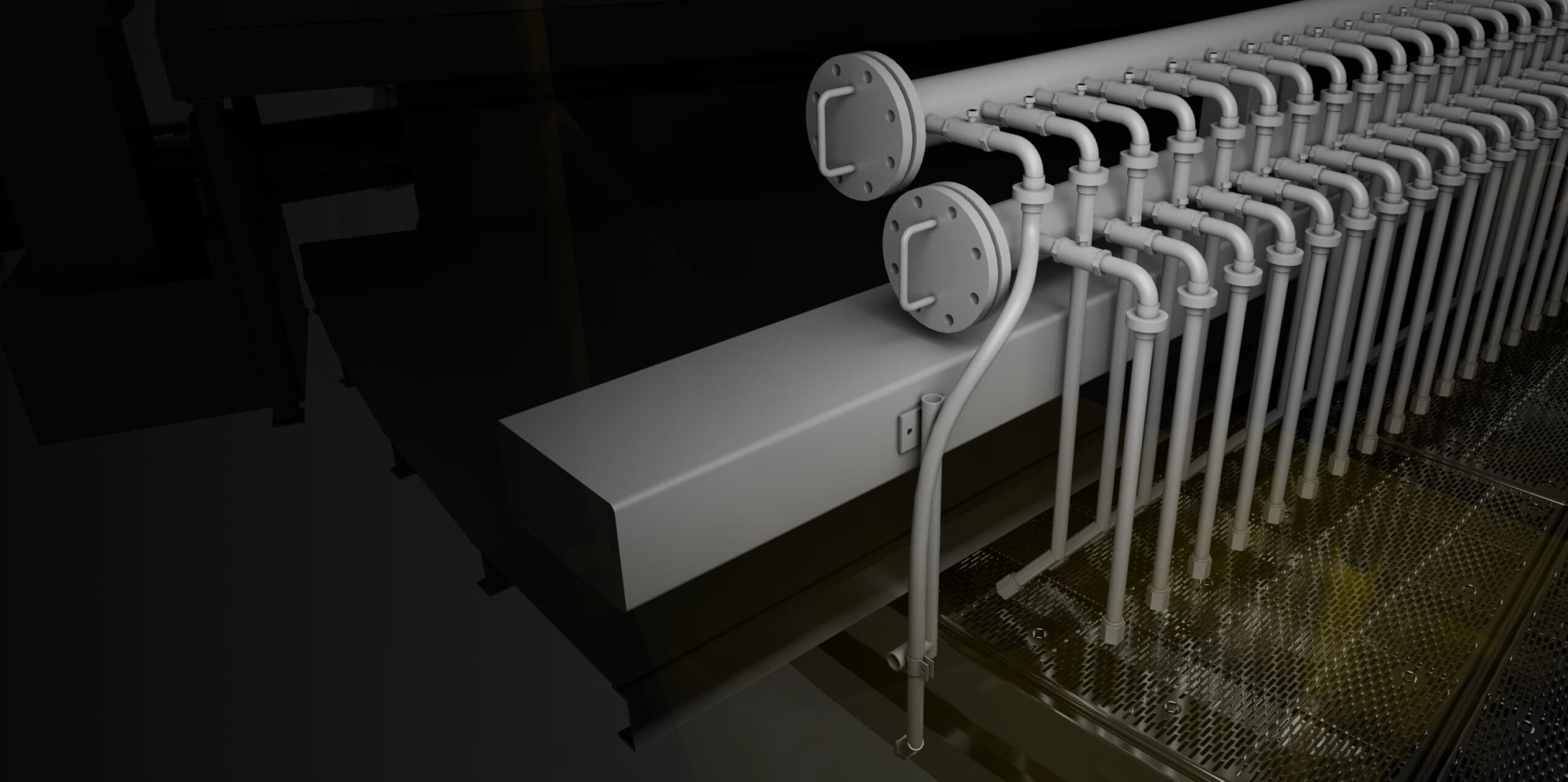
The yield equation carries a fourth term, availability, since a filter standing idle for cleaning recovers nothing at all. Thermal expansion on a big hot machine is absorbed by a floating support structure before it can work on the bottom frame. Torque arrives in quantity from a drive pinwheel driven by low-power motors, and an automatic lubrication system meters oil out precisely where it is needed. No recovery calculation has a line for features of this sort, yet they govern the number of hours in a year that any recovery calculation is allowed to run for.
Gypsum Washing on the Belt, and the Test That Sets the Wash Point
How Counter-Current Washing Fits Phosphogypsum Duty
The argument gains a second machine where phosphogypsum is handled. On a horizontal rubber belt vacuum filter, gypsum can be filtered and washed with the cleanest water meeting the cleanest cake in staged counter-current washing.
Our Hubei reference covers eight 120 m² units used for phosphogypsum repulping and washing.
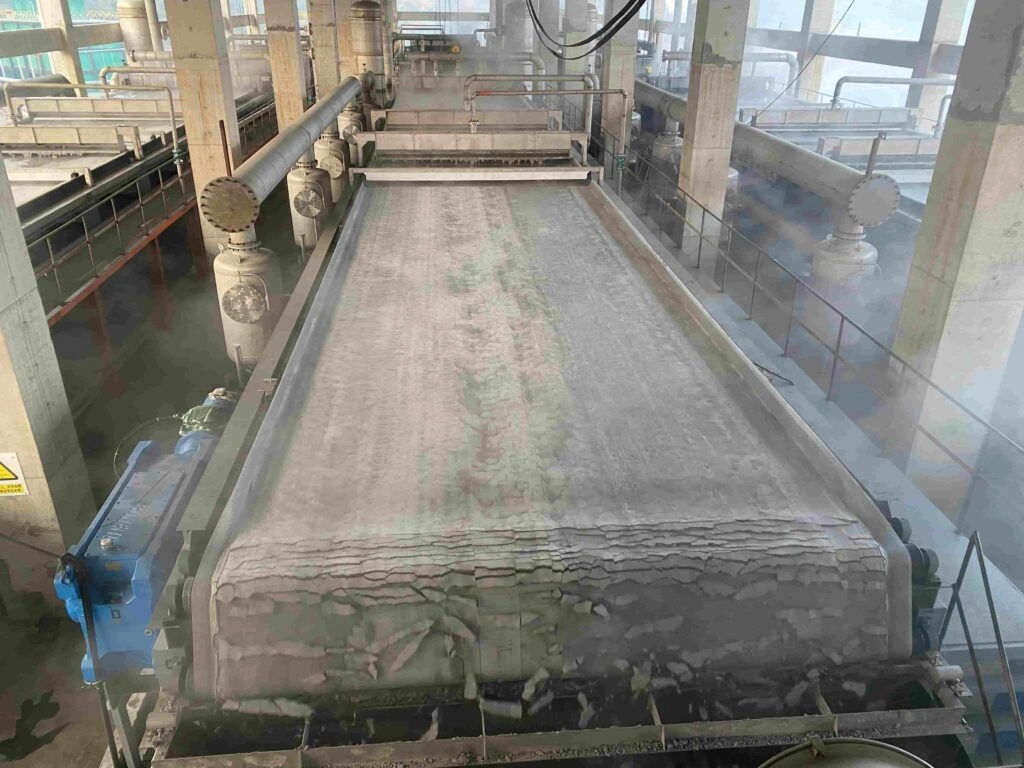
Both machines can serve phosphogypsum duty, but their washing mechanisms differ: the rotary table uses zonal operation, while the belt supports staged counter-current washing. Selection should compare the plant’s own wash curve, cake behavior, water use and footprint.
What a Filtration Test Should Establish
The filtration test should use the plant’s slurry and cloth across a range of wash ratios. Its report should show three relationships: soluble P2O5 remaining in the cake, cake moisture and sustained filtration rate after repeated cycles. Those curves help a capped plant estimate its recoverable P2O5 and identify which operating loss has the greatest effect.
We also record feed distribution, cake cracking, cloth blinding and any scale or staining seen during the run. That evidence lets the plant compare alternatives on the same throughput, moisture and soluble target and gives the team a measured basis for production planning and sulfur discussions.
Conclusion
Read the Mosaic idling as a sulfur story, because it is one. Every phosphate plant still turning should also read it as a filtration story: once acid supply is capped, recovery stops being an efficiency statistic and becomes the capacity the plant has left. The yield waiting to be collected sits in the cake, in distribution kept even, in wash stages that meet the cake rather than slip past it, and in passages kept clear of scale. Before the December idling rearranges the market any further, plants reviewing their position can send their current gypsum P2O5 figure, their wash ratio and their cake moisture to our engineering and commissioning team, and the review will open from their wash curve, not from a catalogue rating.
FAQs
Q1: If a plant is short of sulfuric acid, why does the filter matter so much?
A1: The acid already consumed in dissolving rock is embodied in the P2O5 the filter then handles. Whatever soluble P2O5 departs inside gypsum cake was paid for with acid and with rock, and it returns nothing, so under a capped acid supply it is the filter’s washing recovery that fixes how much saleable product a tonne of acid turns into.
Q2: Which figures show whether a phosphoric acid filter is losing yield?
A2: Three figures, and they must be read as a set: the soluble P2O5 carried out in the discharged gypsum, the wash ratio being spent to reach it, and the moisture of the cake. Gypsum running high while the wash ratio runs high says the washing itself is failing, most often through cake that is uneven or channelled. A handsome gypsum figure purchased with too much water is a dilution cost on its way back through the filtrate.
Q3: Can an existing rotary filter be improved before replacement is discussed?
A3: In most cases it can, provided the order is respected. Begin with cloth condition and scaling, the two that love to impersonate capacity problems; continue with distribution and wash placement, which govern whether wash water ever meets the cake; finish with the measured wash curve, which identifies the setting genuinely limiting recovery. Only when area or condition still caps the rate after those corrections does replacement belong in the conversation.