

Guinea is trying to convert its bauxite position into domestic refining capacity, and the Bayer process is the technical centre of that shift. The government target is five to six alumina refineries by 2030, with approximately 7 million tonnes per year of processing capacity and continuing discussions with international financing partners, according to a report on alumina refining capacity. That shift is also reshaping the global alumina supply chain by moving more refining closer to the ore.
The shift matters because bauxite to alumina processing turns an export mine into a chemical plant built around the Bayer process. Ore quality, caustic consumption, steam balance, red-mud separation and product moisture become design duties. A refinery that looks feasible at a national planning level still has to prove those duties project by project.
Guinea’s Refinery Ambition Starts with Ore and Caustic Balance
The policy direction is simple: more ore should be converted into alumina before it leaves Guinea. The engineering effect is broader. Refineries require reliable power, water, caustic supply, maintenance capability and a residue-management plan. Those systems can consume more project attention than the digestion vessel itself.
Refining capacity becomes the capital and schedule constraint
A bauxite-to-alumina project needs a complete industrial chain, not only a refinery building. Mining, crushing, conveyor or rail transport, digestion, clarification, precipitation, calcination, product handling and residue disposal all need to be coordinated. A delay in one area can prevent the plant from reaching its nameplate rate even when the main process unit is complete.
This is why project teams should treat the refinery as a sequence of dependent duties. The first question is not which equipment is largest. Alumina refinery selection should begin with that chain.
Feed quality and Bayer chemistry determine equipment design
Bauxite does not behave like one uniform ore. Reactive silica, iron oxide, moisture, particle size and mineralogy influence caustic consumption, scaling, settling and product quality. A Bayer process design that works for one deposit can require different operating conditions for another.
The reliable starting point is a representative feed campaign. The project should know which grades will be blended, how the blend will vary and what impurity range the refinery must tolerate. Only then can digestion, evaporation, clarification and filtration duties be compared on the same basis.
Where Bayer Liquor, Red Mud, and Hydrate Split the Design
The critical decisions often sit between the well-known process steps. Slurry has to move without settling, red mud has to separate from pregnant liquor, and hydrate has to meet moisture and handling targets. Each interface creates a risk that a simple flowsheet does not show.
Digestion and slurry movement need a stable operating window
Bauxite digestion combines caustic liquor, heat, pressure and abrasive solids. Agitation and vessel design have to maintain contact while protecting the pressure boundary and support structure. A change in solids concentration or particle size can alter pumping demand, heat transfer and scaling behavior.
The equipment should be evaluated around the full feed range, not only the nominal blend. A pressure vessel, agitator and transfer system that meet one test condition may still leave operators with poor mixing or excessive wear when the ore changes. Material selection and maintenance access belong in the same review.
Red mud separation and washing determine the water balance
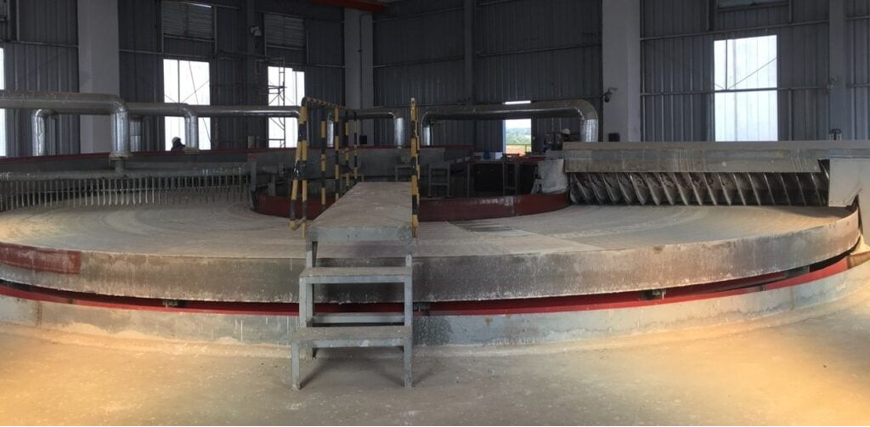
Red mud filtration is one of the largest solid-handling duties in an alumina refinery. Separation and washing affect caustic recovery, residue alkalinity, water use and the size of the disposal system. The primary duty is to produce a stable underflow that can be pumped, washed and further dewatered without losing control of the water balance. The deep cone thickener is the relevant NHD reference for that duty; it was developed and applied in alumina red-mud separation and washing.
NHD’s thickener equipment includes torque monitoring, automatic rake lifting, DCS integration and ultrasonic measurement of slurry level and solids content. Those features can help a plant manage changing sediment load, but sizing still depends on settling tests, flocculant response and residue rheology.
Controlled-moisture filtration belongs only where the duty is documented
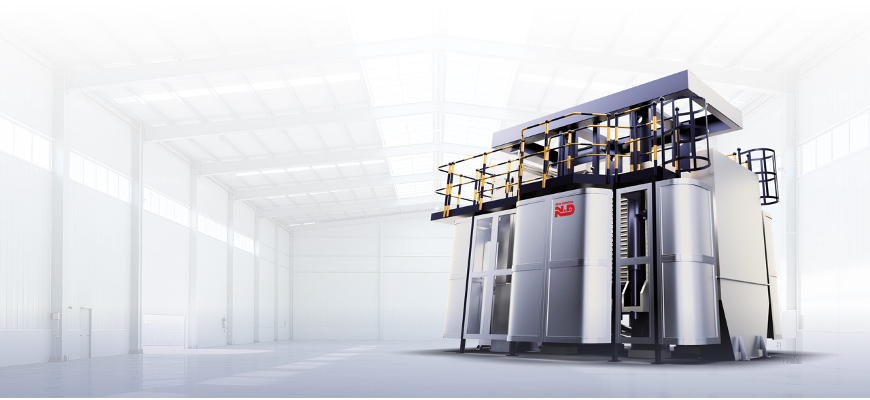
The white side of an alumina refinery also depends on solid-liquid separation, but the equipment basis must remain inside the evidence. Hydrate filtration and washing influence residual soda, moisture and product handling, yet a general vertical filter press page does not by itself prove alumina hydrate service.
A vertical filter press can be considered when a separate, documented duty calls for a low-moisture cake and controlled discharge. For alumina, the project still needs hydrate or residue testwork, wash-ratio data and confirmation from the equipment supplier that the selected configuration is qualified for that service. The equipment name alone does not prove that the duty fits.
Reading the Nhan Co Reference Without Overstating It
The Nhan Co project shows a real alumina filtration reference
NHD has an alumina project reference at Nhan Co in Vietnam, where it supplied a pan filter for a 650 kt/a alumina project after earlier work on the Lam Dong project. The alumina project reference shows the company has experience with alumina filtration equipment and project coordination.
For red mud filtration, the deep cone thickener is the direct NHD reference because its documented alumina duty covers red-mud separation, washing and underflow concentration. The final configuration still depends on settling tests, flocculant response, underflow rheology and the required wash ratio.
The filter press keyword still needs an evidence boundary
The refinery also needs a coherent red mud filtration and residue strategy. Thickening, filtration, pumping and storage should be compared together because the underflow from one unit becomes the feed condition for the next. A vertical filter press can be evaluated for a separately documented controlled-moisture duty using wash ratio, cake release and downstream handling targets. It is not the default answer for red-mud separation, and the supplier must confirm service compatibility before it enters the alumina flowsheet.
The Testwork Package That Can Support an Equipment Freeze
Establish the Bayer liquor and residue basis
The project should define bauxite blends, caustic and steam balances, target alumina quality, residue destination, water recovery and available maintenance infrastructure. Pilot or representative testwork should show how the ore behaves through digestion, clarification, precipitation and filtration.
Prove the water balance and disposal route
Those results then guide equipment selection. The useful comparison is not which supplier lists the largest unit. It is which configuration can hold the operating window, protect product quality and keep residue and water within the project limits.
Conclusion
The refinery plan will be judged by whether the Bayer process can hold its liquor balance while producing manageable hydrate and residue. Guinea’s ore plan supplies the context, but the design decision turns on caustic recovery, red-mud thickening and the filtration duty that follows each stream. The Nhan Co alumina reference shows how filtration equipment fits a real project scope. Before equipment freeze, prove the ore blend, wash ratio, residue behavior and downstream condition on one basis. Share that package with NHD at sales@chinanhd.com or continue the review on +86 136 6732 4277.
FAQs
Q1: Why is bauxite processing in Guinea more complex than exporting ore?
A1: Refining adds chemical conversion, caustic and steam balance, red-mud management, product filtration and a larger utility footprint. The mine becomes part of a chemical plant with stricter operating dependencies.
Q2: What should be tested before selecting Bayer process equipment?
A2: Representative ore tests should cover reactive silica, mineralogy, particle size, settling behavior, caustic demand and residue rheology. Those results define the digestion, clarification and filtration duties.
Q3: Where does a vertical filter press fit in an alumina refinery?
A3: It is not presented here as a proven alumina hydrate or red-mud solution. It may be evaluated only for a separately documented controlled-moisture duty after testwork and supplier qualification confirm that service; red-mud separation and washing should first follow the appropriate thickening and washing route.