

Critical minerals investment screening now connects ownership, supply access, processing location, and downstream market access. The European Commission has opened an in-depth investigation into MMG’s proposed acquisition of Anglo American’s Brazilian nickel business. The nickel investment screening review identifies preliminary concerns that the transaction could reduce reliable access to low-carbon ferronickel for European stainless-steel producers. ferronickel supply review indicates that a statement of objections is being prepared, but the investigation has not yet produced a final prohibition decision.
The case matters beyond one transaction. Critical minerals investment screening now connects ownership, supply security, competition, and downstream access. Nickel project development must therefore be planned with a clearer evidence trail for control, off-take, feed origin, processing location, and environmental performance.
Why Investment Screening Changes Project Planning
Investment screening is often described as a legal or ownership process. In practice, it reaches into project design. Reviewers may ask how much of the output will remain available to the target market, how supply decisions are controlled, and whether the project increases concentration in a sensitive material.
Ownership and off-take are reviewed together
A transaction can raise concern when the acquiring group controls processing capacity and also has an incentive to divert supply to its own downstream operations. The Commission’s preliminary concern in the MMG case centres on whether ferronickel could be redirected away from European customers. That means an off-take agreement, marketing arrangement, or internal transfer policy can be as important as the shareholding structure.
For project teams, critical minerals investment screening should be treated as a planning workstream. Corporate structure, offtake terms, product destination, and control rights need to be documented consistently across the legal, commercial, and technical models.
Greenfield and local processing options gain weight
When acquisitions face longer review, companies may accelerate greenfield projects or build processing capacity in jurisdictions that offer clearer access to the target market. That shifts demand toward complete project packages rather than asset purchases alone. It also increases the importance of local permitting, water, power, labour, logistics, and residue management.
A greenfield nickel project still has to pass the same metallurgical tests as an acquisition. Ownership strategy cannot compensate for an unstable leach, poor residue behavior, or an unbuildable water balance.
Where Nickel Cobalt Projects Face Process Risk
Nickel and cobalt projects are usually judged first by grade and recovery. Long-term performance often depends on the parts of the flowsheet that receive less attention during early study: feed variability, neutralization, residue washing, water recycle, and final dewatering. A nickel processing plant should therefore be assessed across the same feed and residue range used in the investment case.
Feed variability and residue handling
Laterite and sulfide feeds behave differently, and even one orebody can change in mineralogy, hardness, liberation, clay content, and impurity level. In nickel cobalt processing, those changes affect leaching, neutralization, flocculant demand, settling rate, underflow density, and residue stability.
The process should be tested across representative feed cases before the equipment duty is fixed. A plant designed around one favourable sample can lose control when the mine plan introduces more fines, more silica, more magnesium, or a different oxidation state. The residue destination also matters because a change in washing or neutralization can change the next handling step.
Water, wastewater, and residue dewatering
In nickel cobalt processing, water is used across leaching, washing, cooling, reagent preparation, and residue handling. Recycle streams can carry dissolved salts, suspended solids, and residual reagents back into the process. The water balance therefore affects both recovery and environmental compliance.
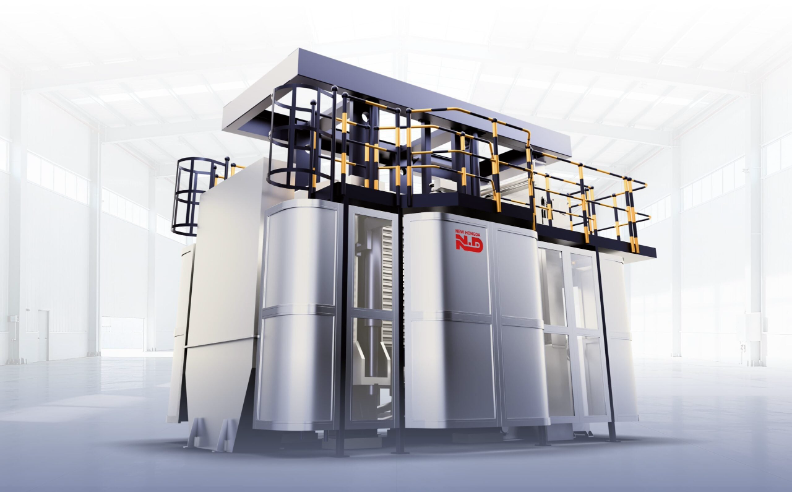
Hydrometallurgy wastewater treatment should be designed with the same operating range as the main plant. Neutralization, precipitation, clarification, and dewatering create solids that must be separated reliably. A vertical filter press can produce a lower-moisture cake for handling or disposal, but the cycle time, cake release, cloth life, and feed conditions have to match the residue. For a nickel processing plant, the selected vertical pressure filter must match the wastewater solids and the required cake handling route. The deep cone thickener duty should remain linked to the wastewater solids, underflow target, and downstream filter cycle.
What NHD’s Nickel and Cobalt References Can Contribute
Related nickel and cobalt experience can help a project team identify the process and site interfaces that deserve early attention. It cannot replace project-specific testwork or regulatory review.
Lygend shows why site and material conditions matter
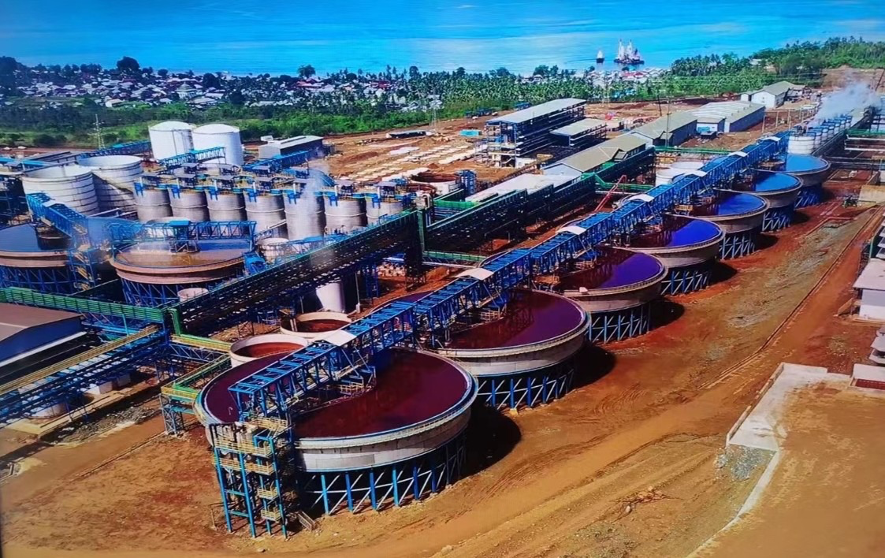
The Lygend nickel and cobalt project included Φ32 m, Φ36 m CCD, and Φ42 m thickeners. High seismic risk on the Pacific Ring of Fire and pandemic-related construction constraints shaped the project. NHD’s documented solution used duplex stainless steel instead of carbon steel and rubber-brick lined tank designs to support structural integrity and reduce civil construction time.
Those details show why critical minerals investment screening cannot be separated from engineering. A project may have a strong resource position and still face delays if materials, site conditions, construction sequence, or residue handling are not mature.
Deep cone thickening and vertical filtration duties
A deep cone thickener can increase underflow density, reduce the volume sent to downstream handling, and return clearer water to the process. The design depends on settling tests, flocculant response, rake load, torque, and the required underflow rheology.
A vertical filter press addresses a different duty: producing a manageable cake from fine or difficult solids, including wastewater and residue streams. The two systems can work in sequence, but they should not be selected only because both reduce moisture. Their feed conditions and operating objectives are different. The vertical pressure filter is normally selected after the residue and wastewater duties are defined, not from a standard cake-moisture target alone.
What to Prepare Before Regulatory Review
A project team should prepare one consistent evidence package for both the regulator and the technical reviewer. It should show the ownership and control structure, off-take and supply logic, project schedule, capital basis, feed source, processing route, product destination, residue strategy, water balance, and environmental controls. Assumptions should be traceable to testwork or engineering studies.
The technical package should also explain how the plant responds if feed quality, throughput, or market access changes. That is more convincing than a static capacity statement. It shows that the project can remain operable under the conditions that matter to regulators, lenders, customers, and the local community.
Conclusion
Screening cases become easier to defend when ownership, supply access, and processing performance can be explained from one evidence set. Nickel project development therefore needs feed tests, control philosophy, wastewater balance, and residue handling aligned before offtake or transaction terms are finalized. Engineering teams that can show performance across the real operating range is better prepared for regulator, lender, and customer review. NHD can support that technical review; send the draft basis to sales@chinanhd.com or coordinate a call through +86 136 6732 4277.
FAQs
Q1: Does EU scrutiny mean the Anglo American nickel sale is already prohibited?
A1: No final prohibition decision is confirmed in the cited evidence. The Commission has opened an in-depth investigation and reporting indicates that a statement of objections is being prepared.
Q2: Why does an off-take arrangement matter in investment screening?
A2: It can affect whether the acquired output remains available to the target market. Reviewers may consider supply diversion, internal transfer, and downstream control alongside the ownership share.
Q3: How should a nickel project handle water and residue risk?
A3: Test representative feed and residue conditions, define the water balance, and match clarification, thickening, wastewater treatment, and filtration duties to the full operating range.