


In a sulfuric acid plant, candle filters are used to remove fine sulfuric acid mist from process gas before it reaches downstream equipment or the stack. Selection depends mainly on mist removal efficiency, pressure drop, operating conditions, and the chemical resistance of the filter media.
For conventional sulfuric acid mist duties, glass fibre is widely used. Where the gas contains HF, however, glass fibre can be attacked, making carbon fibre a more suitable option. The key is to match the element not only to the mist load, but also to the gas chemistry and the pressure available in the gas train.
Where Are Candle Filters Used in a Sulfuric Acid Plant?
Drying Tower and Absorption Tower Duties
In a contact-process sulfuric acid plant, the drying section removes moisture from the process gas, while the absorption section removes SO3 into circulating acid. Gas leaving these sections can still carry fine sulfuric acid mist or entrained acid droplets.
If the mist is not removed effectively, it can increase corrosion, fouling, downstream equipment loading, or stack emissions. Depending on the plant configuration, candle filters may be used in drying, absorption, heat-recovery, scrubbing, packed-tower, evaporator, or other acid-mist removal duties.
What the Element Has to Capture: Fine Sulfuric Acid Mist
Acid mist spans a wide range of droplet sizes. Large droplets can be captured by impaction and interception, while the fine and sub-micron fraction is often the most difficult to remove and therefore plays an important role in element selection.
Fibre diameter, bed depth, packing structure, and gas velocity all influence collection efficiency. That is why an efficiency figure should always be read together with its droplet-size range and operating velocity. A quoted removal percentage only describes the conditions under which it was measured; performance under different velocities or after extended service may differ.
What Determines Candle Filter Efficiency and Pressure Drop?
Mist Removal Efficiency
Collection efficiency is influenced by fibre diameter, bed depth, packing density, and the velocity of the gas through the fibre bed. Finer fibres and denser or deeper beds can improve capture of small droplets, but they can also increase pressure drop.
NHD BECOFIL Candle Filter elements are available in different grades for different efficiency and capacity requirements. The published figures below illustrate how the element grades differ:
| Element | Published Mist Removal | Typical Bed Velocity | Application Focus |
| TGW15 | 100% above 1 µm; 98% at 0.5–1 µm | 0.05–0.25 m/s | High-efficiency duty |
| B14(W) | 100% above 3 µm | 0.1–0.35 m/s | Standard mist removal |
| G25 | 100% above 3 µm | 0.8–2.5 m/s | Higher-capacity duty |
These figures should not be compared in isolation. The required outlet concentration, droplet-size distribution, gas velocity, and allowable pressure drop must be considered together.
Gas Velocity and Pressure Drop
Bed velocity links collection efficiency with pressure drop. Increasing bed velocity generally increases pressure drop and can affect collection performance, particularly for fine mist.
The blower’s available pressure therefore sets an important design limit. The pressure allowance should also consider the element in service rather than only in a clean condition. Published pressure-loss ranges for different BECOFIL grades should be reviewed together with their bed-velocity ranges and required removal efficiency.
Glass Fibre Element Material and Construction
Glass fibre is widely used for conventional sulfuric acid mist removal because fine fibre beds can provide high collection efficiency at controlled pressure drop.
NHD BECOFIL Candle Filters use fibre-bed elements for sulfuric acid drying, absorption, low-temperature waste heat recovery, scrubbers, packed towers, evaporators, and related acid-mist duties. NHD has cooperated with Begg Cousland since 2005, with the core fibre element supplied by Begg Cousland and the finished filter assembled by NHD.
The element is a consumable component inside the filter vessel. Captured acid drains from the fibre bed, while the element is replaced when its pressure drop, physical condition, or service life reaches the maintenance limit. For this reason, filter-media durability is part of element selection rather than a separate maintenance issue.
When Should Carbon Fibre Replace Glass Fibre?
Why HF Can Shorten the Life of Glass Fibre Elements
In smelter acid plants, gas composition can vary with ore and process conditions. Some off-gases contain fluorine compounds that form HF, which can attack glass fibre and shorten element life.
The result is not only a higher spare-parts cost. Loss of fibre strength can reduce service life and may affect removal performance and pressure drop over time. Where HF is present at a level that threatens glass-fibre durability, carbon fibre should be considered as an alternative filter medium.
When Carbon Fibre Candle Filter Elements Are Needed
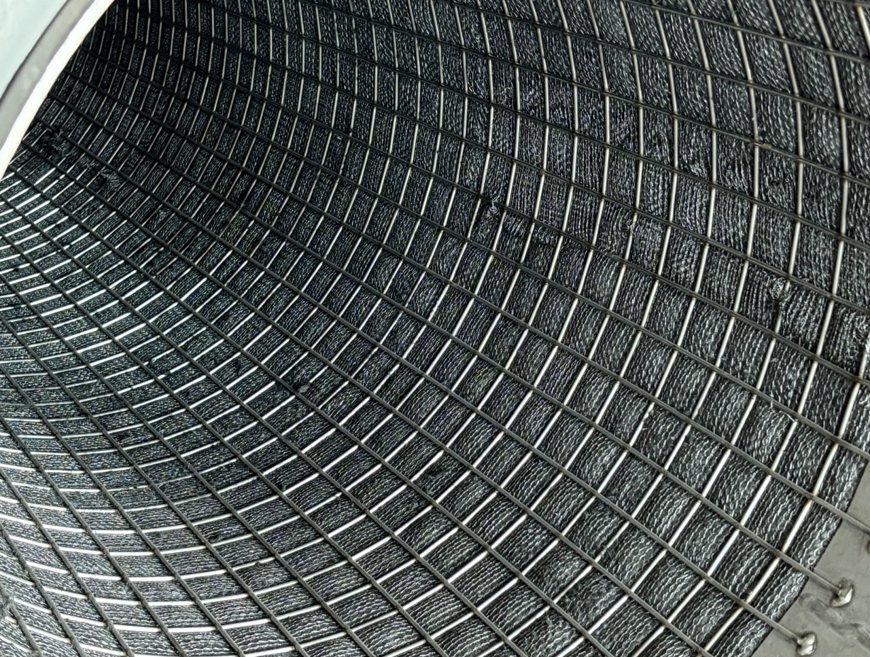
Carbon fibre elements are designed for acid-mist duties where resistance to HF is required. NHD Carbon Fibre Candle Filter elements are specified for smelter plants such as copper, zinc, lead, and pyrite operations, as well as other non-ferrous and chemical duties where HF is present.
The C7 and C7K elements remove mist through Brownian diffusion, interception, and impaction. Their published design criteria include 100% removal above 3 µm, 99% below 3 µm, pressure loss of 150–250 mmH2O, and bed-velocity limits that depend on the arrangement. An invisible-stack-emission criterion below 20 mg/m³ is also used in the published selection data.
Carbon fibre is not automatically the better option for every sulfuric acid mist duty. Where HF corrosion is not a concern and the remaining operating conditions are within the element’s design limits, glass fibre remains a common choice.
What to Confirm Before Selecting a Candle Filter Element
1. What Is in the Gas?
Confirm the gas composition, including the presence and concentration of HF or other corrosive contaminants. The sampling point and the range of operating conditions should represent what the candle filter will actually see in service.
2. What Are the Operating Conditions?
Confirm gas temperature, operating and design flow rate, acid mist loading, acid concentration, and the expected variation during the operating campaign. These conditions determine the physical duty and influence both element sizing and service life.
3. What Performance Is Required?
Define the required outlet mist concentration or collection efficiency together with the allowable pressure drop. The correct element has to meet both targets at the same time.
4. What Element Configuration Fits?
Confirm vessel arrangement, available space, element dimensions, housing and internal materials, and any applicable maintenance or washing arrangement. These details help determine which element family and grade can be installed in the existing or proposed vessel.
Key Data to Provide for Candle Filter Selection
For an accurate technical review, provide the gas flow at operating and design conditions, temperature at the element, gas composition including HF, acid mist concentration and droplet size where known, acid concentration, dust load, required outlet concentration, allowable pressure drop, and vessel arrangement.
Conclusion
Selecting a candle filter for sulfuric acid mist removal requires balancing three factors: collection efficiency, pressure drop, and filter-media compatibility with the gas chemistry.
Glass fibre is widely used for conventional sulfuric acid mist duties, while HF-bearing gas may require carbon fibre because of its greater resistance to HF attack. The final selection should be based on the actual gas composition, temperature, flow rate, mist loading, required outlet concentration, and allowable pressure drop.
NHD can review these operating conditions and recommend a suitable BECOFIL or Carbon Fibre Candle Filter. Contact sales@chinanhd.com or WhatsApp +86 136 6732 4277.
FAQs
Q1: What does a candle filter remove in a sulfuric acid plant?
A1: A candle filter removes fine sulfuric acid mist and entrained acid droplets from process gas. The fibre bed captures droplets through mechanisms including Brownian diffusion, interception, and impaction, while the captured acid drains out of the gas stream.
Q2: Why can HF shorten the service life of glass fibre candle filters?
A2: HF can attack glass fibre. In HF-bearing smelter gas, this can reduce fibre strength and shorten element life, which is why carbon fibre may be considered where HF resistance is required.
Q3: What is the difference between glass fibre and carbon fibre candle filters?
A3: For sulfuric acid mist applications, the main difference is resistance to the gas chemistry. Glass fibre is widely used for conventional acid-mist duties, while carbon fibre is used where HF resistance is required. Final selection still depends on efficiency, pressure drop, flow, temperature, and mist loading.
Q4: What gas data should be confirmed before choosing a candle filter element?
A4: Confirm the operating and design gas flow, temperature at the element, gas composition including HF, acid mist concentration and droplet size where known, acid concentration, dust load, required outlet concentration, allowable pressure drop, and vessel arrangement.