
October 12, 2026. The main lithium carbonate contract on the Guangzhou Futures Exchange closed below 110,000 yuan a tonne. That is more than 48 percent under the May high. Days earlier, Yichun reissued the environmental review for the Jianxiawo mine — 100,000 tonnes of LCE a year, expected back in production around the new year. Analysts see a 38,000-tonne global surplus in 2027.
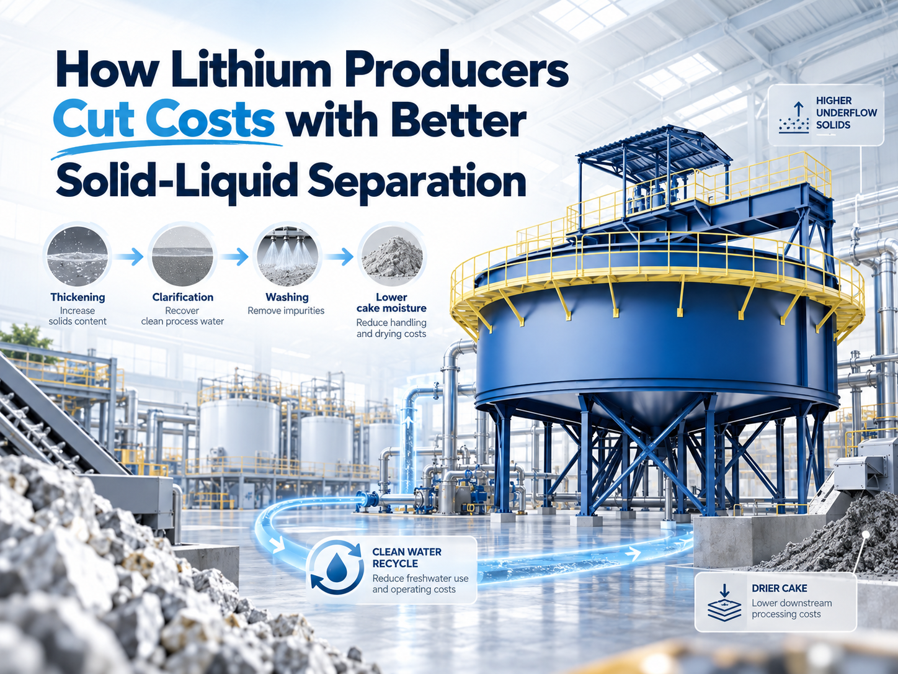
Every lithium plant is now hunting cost. Much of it sits in the separation steps, hiding in plain sight. Water recovered is water not purchased. Moisture in the filter cake turns into dryer fuel; the plant pays for the same water twice. Shave an hour off the filtration cycle and throughput rises with zero new equipment. Thickeners, filters, cloths — the train between the mine and the final crystal. That is where the money leaks. That is where it gets caught.
Where the Cost Sits in a Lithium Flowsheet
Concentrate Dewatering Sets Up Everything Downstream
Spodumene concentrate or chemical slurry, the first cut decides how much water rides into the hot end. Wet feed eats kiln energy. It dilutes the leach. A dewatering step that holds low, steady cake moisture earns its keep every single hour.
Leach Residue Is a Cost Twice Over
Roast, leach, and the residue still holds process water, spent reagents, undissolved lithium. Filter it badly and the plant bleeds twice — lithium lost to the waste pile, and good money spent handling a wetter, heavier stream. Residue filtration wins no awards. It just shows up on the cost sheet.
The Carbonate Step Is Where Purity Is Made
Lithium carbonate gets precipitated, filtered, washed, dried. The wash decides what rides along: sodium, sulfate, chloride. Battery grade has no patience for impurities. Rework a batch and you have paid for the most expensive filtration in the plant. A filter that washes inside its own cycle guards the grade. No second washing plant required.
Thickening: The Cheapest Tonne Is the One Never Filtered
Underflow Density Decides What the Filter Receives
Dense, stable underflow: the filter gets a feed it can plan around. Surging underflow: the filter gets a problem. The NHD thickener runs high-rate designs with live torque and level monitoring. The underflow stays honest. The filter cycle becomes a schedule instead of a fire drill.
Recovered Water Goes Straight Back to the Plant
In lithium country, water has a price — sometimes a steep one. Thickener overflow is process water the plant already owns. Each cubic metre back into the circuit is one less drawn, treated, or trucked in. Deep-cone designs that drive underflow toward paste density tighten that loop further.
Filtration Choices That Move the Cost Needle
Cake Moisture Against Drying Energy
Reagents first, then the dryer: the two biggest operating costs in most lithium plants. And the dryer’s workload is set upstream, at the filter. The HDLY vertical automatic pressure filter runs to 1.6 MPa. Cake moisture comes out at 10 percent or below. That is dryer fuel the plant never buys. Specify moisture on the real feed, proven on a pilot run. Catalogue figures do not dry anything.
Wash the Cake Inside the Press
Wash liquid crosses the cake inside the chamber. A second squeeze follows. Impurities leave with the wash instead of riding into the dryer.

Design it in from the start and washing costs a stage inside the cycle. Bolt it on later and it costs a repulping tank, another filter, more water, more floor. The cheap option is the early decision.
The Cloth Is a Cost Line
A cloth going blind does not fail all at once. It stretches the cycle a little more each shift — throughput leaking away in disguise. Match the filter cloth series to the slurry chemistry on file. Count replacement intervals in tonnes filtered. When the cloth gives up, read the failure: blinding, abrasion, chemical attack. Each one orders a different replacement.
What Not to Cut When Cutting Costs
Cheaper Cloth Is Usually the Most Expensive Option
Prices fall, and purchasing eyes the consumables line. Natural instinct. Expensive mistake. Per tonne of product, the bargain cloth that adds minutes to each cycle costs more than the premium fabric ever did. Trim the purchase order. Leave the specification alone.
Test the New Feed Before It Becomes the Plant Feed
Cheap markets push plants toward cheaper feeds — lower grade, blended, variable. Those feeds change filtration behavior first and ask questions later. Run the representative slurry through a pilot, full production cycle. Write down the moisture, the cycle time, the cloth life. Then commit. The test costs pocket change next to one wrong equipment call.
Conclusion
The lithium price answers to no plant team. The cost base does. And in lithium processing, an outsized chunk of that base moves through solid-liquid separation. Thickeners that hold their underflow. Presses that starve the dryer. Cloths picked for the duty, not the price tag. That is how a plant stays in the game when the market turns mean. Teams tracing where their separation train bleeds money can send feed data and cake targets to sales@chinanhd.com or message the team on WhatsApp at +86 136 6732 4277 for an equipment check.
FAQs
Q1: Why are lithium prices falling in late 2026?
A1: Supply keeps coming back — big Chinese projects among it — while demand growth lags. Analysts expect outright surplus in 2027. Guangzhou futures have shed more than 48 percent since the May peak.
Q2: Where does solid-liquid separation save money in lithium processing?
A2: Three places. Thickeners recover process water and hand the filter a steady feed. Presses set the cake moisture that fixes the dryer bill. In-press washing guards product purity with no separate washing circuit.
Q3: What is the first thing to check when filtration costs look too high?
A3: Measure two things on the real feed: cake moisture and cycle time. Wet cake means the dryer is covering for the filter. A stretched cycle means the cloth is done. Both answers live in the press and cloth specification — not in operator effort.