 Indonesian
  English
  French
  Spanish
  Russian
  Arabic
  Portuguese
  German
  Turkish
  Persian
  Vietnamese
  中文
中文 
Pembersihan gas industri untuk menara dengan kabut dan padatan tinggi lebih sulit daripada untuk scrubber basah standar — kabut halus, padatan terlarut, dan aerosol mengurangi efisiensi, meningkatkan penurunan tekanan, dan menyebabkan korosi pada peralatan hilir jauh sebelum terjadi kegagalan yang terlihat. Panduan ini menjelaskan data gas dan menara apa yang perlu dikonfirmasi, mengapa solusi satu tahap tersumbat di bawah padatan tinggi, dan bagaimana pengurangan padatan di bagian depan dipadukan dengan penghilangan kabut selanjutnya.
Mengapa Menara Kabut Tinggi Menjadi Risiko dalam Pembersihan Gas Industri?
Masalah pada menara kabut bertekanan tinggi berkembang secara diam-diam. Gas mungkin masih melewati menara sementara peralatan hilir mengalami lebih banyak tetesan, residu, dan pekerjaan pembersihan. Pembeli harus mempertimbangkan tanda-tanda ini sebelum memilih sistem penghilang kabut apa pun.
Kabut Asam dan Sisa Padatan Terlarut
Kerusakan akibat perpindahan fluida jarang terlihat pada alat ukur — kerusakan tersebut muncul di hilir, pada kipas, pemanas, dan penghilang embun yang mulai tersumbat lebih cepat dari yang diperkirakan. Padatan terlarut dapat mengering, mengkristal, dan menempel pada permukaan kontak, mengubah pembersihan rutin menjadi pekerjaan yang mengharuskan penghentian operasional.
Beban Demister dan Saluran Udara Hilir
Demister hilir adalah pengaman terakhir, bukan perangkat yang harus menangani setiap partikel padat sendirian. Jika beban hulu terlalu berat, pengotoran dan hambatan akan meningkat lebih cepat. Untuk tahap pemisahan gas-cair tambahan, pembeli dapat meninjau bagian dalam menara NHD seperti... Demister Baling-baling Chevron dalam kerangka desain sistem yang lebih luas.
Penghentian Operasi Akibat Korosi dan Pembersihan
Korosi dan penghentian operasional untuk pembersihan adalah dampak pertama yang dirasakan oleh tim pabrik. Zat asam yang terbawa menyerang saluran udara, penutup, rangka penyangga, dan lubang inspeksi. Residu lengket memaksa pembersihan mendadak, penurunan produksi, pekerjaan di ruang terbatas, dan keputusan perawatan yang terburu-buru.
Data Penting untuk Pemilihan Scrubber Kimia
Paket permintaan informasi yang bermanfaat harus spesifik. Pembersih kimia yang sama akan berperilaku berbeda ketika kecepatan gas, beban padatan, tingkat korosi, dan akses menara berubah. Berikan data berikut kepada pemasok sebelum pemilihan akhir.
Gas: Volume, Suhu, Kecepatan, Komponen Korosif, Penurunan Tekanan yang Diizinkan
Kelima kelompok data ini menetapkan batasan tinjauan pertama. Volume gas memengaruhi ukuran peralatan dan area kontak. Suhu dan komponen korosif memengaruhi pilihan material. Kecepatan gas dan penurunan tekanan yang diizinkan memengaruhi area terbuka, waktu tinggal, jalur drainase, dan tata letak sistem penghilang kabut akhir.
Korosivitas dan Kandungan Padatan
Korosivitas dan kandungan padatan harus dibahas bersama. Kabut asam bersih terutama menguji ketahanan material. Aliran gas dengan kandungan padatan tinggi menambah masalah penyumbatan, abrasi, pembuangan bubur, dan kemampuan pencucian. Ketika kedua faktor tersebut tinggi — korosif dan kaya padatan — satu tahap BlueFil®, bagian isian, atau demister jarang dapat mengatasi masalah tersebut sendirian; penanganan padatan di hulu harus dibahas terlebih dahulu.
Akses untuk Perbaikan dan Pemeliharaan Menara
Keterbatasan retrofit dapat mengubah solusi terbaik. Menara lama mungkin memiliki lubang inspeksi yang kecil, posisi nosel yang tetap, ketinggian pengangkatan yang terbatas, atau sedikit ruang untuk tahap pemisahan tambahan. Jika operator tidak dapat melepaskan bagian yang kotor dengan aman, siklus pembersihan pertama akan mengungkap kelemahan desain — gasket yang robek, serpihan yang jatuh, dan waktu henti yang tidak direncanakan.
Matriks Seleksi Pengadaan
| Faktor seleksi | Apa yang harus dikonfirmasi oleh pembeli | Mengapa ini penting |
| Data gas | Volume gas, suhu, kecepatan, komponen korosif, penurunan tekanan yang diizinkan | Menetapkan batasan pertama untuk ukuran peralatan, material, dan tinjauan kehilangan tekanan. |
| Kabut dan tetesan | Rentang partikel kabut, kimia cairan, perilaku aerosol, carryover yang terlihat | Menunjukkan apakah penghilangan kabut lanjutan atau pemisahan gas-cair memerlukan tahapan yang lebih halus. |
| Pemuatan padatan | Padatan terlarut, debu, garam yang mengkristal, partikel lengket, jalur pembuangan lumpur | Menentukan apakah pengurangan padatan di tahap awal diperlukan sebelum pemisahan halus. |
| Akses menara | Lubang got, ruang pengangkatan, posisi nosel, jendela penghentian, metode pembersihan | Memengaruhi kelayakan renovasi dan biaya perawatan jangka panjang |
| Ulasan pemasok | Gambar proses, data RFQ, material pilihan, interval pembersihan yang diharapkan | Mari kita gunakan NHD untuk mencocokkan produk dengan bea masuk, alih-alih mengutip dari daftar umum. |
Mengapa Aliran Gas dengan Kandungan Padatan Tinggi Dapat Menyumbat Solusi Satu Tahap?
Solusi satu tahap — satu bagian yang dikemas atau satu tahap penghilangan kabut yang menangani semuanya — bekerja paling baik ketika beban gas yang masuk tetap berada dalam kisaran desain. Aliran dengan kandungan padatan tinggi kurang toleran karena padatan, tetesan, dan perubahan kelembapan memasuki zona pemisahan yang sama. Pengotoran dapat terjadi lebih cepat dari yang diperkirakan.
Blokade Menara Padat Tradisional
Menara isian tradisional dapat kehilangan area terbuka ketika padatan terlarut dan endapan seperti bubur menumpuk di dalam isian. Awalnya, operator mungkin memperhatikan distribusi gas yang tidak merata atau lebih banyak pencucian. Kemudian, endapan tersebut mungkin tidak lagi berupa lapisan tipis di permukaan, yang berarti penghentian operasional yang lebih lama.
Risiko Penyumbatan Jika Hanya Menggunakan BlueFil®
Untuk tindak lanjut pembersihan gas, NHD dapat meninjau Sistem Penggosokan Gas BlueFil® Solusi bantalan jala untuk menangkap semprotan tetesan dan menghilangkan cairan atau padatan terlarut dari aliran gas. Namun, pada menara dengan kandungan padatan tinggi, beban hulu tetap perlu ditinjau. Sistem pembersih gas BlueFil tidak boleh diminta untuk menangkap setiap padatan kasar sebelum data proses diperiksa.
Kebutuhan Pengurangan Padatan Hulu
Pengurangan padatan di hulu seringkali merupakan langkah yang terlewatkan. Tujuannya bukan untuk menggantikan penghilangan kabut selanjutnya, tetapi untuk membuat gas yang masuk ke tahap tersebut lebih mudah ditangani. Ketika fraksi kasar atau lengket dikurangi terlebih dahulu, sistem penghilangan kabut di hilir dapat tetap lebih dekat dengan tugas yang dimaksudkan.
Penurunan Tekanan dan Peningkatan Pengendapan
Penurunan tekanan biasanya meningkat setelah pengotoran dimulai. Anggap ini sebagai peringatan operasional, bukan satu-satunya variabel desain. Begitu luas area terbuka bagian isian berkurang 20–30%, interval pencucian menjadi lebih pendek, dan penghentian pembersihan berikutnya biasanya beberapa minggu lebih awal dari yang direncanakan.
Untuk penghilangan kabut dengan bantalan jala, penurunan tekanan lapisan bersih biasanya berada dalam kisaran 12–450 mmH₂O; begitu pembacaan melenceng jauh di atas batas atas tingkatan Anda, penyebabnya adalah pengotoran—bukan aliran.
Bagaimana BECOFLEX + BlueFil® Menangani Menara dengan Kabut Tinggi dan Kandungan Padatan Tinggi
Untuk menara dengan tingkat kabut dan padatan tinggi, pendekatan yang lebih efektif adalah dengan melakukan diskusi bertahap: kurangi padatan di tahap awal, kemudian fokuskan tahap selanjutnya pada kabut, tetesan cairan, dan pemisahan gas-cairan. Di sinilah kombinasi BECOFLEX dan BlueFil® menjadi bermanfaat.
BECOFLEX: Penghilangan Padatan di Bagian Depan
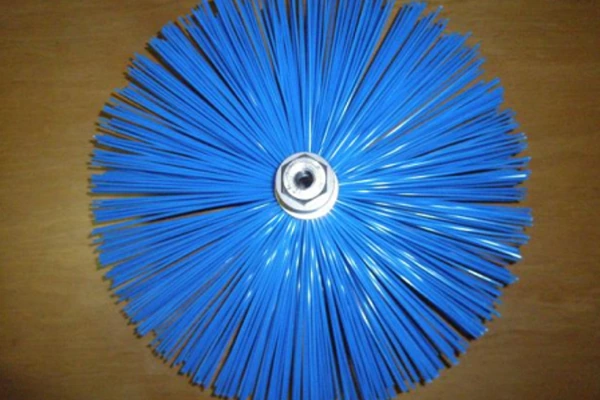
BECOFLEX Rotary Brush Scrubber langsung mengatasi beban padatan di bagian hulu — sikat yang berputar bersentuhan dengan lapisan gas-cair dan secara fisik menggosok partikel kasar, aerosol, dan residu terlarut sebelum mencapai bagian internal hilir yang lebih halus.
BlueFil®: Penghilangan Kabut Lanjutan
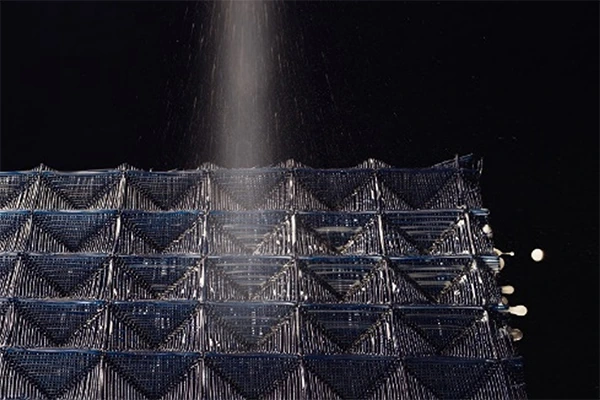
Setelah beban awal berkurang, BlueFil® dapat ditinjau sebagai tahap penghilangan kabut dan pembersihan gas selanjutnya. Blok jaring terstruktur BlueFil® biasanya terdiri dari beberapa lapisan jaring dengan spesifikasi berbeda. Dengan memilih serat dengan diameter berbeda dan jaring piramida dengan tingkatan berbeda, dapat disesuaikan dengan kisaran partikel kabut target, menangkap partikel kabut sub-mikron berukuran 0,5–0,8 μm saat beroperasi pada kecepatan gas di atas 2,5–3 m/s.
| Aplikasi Industri | Model Baru MX095 | MX094-H | MX094-L | MX040 | MX020 | MX010 | MX005 |
| Kabut Air / Kabut Kimia | X | X | X | X | X | X | X |
| Kabut Minyak / Kabut Emulsi | X | X | X | X | X | ||
| Penghilangan Kabut Aerosol | X | X | X | X | X | X | X |
| Penghilangan Kabut Pengemasan | X | X | X | X | |||
| Cairan | X | X | X | X | X | X | |
| Tidak ada batasan untuk menggabungkan solusi. |
| Bahan | Warna | MX094-H | MX094-L | MX040 | MX020 | MX010 | MX005 |
| PET | Putih | X | |||||
| PP | Biru Tua | X | X | X | X | X | |
| ETFE | Alami | X | X | X | X | X | |
| PFA | Alami | X | X | X |
Pengolahan Gas Menara Gabungan
Pengolahan gas menara gabungan adalah tentang membagi tugas. BECOFLEX mengurangi beban padatan di bagian depan. BlueFil® menangani penghilangan kabut dan pemisahan gas-cair selanjutnya. Demister hilir atau komponen internal menara lainnya kemudian dapat ditinjau berdasarkan beban tetesan yang tersisa, kecepatan gas, lingkungan material, dan rencana perawatan.
Daftar Periksa Data RFQ untuk Tinjauan NHD
Sebelum tim proyek meminta penawaran akhir, kirimkan paket RFQ (Request for Quotation) yang ringkas. Tabel di bawah ini menjaga agar diskusi tetap berfokus pada tugas operasional sebenarnya, bukan permintaan produk yang luas.
| Item Permintaan Penawaran (RFQ) | Data yang perlu disediakan | Bagaimana NHD dapat menggunakannya |
| Kondisi gas | Volume, suhu, tekanan, kecepatan gas, komponen korosif | Periksa ukuran peralatan, paparan material, dan batas kehilangan tekanan. |
| Kabut dan padatan | Perilaku tetesan, padatan terlarut, jenis debu, pembuangan bubur atau kebutuhan pencucian | Pertimbangkan apakah pengurangan bagian depan BECOFLEX perlu dibahas sebelum BlueFil®. |
| Tata letak menara | Diameter menara, tinggi, lubang inspeksi, posisi nosel, batasan pemasangan ulang | Periksa apakah susunan tersebut sesuai dengan menara yang ada dan akses perawatan. |
| Target operasi | Tugas pembersihan gas, masalah sisi emisi, pemulihan produk, interval pembersihan | Sesuaikan konsep scrubber kimia dengan nilai proses, bukan hanya nama peralatannya. |
| Dokumentasi | Gambar, foto, preferensi material, gejala kegagalan saat ini | Mendukung peninjauan data proses NHD dan diskusi retrofit non-standar. |
Mengapa Pembeli Harus Bekerja Sama dengan NHD untuk Pembersihan Gas Menara?
Menara pengolahan padatan tinggi membutuhkan lebih dari sekadar rekomendasi produk tunggal. Dibutuhkan pemasok yang dapat memahami beban proses, mendiskusikan bagian dalam menara, dan menjaga desain akhir tetap dalam batas pengoperasian dan pemeliharaan yang realistis.
Pencocokan Produk di Seluruh Komponen Internal Menara
Untuk ulasan menara gabungan, NHD Bidang ini mencakup filtrasi, pemisahan padat-cair, pemisahan gas-cair, penghilang kabut, bagian dalam menara, scrubber, dan fabrikasi non-standar. Cakupan ini penting karena menara penghasil kabut tinggi sering berada di antara kategori produk. Solusi akhirnya dapat menggabungkan tahap scrubber kimia, penghilangan padatan di bagian depan, penghilangan kabut lanjutan, dan peninjauan material.
Tinjauan Data Proses
Peninjauan data proses adalah saat proyek pembersihan gas industri menjadi konkret. NHD dapat membahas BlueFil®, BECOFLEX, demister, scrubber, dan komponen internal menara terkait dalam satu paket data gas. Untuk pertanyaan sistem yang lebih luas, pembeli juga dapat meninjau NHD. EPC+M+O. konteks teknik.
Dukungan Retrofit Non-Standar
Dukungan retrofit non-standar berguna ketika menara yang ada tidak dapat dirancang ulang dari awal. Pembeli mungkin perlu mempertahankan dimensi cangkang, menggunakan kembali nosel, mengatasi keterbatasan akses, atau memasang sistem baru dalam waktu henti yang singkat. Pemasok harus meninjau beban menara dan kendala pemasangan bersama-sama.
Kesimpulan
Menara dengan tingkat kabut dan padatan tinggi memerlukan keputusan pembersihan gas industri berdasarkan kondisi gas, ukuran tetesan, beban padatan, kecepatan gas, penurunan tekanan, risiko korosi, akses perawatan, dan batasan retrofit. Ketika kandungan padatan tinggi, menara isian tradisional dan BlueFil® yang digunakan sendiri mungkin sama-sama menghadapi tekanan pengotoran. BECOFLEX dapat berfungsi sebagai tahap pengurangan padatan awal sebelum BlueFil® menangani penghilangan kabut dan pemisahan gas-cair selanjutnya. NHD dapat membantu pembeli meninjau data proses dan mencocokkan BlueFil®, BECOFLEX, demister, scrubber, atau komponen internal menara non-standar dengan tugas menara yang sebenarnya.
Kirim data gas, gambar menara, interval pembersihan target, dan gejala pengotoran saat ini melalui sales@chinanhd.com Hubungi WhatsApp +86 13667324277, dan NHD akan memulai peninjauan dari kondisi layanan Anda yang sebenarnya.
Pertanyaan FAQ
Q1: Apa itu sistem pembersihan gas industri?
A1: Ini adalah sistem yang menghilangkan kabut, padatan terlarut, aerosol, dan komponen korosif dari gas proses sebelum merusak peralatan hilir. Dalam layanan menara, biasanya menggabungkan pengurangan padatan di bagian depan dengan penghilangan kabut selanjutnya.
Q2: Data proses apa yang harus diberikan pembeli sebelum memilih sistem pembersihan gas industri?
A2: Pembeli harus memberikan volume gas, suhu, kecepatan, komponen korosif, penurunan tekanan yang diizinkan, kondisi kabut, kandungan padatan, ukuran menara, batasan retrofit, akses perawatan, dan gejala pengotoran atau korosi saat ini.
Q3: Mengapa kandungan padatan tinggi menimbulkan risiko penyumbatan pada menara isian atau tahap penghilangan kabut?
A3: Padatan tinggi dapat mengering, mengkristal, atau menempel pada permukaan kontak. Begitu endapan mengurangi area terbuka, penurunan tekanan meningkat dan efisiensi penghilangan kabut menjadi tidak stabil, sehingga pengurangan padatan di hulu harus ditinjau sebelum mengandalkan satu tahap pemisahan saja.