

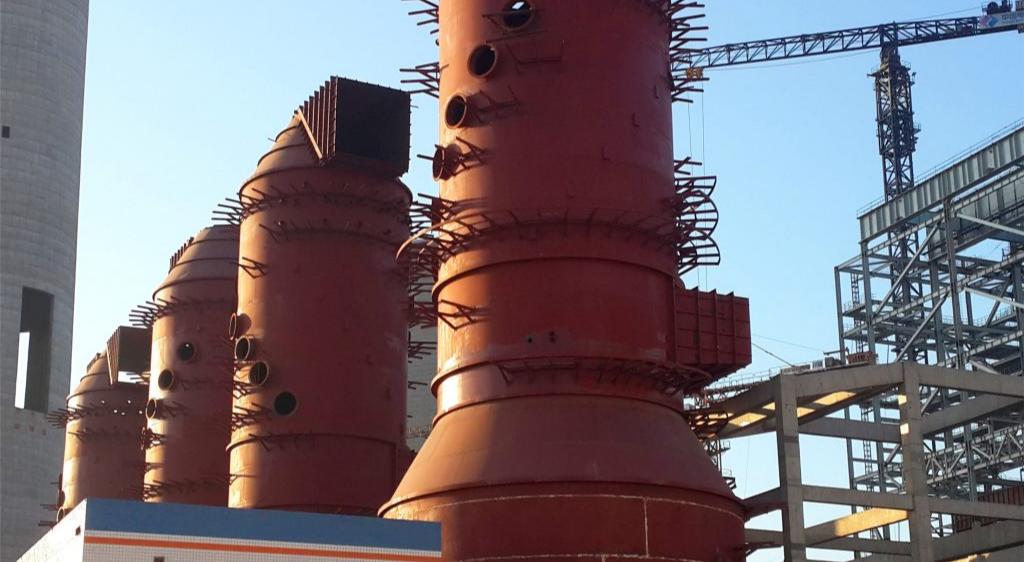
In many wet flue gas desulfurization projects, people blame the big equipment first. The absorption tower is old. The circulation pump is not enough. The demister needs cleaning again. All of that may be true. Still, one part is often checked too late: the desulfurization sprayer.
A sprayer is not just a set of pipes and nozzles. In an absorption tower, it decides how slurry is spread across the gas flow. If slurry coverage is weak, gas-liquid contact becomes uneven. Some areas get enough washing. Some do not. After months of operation, that small design problem may appear as unstable SO₂ removal, scaling, corrosion, higher demister load, or more shutdown work.
Why Desulfurization Sprayer Design Affects Absorption Tower Performance
A wet FGD absorption tower works by contact. Flue gas moves through the tower, and alkaline slurry meets the gas through the spray layer. If the spray pattern is even, the reaction is easier to control. If the pattern is poor, the tower may still run, but the result can slowly drift.
A badly arranged sprayer may leave dry areas inside the tower. A wrong nozzle angle may wet the wall too much and miss the gas path. Uneven branch flow may feed some nozzles well while starving others. These are not always dramatic failures. More often, they become higher limestone use, more cleaning, and a less stable outlet value.
Sprayer design also affects downstream equipment. If droplet carryover increases, the demister needs more flushing. If slurry is thrown too high or too fine, the gas may carry more liquid upward. In that case, changing only the demister may not solve the problem.
What Buyers Should Check Before Choosing a Desulfurization Sprayer
A proper inquiry should start with operating data. Tower diameter, gas flow rate, SO₂ concentration, slurry flow rate, required removal efficiency, slurry solid content, circulating pump data, nozzle pressure, and tower layout should all be shared with the supplier.
Nozzle type and spray angle must match the tower. More nozzles do not automatically mean better coverage. Branch layout, spray overlap, pressure balance, flushing design, and maintenance access matter just as much.
Material selection also needs early discussion. Wet FGD slurry can be both corrosive and abrasive. Pipe, flange, branch, and nozzle materials need to handle the real slurry condition. A cheaper material may reduce the first purchase cost, but leakage, thinning, or frequent nozzle replacement can cost more later.
For overseas projects, buyers should also confirm flange standards, spare nozzle plans, packing methods, installation drawings, and after-sales responses. Once the tower is operating, a small sprayer issue can become difficult to fix quickly.
Common Signs That the Sprayer Is Limiting Tower Operation
Sprayer problems are often hidden inside other complaints. Operators may say the tower fouls too fast, the outlet SO₂ is unstable, or the demister pressure drop rises. The spray layer should be checked when these problems keep coming back.
Uneven Slurry Coverage
Uneven coverage means some gas zones do not meet enough slurry. The plant may increase slurry circulation to compensate, but that raises pump load and still may not cover the weak area. This is common in retrofit projects where the plant increases gas volume or removal target while keeping an old spray arrangement.
Nozzle Blocking and Flow Loss
Wet FGD slurry is not clean water. It may carry limestone particles, gypsum, scale pieces, and other solids. If nozzle passage is too small, if flushing is weak, or if branch flow is not balanced, blockage can happen. Once several nozzles lose flow, local gas-liquid contact becomes worse.
Higher Carryover to the Demister
The sprayer and demister work in the same tower environment. Poor nozzle direction or excessive fine droplets can increase liquid carryover. Then the demister has to handle more liquid than planned. More washing water, higher pressure drop, and more maintenance may follow.
How Sprayer Structure Should Match the Absorption Tower
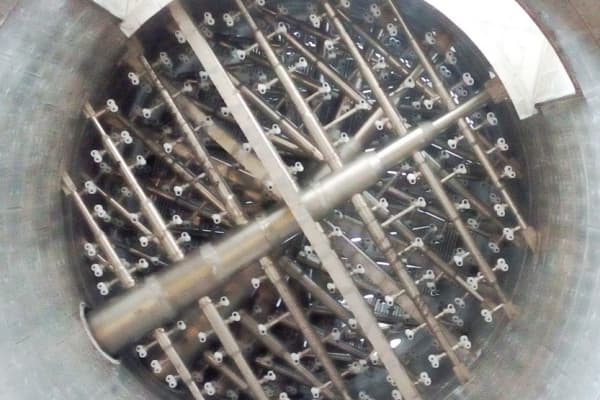
In a large absorption tower, the sprayer usually includes a main manifold, several branches, and many nozzles. The simple goal is to move slurry from the circulating pump to each spray point. The real work is keeping that distribution stable.
NHD’s desulfurization sprayer product page explains this structure clearly: the sprayer distributes slurry from the circulating pump to each point, and the absorption tower slurry is pumped through the manifold and branches to the nozzles. This is the basic logic buyers should understand before comparing quotations.
For a new tower, the sprayer can be planned together with tower diameter, spray layers, gas flow path, and support structure. For a retrofit tower, space is tighter. The new sprayer must fit existing manholes, supports, pipe openings, and shutdown time. A split structure or site measurement may be needed.
Material Selection Matters in Wet FGD Environments
Wet FGD systems are tough on equipment. The slurry may wear the pipe wall. The gas and liquid may corrode metal parts. Chloride content, pH, temperature, and solids concentration can all change material needs.
Buyers should avoid vague material requests. They should provide slurry and gas conditions, then ask the supplier to explain the material choice for the manifold, branch pipe, flange, weld, and nozzle.
NHD’s related Shandong Xinfa Group flue gas desulfurization project shows its experience with absorption tower corrosion control and EPC execution. The project involved 700 MW Unit 1#-6# absorption towers, where traditional FRP/rubber lining was replaced with SuperAustenitic + Hastelloy to improve service life and reliability.
Retrofit Projects Need Extra Site Review
Old absorption towers rarely match the original drawings perfectly. Some towers have repaired shells, changed supports, replaced nozzles, or added internals. If the supplier only uses old drawings, the new sprayer may not fit during shutdown.
For retrofit projects, buyers should collect tower drawings, site photos, manhole size, support position, nozzle elevation, circulation pump data, and planned shutdown window. If the tower will increase capacity or meet a stricter emission target, the new duty should also be provided.
A standard sprayer design may not be suitable. Custom branch arrangement, split delivery, special flange connection, and adjusted nozzle positions may be required. It is better to confirm these points before manufacturing than to modify equipment on site under time pressure.
How to Compare Desulfurization Sprayer Suppliers
A qualified supplier should understand wet FGD operation, not only pipe fabrication. Buyers should check whether the supplier can review gas flow, slurry flow, SO₂ load, tower diameter, nozzle coverage, pressure loss, material selection, and maintenance access.
The supplier should also be able to provide a complete sprayer package, including manifold, branches, nozzles, flanges, supports, drawings, material documents, and spare parts suggestions.
NHD can be reviewed as one supplier option. Its desulfurization equipment series covers the Desulfurization Regeneration Tower, Sprayer in Steel Plant, Chevron Vane Demister, BECOFIL Candle Filter, Carbon Fibre Candle Filter, Gas Scrubbing System BlueFil®, BECOFLEX Rotary Brush Scrubber, and Wire Mesh Demister. For engineering buyers, this wider product range helps when an absorption tower project needs a sprayer, tower lining, a demister, and related equipment together.
FAQ
Q1: What parameters should buyers provide before selecting a desulfurization sprayer?
A1: Buyers should provide tower diameter, gas flow rate, SO₂ concentration, slurry flow rate, slurry solid content, circulating pump data, nozzle pressure, required removal efficiency, tower drawings, manhole size, and site layout.
Q2: Is MOQ required for desulfurization sprayer equipment?
A2: For large tower projects, MOQ is usually one complete set. The final quantity depends on tower number, spray layers, manifold and branch layout, spare nozzle demand, material requirements, and project schedule.
Q3: Can desulfurization sprayers be customized for retrofit projects?
A3: Yes. Retrofit projects often need custom manifold layout, split sections, adjusted branch arrangement, special flange connections, and nozzle positioning based on existing tower space, supports, manholes, and shutdown time.
Q4: Can NHD support installation, maintenance, and after-sales service?
A4: Yes. NHD can support equipment selection, customized design, manufacturing, installation guidance, maintenance advice, spare parts planning, and after-sales service. For overseas absorption tower projects, buyers should confirm site conditions and service scope before ordering. If you have any further questions, please feel free to contact NHD.